
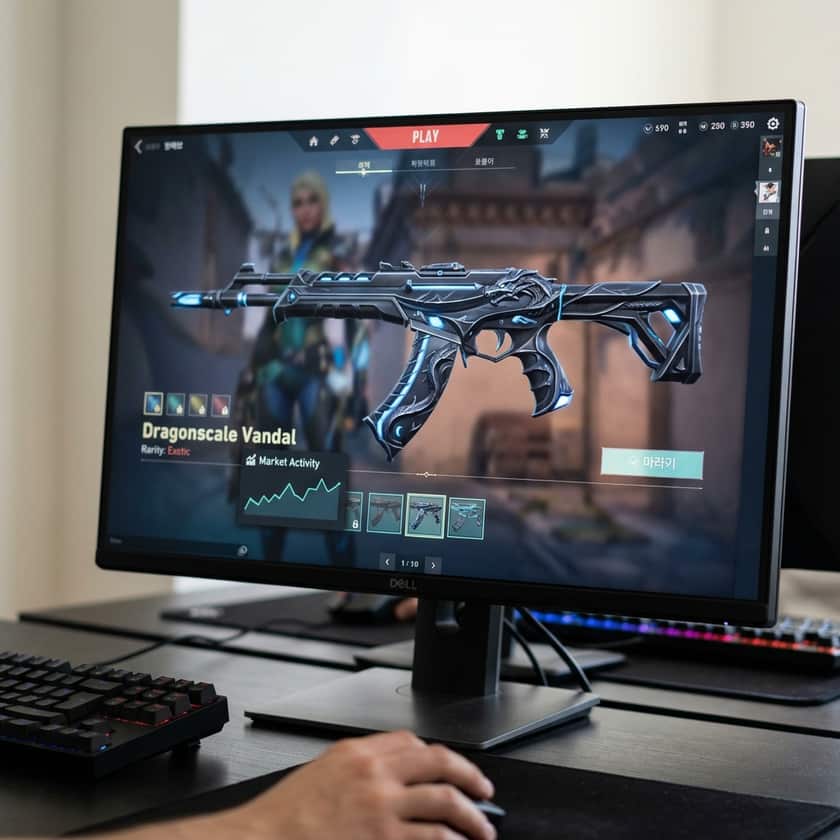
The ecosystem of digital item trading has evolved into a sophisticated virtual economy. For many players, collecting skins is more than just an aesthetic pursuit; it is a serious financial undertaking that requires understanding market mechanics, rarity indices, and supply chains. Whether you are dealing with common items that exist in high volume or ultra-rare artifacts with minuscule drop rates, successful trading relies on your ability to interpret market data rather than just relying on impulse. This guide serves as an introduction to how these economies function, the importance of analyzing scarcity, and the risks associated with volatile secondary markets.
Understanding Rarity and Supply Metrics
The primary driver of any skin's value is its rarity tier. Developers often create systems where spawn rates determine the total circulation of an item. A standard item might be widely available, while a high-tier asset might require thousands of hours of gameplay or extreme luck to acquire. Serious traders prioritize the 'count'—the total number of copies in existence. When analyzing a potential trade, always verify the current circulating count of an item. An item with 133 copies in existence, for example, holds a completely different market position compared to an item with 600,000 copies, regardless of how attractive the skin appears.
| Rarity Tier | Spawn Chance | Total Circulating Count |
|---|---|---|
| Common | 40% - 100% | 131,000 |
| Rare | 15% - 30% | 26,800,000 |
| Epic | 1% - 10% | 507,000 |
| Legendary | 0.3% - 1% | 60,000 |
| Mythic | 0.05% - 0.2% | 4,600 |
| God | 0.0001% - 0.03% | 687 |
| Secret | 0.0005% - 0.00000000000002% | 133 |
It is crucial to recognize how demand fluctuates based on these statistics. As an item moves from common to secret, the scarcity increases exponentially, which usually creates a speculative environment. Buyers often look for 'God' or 'Secret' tier items because their low probability of appearance makes them stable stores of value in the long term. Conversely, common skins, often priced at a few cents, serve as the currency of the casual market, while mid-tier items are subject to the whims of fashion and meta-changes in the game environment.
Strategies for Safe Trading
Trading skins effectively requires a mix of patience and vigilance. Beginners often make the mistake of overpaying for trending items, only to see the value drop once the hype subsides. A disciplined trader sets price alerts and watches the market for at least 30 days before making a significant acquisition. Always verify the seller's reputation and ensure that you are using secure platforms. If an offer seems too good to be true—for instance, a rare item being sold for pennies on the dollar—it almost certainly involves a fraudulent account or a compromised item. Never bypass official trade safeguards to expedite a deal.
- Audit the supply count: Ensure the item is not being flooded into the market by an update.
- Check recent sales history: Do not rely solely on list prices, which can be artificially inflated.
- Evaluate liquidity: Ask yourself how easy it will be to sell this item later.
- Set a budget: Never invest more than $250 to $500 in volatile assets initially.
- Diversify: Avoid putting your entire trading bankroll into a single, high-risk skin.
- Review market trends: Look for stability over a $750 range rather than single-day spikes.
The psychological aspect of trading is just as important as the data. Markets are frequently influenced by what might be termed 'trading brainrot'—a state where participants act on FOMO (fear of missing out) rather than rational calculation. This happens when a new, flashy skin arrives, and buyers rush to acquire it at inflated prices, sometimes exceeding $1,000 or even $2,000 within the first few days. However, experienced traders know that these prices almost always drop once the initial excitement wanes. Wait for the market to normalize before entering at a competitive price point.
Identifying Market Pitfalls
One common pitfall is ignoring the hidden costs of trading. Many platforms charge transaction fees that can eat into your profit margins. If you are flipping low-tier items, a $15.50 or $62.00 sale might seem profitable, but after fees are deducted, your actual earnings may be lower than expected. Additionally, beware of automated tools and autoclickers that claim to give you an edge. These often violate game terms of service and can lead to your account being banned. Using such tools to 'snipe' deals or automate trades is a high-risk activity that often results in the loss of your entire inventory.