
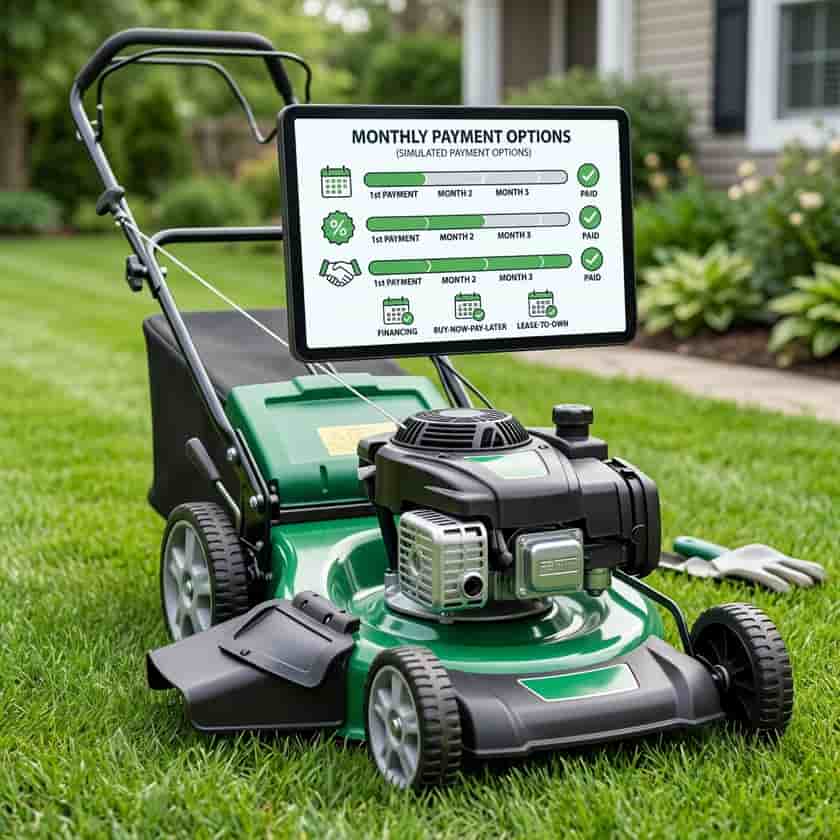
Understanding Lawn Mower Financing Options
Lawn mowers range from basic walk-behind equipment to larger riding and commercial machines, and the purchase price may lead some buyers to consider monthly payments. A smaller payment can make a product appear easier to fit into a budget, but it does not show the total amount paid, the cost of credit, or whether the buyer owns the mower at the end. Before choosing a plan, define the mower type actually needed, compare the cash price with the financed or leased total, and include maintenance, storage, fuel or electricity, insurance if applicable, and repairs. Payment products vary by retailer, lender, state, applicant, and time.
Different mower categories may be offered through different payment products, but availability is not assured. Store cards, installment loans, manufacturer-sponsored credit, buy-now-pay-later plans, and lease-to-own agreements can have different disclosures and consumer obligations. A lender may review credit, income, identity, or other information, while another provider may use different approval criteria. Do not infer affordability from an approval decision. First identify the required cutting width, terrain capability, storage space, transport needs, and service availability; then compare only equipment that meets those practical needs.
Common Financing Paths for Lawn Equipment
- Retail or store credit: A revolving account or purchase-specific promotion; compare APR, deferred-interest conditions, fees, and what happens when the promotion ends.
- Manufacturer-sponsored financing: Credit offered through a lending partner; verify eligibility, rate, term, down payment, and total of payments in the actual offer.
- Personal installment loan: Funds borrowed from a bank, credit union, or other lender; compare APR, origination fees, payment schedule, and prepayment terms.
- Buy-now-pay-later plan: A short installment arrangement that may involve automatic withdrawals, late fees, or credit reporting depending on the provider.
- Rent-to-own or lease-to-own: The buyer pays to use the mower under a contract and may obtain ownership later; compare the cash price, total payments, return rights, and loss consequences.
Promotional financing should be evaluated from the written offer, not from a headline. Determine whether the promotion charges no interest, waives interest only when the full balance is paid by a deadline, or uses another structure. With deferred-interest offers, interest may be charged from the purchase date if contract conditions are not met. Confirm the standard APR, minimum payment, promotion end date, late-payment consequences, and amount needed each month to clear the balance on time. Also review whether optional products or fees are included in the financed amount. Terms differ, so examples from another retailer or customer should not be treated as the offer you will receive.
The Role of Credit in Financing Approvals
Credit history can influence approval, APR, credit limit, deposit requirements, and available terms, but a particular score does not establish a rate. Checking credit information before applying may help a buyer spot errors and decide which applications are appropriate. Ask whether an initial eligibility check affects a credit report and avoid submitting multiple applications without understanding their impact. Compare the same core fields across offers: cash price, amount financed, APR, finance charge, number and amount of payments, fees, collateral or repossession rights, and total of payments. Approval is a lender decision, not evidence that the payment is affordable.
Alternative Paths: Lease-to-Own Agreements
Rent-to-own and lease-to-own plans may use weekly or monthly payments and may have different credit-screening practices than traditional loans. Convenience can come with a substantially higher total than the cash price. Review how ownership is obtained, whether early purchase is available, what happens to previous payments if the mower is returned, and whether a missed payment can result in losing both the mower and money already paid. Automatic withdrawals may also create overdraft or card-limit problems. Compare the full contract total with a cash purchase and conventional credit before deciding.
Estimated Monthly Costs by Mower Type
| Option | Ownership Path | Costs to Record | Contract Questions |
|---|---|---|---|
| Store or promotional credit | Ownership generally begins at purchase, subject to lender security rights | APR, finance charge, account fees, optional products | Is interest deferred, and what ends the promotion? |
| Installment loan | Ownership generally begins at purchase, subject to any lien | APR, origination fees, total of payments | Is the rate fixed, and is there a prepayment charge? |
| Buy now, pay later | Depends on transaction and provider terms | Installments, late fees, automatic-payment effects | Is credit reporting used, and what happens after a missed payment? |
| Rent-to-own or lease-to-own | Ownership may occur only after contract conditions are completed | Total scheduled payments, fees, early-purchase amount | Can the item be returned, and what money is refundable? |
Essential Checklist Before Signing
- Equipment fit: Confirm that the mower type, cutting capacity, terrain rating, and storage needs match the property.
- Cash price and total: Record the cash price, amount financed, finance charge, fees, and total of all scheduled payments.
- Payment mechanics: Confirm due dates, automatic withdrawals, late fees, grace periods, and consequences of a missed payment.
- Ownership and return rights: Identify when title or ownership transfers and what happens if the product is returned or repossessed.
- Warranty and service: Read the actual coverage, exclusions, duration, claim process, and local repair availability.
- Budget resilience: Include routine maintenance and leave room for repairs rather than using the maximum approved payment as the budget.
The payment period should be considered alongside expected use, warranty coverage, and the ability to maintain the mower. A long agreement can reduce the scheduled payment while increasing total cost or leaving payments due after repair needs arise. Ask for an itemized contract before signing and compare it with at least one alternative when available. If a warranty or service plan is offered, determine whether it is included, optional, financed, or administered by another company. Keep copies of the advertisement, disclosures, contract, payment schedule, warranty, and receipts.
A pay-monthly arrangement is one way to obtain lawn equipment, not evidence of affordability or value. The strongest comparison starts with the right mower and then evaluates the entire obligation: cash price, APR, fees, total of payments, ownership, return terms, maintenance, and the consequences of missed payments. If the written terms are incomplete, different from the advertisement, or difficult to understand, pause before signing. A lower-cost mower, rental, shared equipment, professional lawn service, or delayed purchase may also deserve comparison depending on how often the equipment will be used.