
The Reality Behind Free iPhone Promotions in the US
Navigating the landscape of smartphone deals in the United States can be both exciting and confusing, especially when major wireless carriers advertise the latest iPhone models for free. While these advertisements are legally compliant, the term free does not mean you can simply walk into a retail store, grab a new device, and walk out without any financial obligation. Instead, these promotions are carefully structured financial agreements designed to secure long-term customer loyalty. Understanding how these deals are put together, what commitments they require, and how they affect your monthly wireless statement is essential for making an informed financial decision before committing to a multi-year service contract.
How the Bill Credit System Works
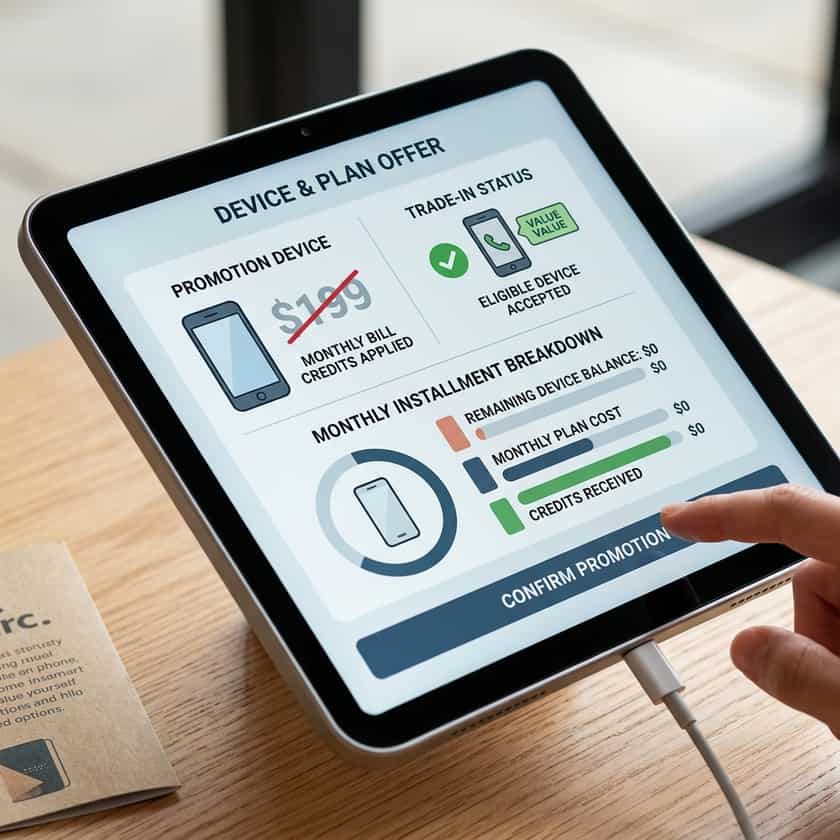
The primary mechanism behind a free iPhone offer is the promotional bill credit system. When you agree to one of these deals, you are actually purchasing the phone on a 24-month or 36-month interest-free installment plan. The carrier then applies a recurring monthly credit to your account that offsets the cost of the device payment. For example, if a new iPhone costs 800 dollars, your monthly device charge would be approximately 22.22 dollars. Simultaneously, the carrier applies a promotional credit of 22.22 dollars to your account each month, resulting in a net cost of zero dollars for the hardware. However, if you choose to switch carriers, cancel your service, or upgrade early, the remaining balance on the phone becomes due immediately.
The Role of Trade-Ins and Plan Requirements
To unlock the highest tier of promotional savings, carriers almost always require a trade-in of your current smartphone. The value assigned to your old device depends heavily on its model, storage capacity, and cosmetic condition. During promotional launch windows, carriers frequently offer enhanced trade-in values that far exceed the actual market value of older devices, sometimes offering up to one thousand dollars in credits for a phone that would otherwise sell for a fraction of that price. However, to get this maximum value, you must also subscribe to a high-tier unlimited data plan. For families or individuals who already utilize these premium services, this is a highly advantageous arrangement. For those currently on budget-friendly prepaid or lower-tier shared data plans, the forced upgrade to a more expensive service tier can easily negate the savings of the free phone.
| Carrier Type | Typical Contract Term | Required Plan Tier | Early Termination Rule |
|---|---|---|---|
| Major US Carriers | 36 Months | Premium Unlimited Plan | Remaining balance due immediately |
| Regional Carriers | 24 to 36 Months | Standard Unlimited Plan | Forfeiture of remaining bill credits |
| Prepaid Brands | No Contract (Instant Rebate) | Eligible Prepaid Plan | Device locked for 12 months |
Key Steps to Prepare for a Carrier Promotion
- Verify device compatibility and unlocking status of your current trade-in phone.
- Backup all your personal data, photos, and settings to secure cloud storage.
- Inspect your current phone for physical damage, cracked screens, or battery swelling.
- Review your current monthly cell phone bill to calculate the true cost of upgrading plans.
- Disable security location features and perform a factory reset before handing over the device.
- Confirm upfront costs including local state sales taxes and carrier activation fees.
Hidden Costs and Important Financial Caveats
Before signing a multi-year device payment agreement, it is vital to calculate the total cost of ownership over the entire contract period. State laws require sales tax to be paid on the full retail price of the new smartphone upfront, regardless of the promotional discounts applied over time. Furthermore, if you decide to cancel your service or port your number to a different network before the 24-month or 36-month period concludes, the outstanding balance of the phone must be settled immediately on your final statement. This means a free phone could suddenly cost you hundreds of dollars out of pocket if you experience a change in financial circumstances or move to an area with poor network coverage.
How to Identify and Avoid Smartphone Upgrade Scams
The high demand for new technology makes the mobile industry a frequent target for online scammers. Legitimate promotional campaigns are managed exclusively through authorized retail stores, official carrier websites, or established big-box retail partners. Be highly skeptical of emails, text messages, or social media pop-ups that claim you have won a device or can claim a phone by paying a nominal shipping fee. These schemes are typically designed to harvest credit card numbers or enroll unsuspecting consumers in recurring monthly subscription clubs. If a deal seems too good to be true and does not require a service activation with a major recognized network, it is a scam.