
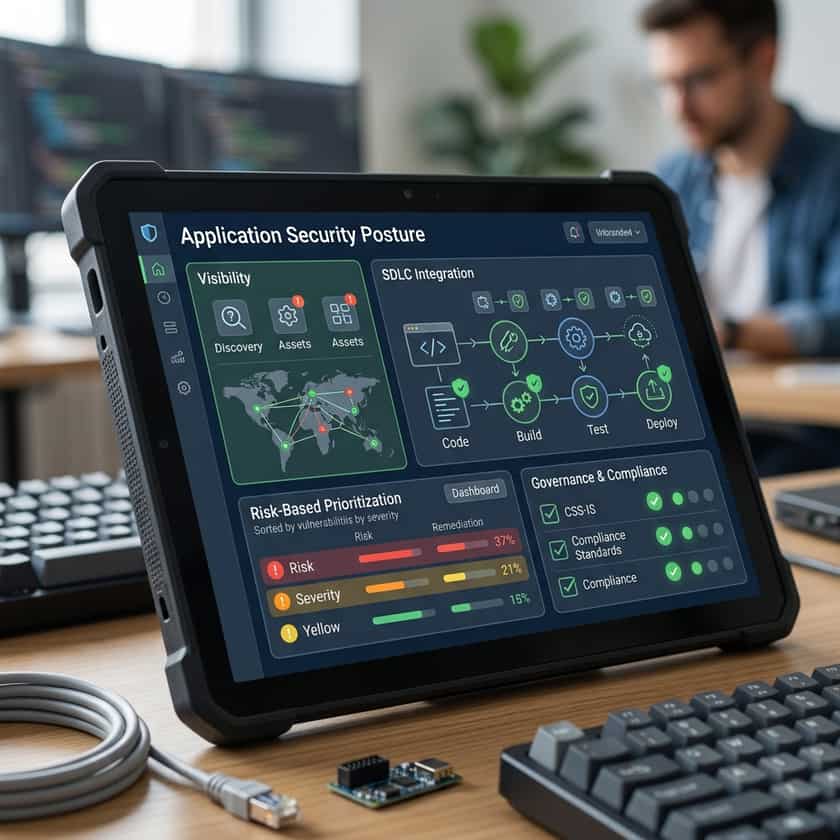
Understanding Application Security Posture
In the fast-evolving digital landscape of 2025, the term Application Security Posture (ASP) has moved from a niche technical concern to a central boardroom priority. Simply put, your application security posture is the aggregate status of your organization's entire application security environment. It acts as a holistic snapshot, detailing the effectiveness of your security controls, the presence of vulnerabilities, and the overall resilience of your software ecosystem. Rather than focusing on a single firewall or patch, ASP demands a view that connects disparate security layers into a unified defense strategy.
Achieving a robust posture requires more than just installing tools; it involves orchestrating a collaborative effort between developers, security operations, and business stakeholders. As organizations scale, they often struggle with a fragmented view of their security, leading to gaps that attackers can exploit. By prioritizing visibility and unified management, businesses can shift from a reactive state of fighting fires to a proactive posture that anticipates threats before they manifest in production environments.
The Challenge of Alert Fatigue and Complexity
One of the most persistent issues facing security teams is the overwhelming volume of alerts generated by modern infrastructure. It is not uncommon for a mid-sized enterprise to process hundreds, sometimes over 500 alerts daily. This constant stream of data creates an environment where critical vulnerabilities are easily buried beneath noise. When security teams spend their time chasing false positives, they lose the ability to focus on strategic improvements, leaving core application components exposed for longer periods than necessary.
Effective application security posture solutions address this by implementing intelligent prioritization frameworks. Instead of treating every vulnerability as an immediate, high-priority emergency, modern systems categorize risks based on their potential business impact. By connecting threat data with application context—such as whether the software handles sensitive customer data or interacts with critical internal databases—security teams can filter out the background noise. This allows for a more focused approach, ensuring that your most valuable digital assets receive the greatest level of protection.
Core Pillars of a Strong Security Strategy
- Continuous Visibility: Maintain an accurate, real-time inventory of all applications, APIs, and microservices in your portfolio.
- Proactive Threat Modeling: Regularly assess how your applications might be attacked and identify the most likely vectors for compromise.
- Automated Compliance Mapping: Simplify the process of mapping your security controls to regulatory frameworks like GDPR or SOC2.
- Unified Governance: Establish clear policies that define security requirements across every stage of the software development lifecycle (SDLC).
- Feedback Loops: Implement rapid communication channels that alert developers to security defects while they are writing code.
Emerging Risks in the Modern Ecosystem
The threat landscape for 2025 is characterized by rapid shifts in technology. Applications are increasingly dependent on third-party libraries, open-source frameworks, and cloud-native services. While these tools enable faster development, they also introduce supply chain risks that are often difficult to detect. A strong posture must account for these external dependencies, ensuring that your security perimeter extends beyond the code written in-house to include the entire ecosystem of integrated software components that power your business.
Furthermore, the rise of AI-driven development and automated coding tools has accelerated the speed at which new features are deployed. While this increases productivity, it also means that security vulnerabilities can be introduced at a faster rate. Maintaining a positive security posture requires adapting to this speed without compromising safety. Integrating security checks directly into the developer workflow—often referred to as 'shifting left'—is no longer optional. It is the most effective way to ensure that security keeps pace with the demands of modern business.
Best Practices for Implementation
Successfully improving your application security posture is an iterative process. Start by auditing your current state to identify the biggest gaps in your visibility and response time. Do not attempt to fix everything at once. Instead, focus on high-impact areas such as API security or critical authentication flows. Engage leadership early, framing security initiatives in the context of business continuity and risk management. When stakeholders understand that security supports the bottom line by preventing costly breaches, it becomes much easier to secure the resources needed for sustainable improvement.