
Navigating the Modern Energy Landscape
In an era of fluctuating utility rates and escalating climate targets, tracking energy consumption is no longer just a facility management task; it is a core business strategy. Commercial buildings, industrial facilities, and even modern residential estates face the challenge of optimizing power, water, and gas usage without sacrificing operational comfort or productivity. Traditional billing cycles provide lagging indicators of resource usage, leaving operators unable to respond to spikes in demand or system inefficiencies until weeks after they occur. Advanced energy management tools solve this visibility gap by transforming raw utility consumption into actionable, real-time intelligence. By adopting a structured approach to monitoring, organizations can establish baseline performance profiles, identify hidden waste, and maintain compliance with evolving environmental standards.
Decoding Energy Management Tools: Hardware vs. Software
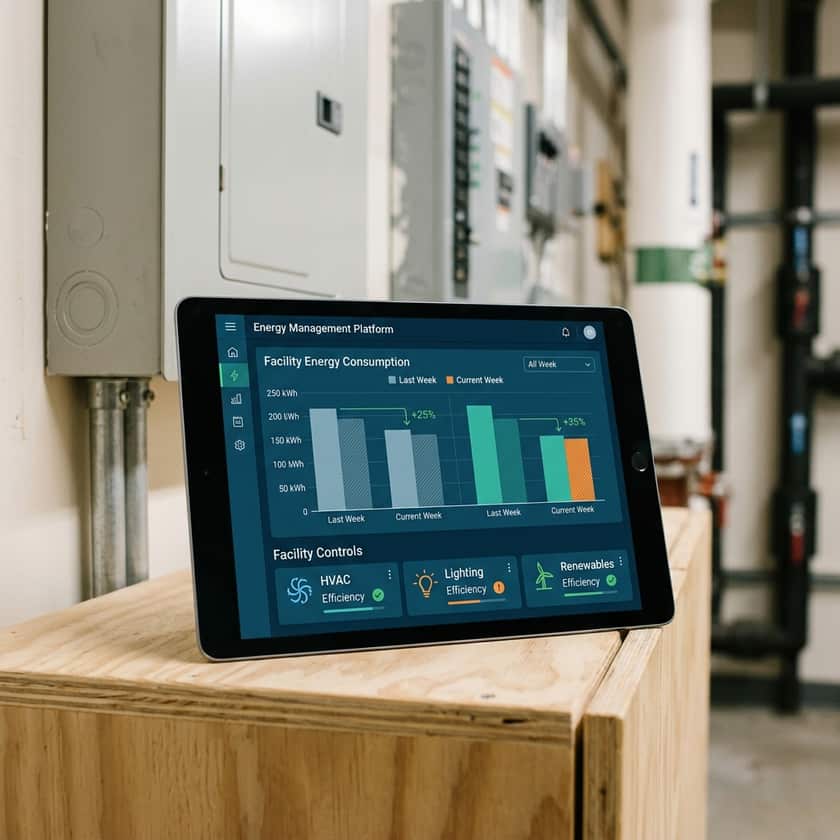
An effective energy management ecosystem relies on a symbiotic relationship between physical data collectors and digital analytical platforms. Hardware devices, such as smart meters, IoT-enabled submeters, and thermal imaging sensors, sit at the front lines of consumption tracking. These units measure physical electrical currents or flow rates at specific intervals, transmitting the data to centralized hubs. On the other side of the equation, software applications serve as the brain of the operation. Energy management software processes these massive datasets, applying algorithms to filter out noise, detect patterns, and visualize consumption trends. Together, these tools bridge the gap between physical operations and corporate decision-making, allowing stakeholders to transition from passive utility payers to active energy managers.
| Category | Primary Function | Key Hardware Components | Key Software Features | Typical Users |
|---|---|---|---|---|
| Utility-Scale | Monitor main building feeders | Smart revenue meters, CT clamps | Billing reconciliation, peak demand alerts | Utility companies, facility directors |
| Submetering | Track specific departments or machines | Branch circuit monitors, gas flow meters | Granular load profiling, cost allocation | Factory floor managers, tenants |
| Enterprise Software | Aggregate data across multiple sites | None (cloud-based API integrations) | Carbon accounting, predictive analytics | Sustainability officers, executive boards |
| Automated Control | Adjust building systems dynamically | Smart thermostats, VFDs, PLC controllers | Scheduled setbacks, load shedding algorithms | Building engineers, automation techs |
Essential Features of Top-Tier Systems
Selecting the right energy management system requires a clear understanding of your organization's specific technical requirements. While basic tracking platforms merely record monthly usage, sophisticated enterprise solutions offer deep diagnostic capabilities. These systems leverage historical weather data, occupancy rates, and production output to contextualize energy fluctuations. For instance, an unexpected spike in cooling energy might indicate a failing compressor rather than simple outdoor temperature changes. By isolating variables, energy software helps maintenance teams prioritize high-impact repairs. Furthermore, automation capabilities allow systems to automatically scale down non-essential lighting or HVAC loads during peak demand pricing windows, dramatically reducing utility expenses without manual intervention.
- Continuous Real-Time Monitoring: Captures energy draw at minute-by-minute intervals for immediate operational visibility.
- Automated Anomaly Detection: Sends instant alerts to maintenance teams when usage exceeds historical baselines.
- Multi-Utility Tracking: Consolidates electrical, natural gas, steam, and water consumption into a single dashboard.
- Predicting Demand Forecasting: Estimates future peak loads to help organizations avoid costly peak-demand surcharges.
- Regulatory Compliance Reporting: Generates structured greenhouse gas emission reports suitable for ESG disclosures.
- Integration API Frameworks: Connects seamlessly with existing ERP and building automation systems to share data.
Strategic Deployment in Five Steps
Deploying an energy management program requires a structured methodology to ensure long-term viability and return on investment. The process begins with a comprehensive energy audit to map out existing utility connections and locate high-consumption equipment. Following the audit, managers establish baseline performance metrics using historical utility bills, establishing a point of comparison for future efficiency gains. The third step involves installing submeters on critical sub-systems like HVAC, refrigeration, and manufacturing lines to eliminate blind spots. Once the data flows, organizations enter the fourth stage: continuous analysis, where analytics software identifies operational anomalies. Finally, teams implement corrective actions, ranging from scheduling changes to physical equipment retrofits, and continually measure the results against their established baseline.
The human element is equally critical to the success of any technological deployment. Technology tools can highlight inefficiencies, but organizational change requires clear communication and stakeholder alignment. Training maintenance personnel to interpret energy dashboards ensures that automated alerts translate into prompt corrective actions on the plant floor. Additionally, presenting simplified energy reports to executive teams helps justify future capital expenditure for energy-efficient upgrades. When sustainability goals are integrated into employee performance metrics and corporate culture, energy management moves from a localized engineering project to a shared organizational mission.
Realizing Financial and Environmental Returns
The return on investment for energy management tools extends far beyond simple cost reduction. While lowering monthly utility bills remains a primary driver, businesses also benefit from extended equipment life cycles. By monitoring power quality and identifying short-cycling equipment, maintenance teams can intervene before a catastrophic failure occurs, reducing costly downtime. From an environmental perspective, precise energy tracking is the cornerstone of any credible corporate sustainability program. Accurate data eliminates greenwashing risks, providing third-party auditors with verifiable proof of carbon reduction efforts. Additionally, participation in utility-sponsored demand response programs allows organizations to earn financial incentives by shedding electrical load during grid emergencies.
Looking forward, the integration of artificial intelligence and machine learning is poised to revolutionize resource management. Next-generation tools will not only report past inefficiencies but will actively predict them, making micro-adjustments to building systems in anticipation of shifting weather patterns or production schedules. As decentralized energy resources, such as solar arrays and battery storage, become standard in modern facilities, energy management tools will play a crucial role in balancing local generation with grid demand. Embracing these advanced platforms today prepares organizations for a highly dynamic, decarbonized energy future where adaptability and real-time efficiency are paramount for survival.