
The Evolution of Modern Energy Management
In an era defined by fluctuating utility rates and escalating climate commitments, tracking electricity, gas, and water consumption has moved from a back-office administrative task to a core operational strategy. Modern energy management tools have revolutionized how businesses and households approach resource consumption. Historically, organizations relied on historical utility bills that offered retrospective views of waste, making it virtually impossible to address structural inefficiencies in real time. Today, sophisticated software integrations and robust hardware networks provide instant, continuous visibility into resource streams across multiple physical facilities. This technological shift enables proactive decision-making, allowing stakeholders to identify sudden anomalies, optimize heavy machinery cycles, and align daily operations with peak-shaving strategies that protect both operational budgets and natural resources.
Core Capabilities of Energy Management Systems
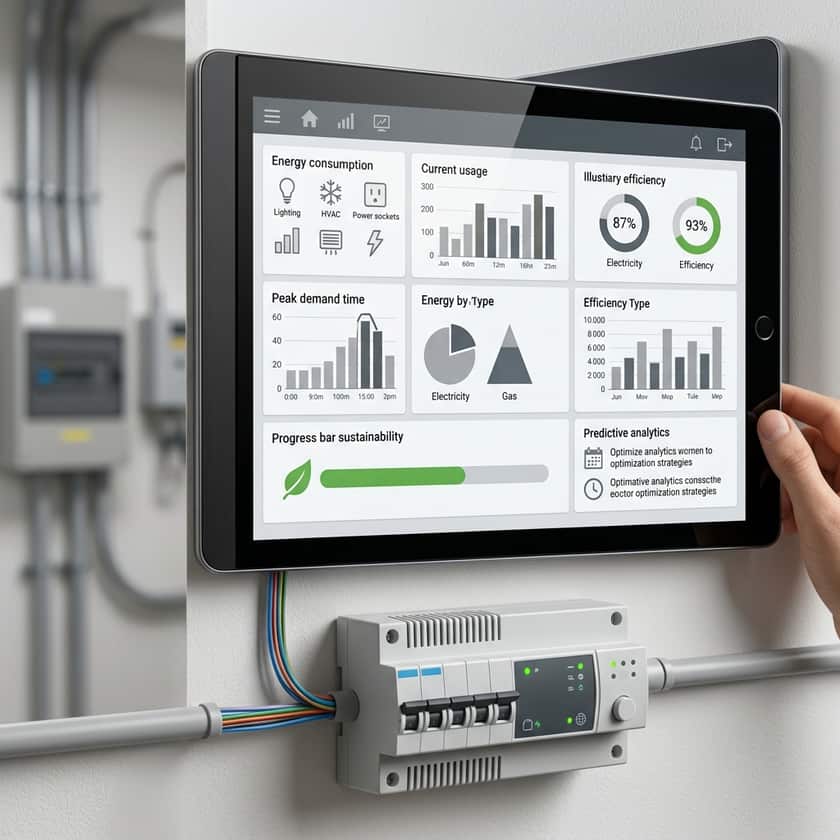
To maximize efficiency, modern energy management solutions rely on a combination of hardware sensors, secure data transmission protocols, and cloud-based analytics dashboards. These platforms continuously collect granular data points from electrical panels, industrial production equipment, and commercial heating and cooling systems. By consolidating this raw, complex data into intuitive, real-time visual interfaces, operators can observe immediate consumption patterns and quickly spot anomalies that indicate machinery malfunctions, physical leaks, or scheduling errors. Furthermore, predictive algorithms utilize historical trends alongside local weather forecasts to anticipate future demand spikes, giving facility managers the precise foresight needed to adjust operational settings before incurring expensive demand charges from municipal utility providers.
- Real-Time Monitoring: Captures utility consumption at sub-minute intervals to highlight immediate operational anomalies.
- Automated Alerting: Dispatches instant notifications via email or SMS when consumption thresholds are breached.
- Customizable Dashboards: Aggregates disparate utility feeds into unified, user-friendly visual panels.
- Predictive Demand Forecasting: Employs historical algorithms to project future load requirements and avoid peak tariffs.
- Compliance Reporting: Generates standardized documentation required for municipal, state, and federal environmental audits.
Comparing Commercial and Residential Solutions
| Metric or Feature | Residential Platforms | Commercial & Industrial Systems |
|---|---|---|
| Primary Hardware | Smart home hubs, plug-in monitors, smart thermostats | IoT sensors, submeters, building automation controllers |
| Data Granularity | Hourly or daily updates on total household draws | Sub-second reporting across specific manufacturing lines |
| Primary Financial Lever | Time-of-use rate optimization and appliance scheduling | Peak demand charge avoidance and power factor correction |
| User Interface Design | Simplified mobile applications for consumer engagement | Comprehensive multi-tenant software with role-based access |
Practical Steps for System Deployment
Deploying an energy management system requires a structured, multi-phase methodology to ensure that capital investments yield maximum operational returns. Organizations must begin by establishing a clear baseline, which involves gathering historical consumption data from the past twelve to twenty-four months. This historical baseline serves as an essential reference point for measuring future savings and validating the efficacy of subsequent efficiency upgrades. Next, technical teams must perform a comprehensive inventory of existing building infrastructure to determine where hardware submeters or IoT sensors are necessary. Selecting software that supports open-source application programming interfaces is critical, as it ensures that the new platform can communicate seamlessly with existing heating, ventilation, and manufacturing control systems without requiring complete equipment replacements.
Overcoming Integration and Compatibility Hurdles
A primary challenge in implementing energy management tools is the presence of fragmented legacy hardware. Older facilities often utilize mechanical utility meters and disconnected climate control units that cannot easily share data with modern digital networks or cloud software. To overcome this hurdle, integration engineers frequently deploy protocol converters and non-invasive external sensor arrays that clamp onto existing wiring to transmit electrical load data without disrupting operations. Additionally, addressing human habits and organizational culture is vital; technical tools only succeed if operational teams actively respond to the insights generated. Providing comprehensive training and demonstrating how energy efficiency simplifies daily routines can significantly accelerate organizational adoption and sustain long-term conservation behaviors.
Evaluating the Financial and Environmental ROI
Investing in comprehensive energy tracking tools delivers measurable financial returns that extend far beyond simple resource conservation. By actively monitoring operational baselines, commercial enterprises can regularly reduce overall utility expenditures by ten to twenty-five percent. These substantial cost savings are achieved by identifying idle-state energy waste, correcting low power factors that trigger penalties, and shifting high-demand processes to off-peak periods when electricity rates are lowest. On an environmental scale, minimizing resource consumption directly reduces greenhouse gas emissions, enabling modern corporations to meet strict sustainability mandates, satisfy investor expectations, and enhance their brand reputation among increasingly eco-conscious consumers and regulatory bodies.
Conducting an Internal Energy Assessment
- Gather previous utility bills to calculate historical baseline consumption patterns.
- Identify major energy-consuming assets, including commercial HVAC systems, server rooms, and heavy production machinery.
- Pinpoint potential waste sources, such as lighting or climate systems remaining active during unoccupied hours.
- Evaluate current physical metering capabilities to see if new IoT submeters are required.
- Establish realistic conservation targets aligned with organizational budget goals and sustainability policies.
The Future of Smart Energy Infrastructure
The landscape of utility management is shifting toward complete automation driven by artificial intelligence and machine learning. Future energy management systems will not simply monitor and alert; they will autonomously optimize building performance. For instance, integrated platforms can automatically modulate climate control systems, adjust intelligent window tints, and coordinate local battery storage systems based on real-time weather changes and utility grid signals. As smart grids expand across the country, organizations utilizing advanced management tools will be uniquely positioned to participate in demand response programs, turning their energy-efficient infrastructures into active revenue generators.