
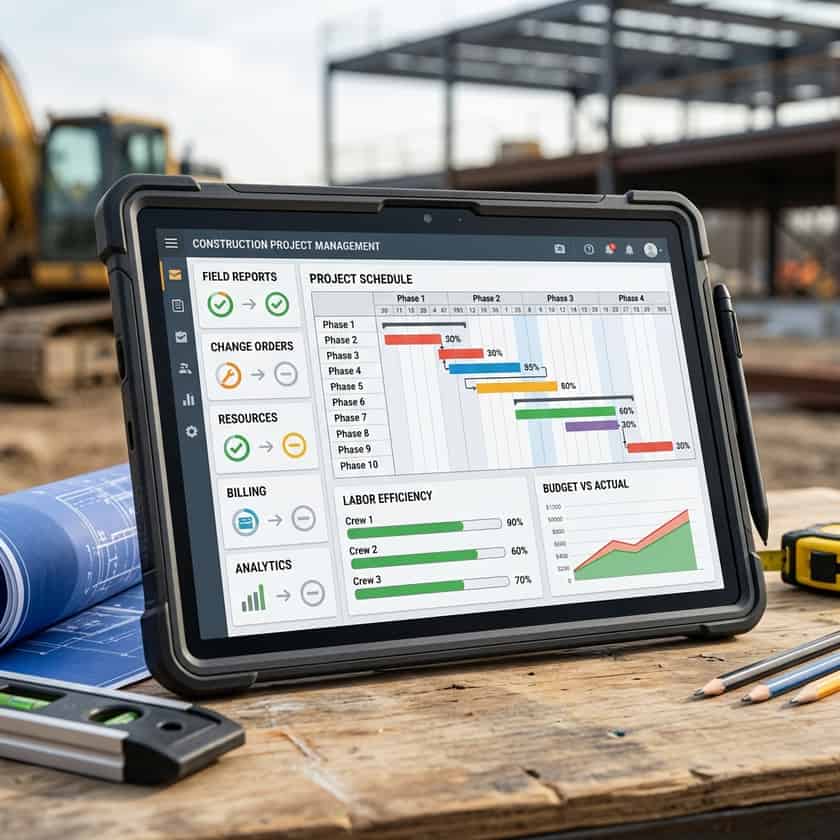
The Evolution of Construction Management Technology in 2026
As the construction industry approaches 2026, the demand for sophisticated, integrated management platforms has never been higher. Firms are moving away from fragmented, manual record-keeping toward centralized digital ecosystems. Skins Construction Software represents a new wave of tools designed to streamline everything from initial bids to final project closeout. Whether you are managing small residential renovations or massive commercial infrastructure projects, the core challenge remains consistent: maintaining visibility over budgets, timelines, and crew resources while navigating tightening regulatory requirements and material availability constraints.
The primary shift we are seeing in 2026 is a focus on data interoperability. Modern construction software must communicate seamlessly with existing accounting systems, CAD software, and field reporting tools. Solutions like Skins are gaining traction not just because of individual feature sets, but because they serve as a 'single source of truth' for the entire project lifecycle. This connectivity minimizes data silos, reduces human error in manual entry, and ensures that the project manager, field crew, and the front office are always operating from the same dataset.
Core Features to Evaluate in 2026 Solutions
When evaluating construction software in the current landscape, it is easy to get distracted by flashy user interfaces. However, true utility is found in the backend capabilities. For firms aiming to scale, the software must handle complex workflows, including sophisticated cost tracking and resource allocation. A robust system in 2026 should move beyond simple task lists, offering predictive analytics that help managers anticipate project delays before they occur. This predictive capability is what separates top-tier solutions from legacy systems that only report on what has already happened.
- Real-time cost estimation that links directly to labor and material price indexes.
- Automated change order management to ensure every scope adjustment is tracked and billed.
- Integrated field reporting tools that allow crew members to upload site photos and logs instantly.
- Seamless accounting integration to sync field expenses with corporate balance sheets.
- Intuitive, user-friendly mobile applications that field staff can adopt without extensive training.
- Advanced billing features that generate professional invoices based on project milestones.
Understanding Pricing Structures and Cost Modeling
Software pricing can be deceptive. While some vendors advertise a flat-rate monthly fee, the true cost of ownership includes implementation, training, and potential integration fees. For a typical mid-sized firm, annual software investment can range significantly, sometimes between $17,000 and $22,500, depending on user count and feature tiers. It is critical to look beyond the initial 'sticker price' and analyze the value of saved labor hours. If a $7,188 investment in software features saves a crew of twenty workers just thirty minutes per week, the annual ROI is almost immediate.
When comparing solutions, consider the 'price per user' model versus 'flat-rate' pricing. Some solutions might cost around $75 per user per month, while others might charge a flat $1,500 monthly fee for unlimited access. Your decision should depend on your scaling plans. If you are a rapidly growing company, flat-rate pricing can protect your budget. However, if your crew size fluctuates seasonally, a per-user model might be more cost-effective during the off-season. Always map out your projected user count for the 2026 calendar year to compare these financial models accurately.
Strategic Implementation for Maximum Adoption
Implementing new software is as much a cultural change as it is a technical one. Many firms fail to realize the benefits of their software investment because the adoption rate is low. The most successful implementation strategies involve 'championing' the technology from the top down. If the project managers and senior leaders do not use the system, the field crew will not either. By 2026, the best solutions have focused on lowering this barrier to entry with cleaner, faster mobile interfaces that make data entry feel like an asset to the field team rather than a chore.
Consider a phased rollout. Start by moving one department or a single high-profile project onto the new platform. This allows you to identify pain points—like specific workflow bottlenecks or connectivity issues—before a company-wide deployment. Training is non-negotiable. Allocate budget for professional training sessions, rather than relying on 'self-taught' methods. In a competitive market where project margins can be thin, the time spent mastering the tools will pay for itself in increased accuracy, fewer billing disputes, and better project outcomes by the end of the year.