
The Evolution of Artificial Intelligence Automation
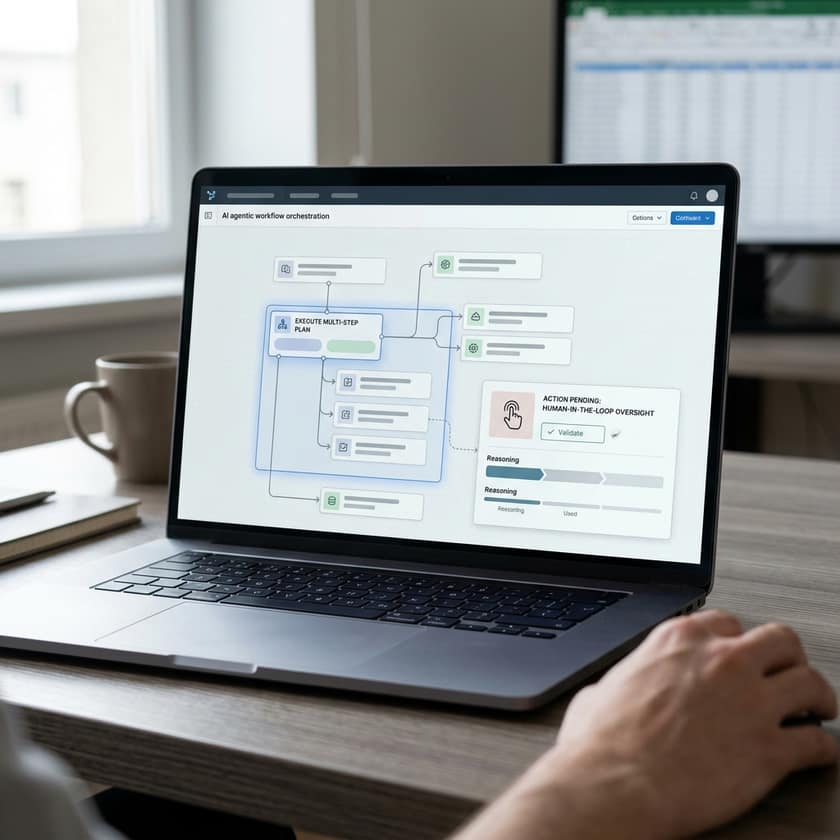
By 2026, the conversation surrounding artificial intelligence has fundamentally shifted. We are no longer discussing mere chatbots or simple script-based automations. Instead, the focus has moved toward 'agentic' workflows—systems capable of understanding intent, planning multi-step processes, and executing complex actions across disparate software environments. This shift represents a maturity in the technology, moving away from experimental pilots and toward deep integration within core business operations. Companies that adopted these early systems are finding that the heavy lifting of data processing and routine decision-making is increasingly handled by intelligent digital agents, allowing human teams to focus on strategy and high-touch customer relationships rather than manual input.
The adoption rates are staggering. Systems that manage 365-day cycles are now commonplace, ensuring that business continuity is not interrupted by human fatigue or operational silos. As these agents become more embedded, the divide between 'work done by people' and 'work done by software' continues to blur. In 2026, the successful organization is defined by its ability to orchestrate these digital workers alongside human talent, creating a symbiotic environment where technology handles accuracy-critical tasks while people provide the ethical oversight and creative direction that machines still struggle to replicate.
Quantifying the Operational Impact
When we look at the metrics defining modern automation, the numbers suggest significant gains in productivity and precision. In many document-heavy sectors, AI automation has pushed accuracy levels toward 90% or higher, significantly reducing the downstream cost of errors that typically plagued legacy systems. Because these tools can process massive datasets in real-time, businesses report a 40% to 60% reduction in the time required to onboard new processes. This is not just about doing the same work faster; it is about enabling new types of services that were previously too labor-intensive or costly to manage at scale.
Furthermore, the concept of 'bottleneck automation' has emerged as a key strategic advantage. Rather than attempting to automate everything at once, organizations are identifying the most constricted points in their value chains—often where data silos prevent communication between departments. By automating the integration of these points, companies are finding they can resolve issues much faster than ever before. This targeted approach has proven effective because it aligns technical upgrades with genuine business needs, ensuring that ROI is measurable within the first few months of deployment rather than years down the road.
Industry-Specific Gains in 2026
- Healthcare: Automated charting and documentation have led to a 75% reduction in manual data entry for nurses, allowing for more direct patient engagement.
- Insurance: Large brokerage firms have saved over 44,000 hours annually by automating policy document reviews and client risk assessments.
- Telecommunications: Improved customer communication and churn prediction models have driven an 18% reduction in subscriber attrition rates.
- Manufacturing: Automated diagnostic tools have successfully resolved 100% of common first-time hardware issues without requiring human intervention.
The Ethical and Operational Balance
While the efficiencies described are compelling, the integration of 2026-era automation requires a disciplined approach to governance. It is not enough to simply 'let the agents do the work.' Because these systems are increasingly autonomous, they require robust monitoring frameworks. We are seeing a move toward 'human-in-the-loop' architectures, where AI handles the bulk of data processing—potentially up to 95% of routine calls or document reviews—but signals a human expert whenever ambiguity arises. This maintains a high standard of accountability, especially in sectors where regulatory compliance is paramount.
This hybrid approach ensures that business leaders remain in control of the 'why' behind their operations, even while the 'how' is automated. Organizations that treat automation as an outsourced black box often find themselves vulnerable to unexpected drifts in output quality. Conversely, those that treat AI as a collaborative partner—one that requires ongoing training, feedback, and supervision—are the ones seeing the greatest long-term success. It is a shift from viewing AI as a replacement for human intellect to viewing it as a force multiplier for human intent.
Looking Ahead to 2027 and Beyond
As we look past the current calendar year, the trajectory for AI automation suggests even deeper integration. We expect to see more 'agent swarms'—where multiple specialized agents collaborate on complex projects—become the standard. For small and medium-sized businesses, the cost of entry is dropping, which will democratize access to these high-level tools. The challenge for the coming years will not be finding the technology, but rather managing the organizational change required to adapt. Companies that prioritize culture, digital literacy, and human-centric design will be the ones to thrive in an increasingly automated landscape.