
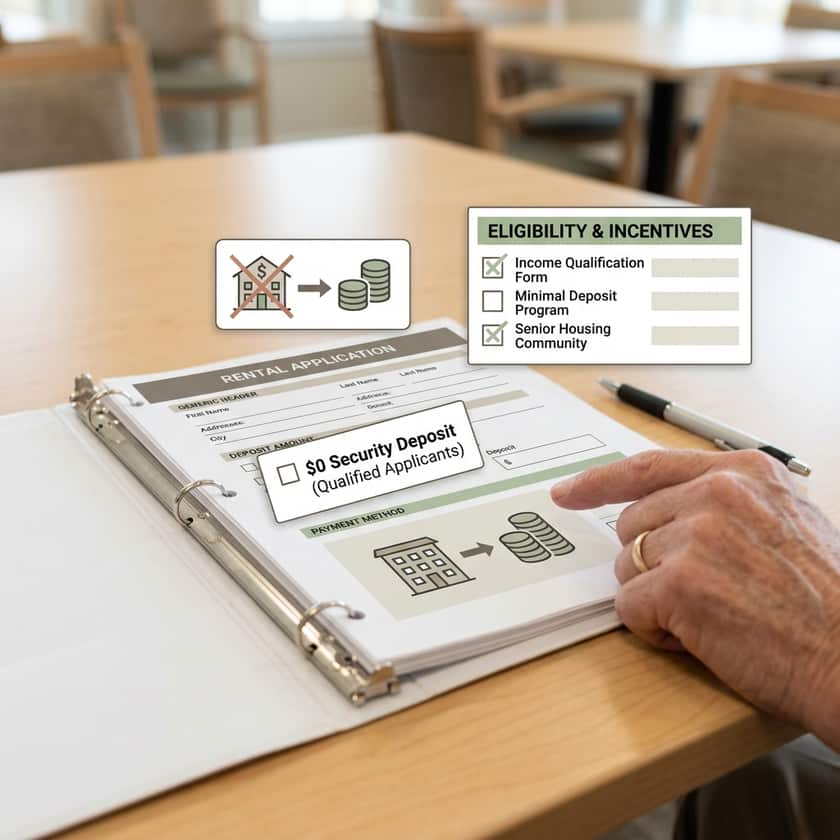
Navigating Security Deposit Options for Low-Income Senior Rentals
For many older adults living on fixed retirement incomes, relocating to a new apartment presents a significant financial challenge. Often, the steepest hurdle is not the monthly rent itself, but the substantial upfront costs required before move-in day. Many leases require a security deposit and other move-in payments, but the amount and timing depend on local law and the individual lease. For seniors relying primarily on Social Security or modest pensions, gathering several thousand dollars at once can feel nearly impossible. Fortunately, the rental market has evolved to offer alternative structures, including properties advertised with low or no upfront security deposits. Understanding how these alternatives operate can help seniors secure safe, affordable housing without depleting their savings.
Demystifying Zero-Deposit and Low-Deposit Rental Terms
When a property is advertised as 'deposit-free' or 'zero-deposit,' it is crucial to recognize that this rarely means there are no financial obligations or risks involved. Landlords still require protection against potential property damage or unpaid rent. Instead of a traditional refundable deposit, these programs usually replace the upfront lump sum with alternative financial products. The most common arrangement involves a third-party service where tenants pay a small, non-refundable monthly fee or a one-time non-refundable premium. While this drastically reduces the initial cash needed to secure an apartment, it does not act as insurance for the tenant. If damage occurs, the tenant remains legally responsible for the repair costs.
Common Alternatives to Traditional Security Deposits
- Surety Bonds: Instead of paying a full deposit, the renter pays a smaller, non-refundable premium to a bonding company, which guarantees payment to the landlord for any damages up to a set limit.
- Monthly Deposit Waiver Fees: Landlords may offer an in-house program where the tenant pays a small monthly, non-refundable fee directly to the property management company in lieu of an upfront deposit.
- Security Deposit Insurance: Third-party insurers cover the landlord's risk, while the tenant pays a low monthly premium that is typically non-refundable.
- Installment Agreements: Some landlords permit renters to spread the traditional security deposit across several monthly installments instead of requiring it entirely upfront.
- Guarantor Programs: Co-signers or specialized institutional guarantors agree to cover potential liabilities, reducing or eliminating the immediate deposit requirement for qualified applicants.
It is vital to emphasize that none of these alternatives are universally available, nor is approval guaranteed for every applicant. Property managers establish their own eligibility rules, and third-party surety or insurance providers will run independent credit and background checks. Furthermore, while these options ease immediate cash-flow constraints, they often represent a higher long-term cost. Non-refundable monthly fees do not accumulate as equity, meaning you will not receive that money back when you eventually move out, unlike a traditional refundable security deposit.
Comparing Traditional Deposits vs. Deposit Alternatives
| Deposit Type | Upfront Cost | Ongoing Cost | Refundability | Tenant Liability |
|---|---|---|---|---|
| Traditional Security Deposit | High (typically 1 to 2 months' rent) | None | Fully refundable if no damage occurs | Responsible for damages exceeding deposit |
| Surety Bond / Insurance | Low (small non-refundable premium) | None or small monthly fee | Non-refundable | Fully responsible to reimburse the bond company for damages |
| Deposit Waiver Fee | None or very low administrative fee | Varies by provider and lease | Non-refundable | Fully responsible for all unpaid rent and property damage |
| Installment Plan | Medium (fraction of full deposit) | Fixed monthly payments until paid off | Fully refundable upon lease termination | Responsible for damages up to and exceeding deposit |
Critical Questions to Ask Before Signing a Deposit-Free Lease
- Is the alternative fee completely non-refundable, or is any portion returned at move-out?
- Am I still legally liable for property damage and unpaid rent, or does the monthly fee cover those costs?
- If I transition to a traditional deposit later in my lease, can I stop paying the monthly alternative fee?
- What credit scores or income ratios are required to qualify for the zero-deposit program?
- Are there separate, non-refundable administrative or application fees associated with this option?
- How does the property manager handle the final walkthrough and damage assessment when I move out?
Asking these questions beforehand can reduce costly surprises. Deposit-alternative fees may not waive responsibility for cleaning, damage, or unpaid rent. Get the terms in writing and keep a signed copy of the lease and any deposit addendum. If possible, have a family member, trusted friend, or legal aid advocate review the terms before you sign.
Strategies to Locate Flexible Deposit Senior Housing
Finding landlords who offer flexible security deposit terms requires a proactive approach. When searching online rental portals, utilize keywords such as 'deposit-free,' 'no security deposit,' or 'flexible deposit options.' Many modern property management companies list these features prominently to attract reliable tenants. However, you should also look beyond standard commercial listings. Local public housing authorities (PHAs) and non-profit senior advocacy organizations frequently maintain directories of affordable housing options tailored specifically for older adults. Programs such as HUD's Section 202 may use program-specific rent and deposit policies; applicants should confirm current terms, waitlist status, and availability with the property or local housing agency.
Utilizing Local Financial Assistance and Grants
If a desirable rental requires a traditional security deposit and does not offer deposit-free alternatives, don't lose hope. Some communities and nonprofit organizations may offer help with upfront moving costs, depending on current funding and local rules. Community action agencies, area agencies on aging, and local nonprofit organizations may know of current rental or deposit-assistance resources. These programs are typically needs-based, require proof of income, and depend heavily on current funding availability. Exploring these community-based resources can provide the necessary financial bridge to help you secure a safe and comfortable home without compromising your long-term financial stability.