
The Hidden Cost of Standardized Workflows
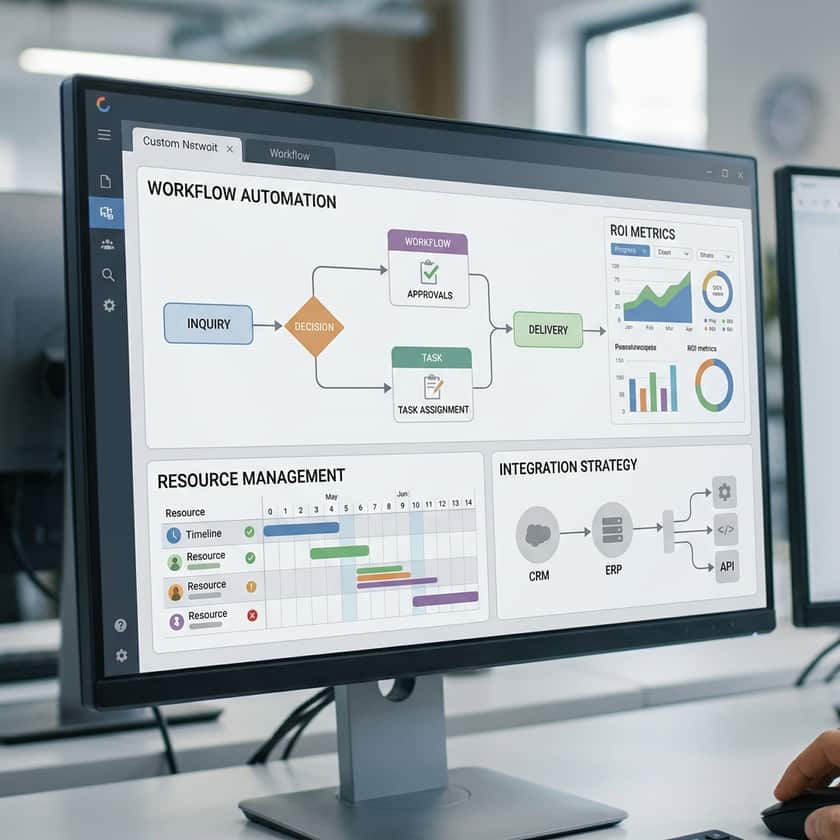
Many professional firms rely on off-the-shelf software solutions that promise universal utility but often deliver fragmented results. These generic tools frequently force businesses to adapt their internal processes to fit the software's limitations, rather than the other way around. This misalignment creates a phenomenon often described as 'busywork creep.' As your organization scales, administrative chores that were once manageable begin to multiply, consuming valuable time that could otherwise be spent on high-value, billable client projects. Without a centralized or tailored approach, staff members frequently lose hours each week toggling between incompatible platforms, leading to data silos and missed opportunities.
Quantifying the Impact of Automation
When businesses transition to custom software solutions, the objective is rarely just convenience; it is a fundamental shift in operational capacity. By analyzing internal workflows, firms can identify specific bottlenecks where automation can replace manual labor. Data suggests that reclaiming even 20 to 30 hours per week through smarter system architecture translates directly into increased project throughput. For many professional services, this recovered capacity allows teams to take on 10 to 14 additional projects annually. The financial impact is significant, often resulting in six-figure revenue gains that would remain inaccessible without specialized, integrated technical support.
| Firm Type | Hours Saved/Week | Extra Projects/Year | Projected Revenue Gain |
|---|---|---|---|
| Davis Interiors | 30 | 14 | $195,721 |
| Design Etch Group | 25 | 12 | $186,400 |
| Creative Studio | 20 | 10 | $156,294 |
Strategies for Selecting Bespoke Software Solutions
Investing in custom build software requires a strategic audit of your current tech stack. Start by identifying the most repetitive, low-value tasks that consume the majority of your team’s weekly focus. These are usually the primary candidates for automation. Consider the total cost of ownership—not just the initial development fees, but the ongoing maintenance and the potential for scalability. A well-designed system should grow alongside your firm, accommodating new service lines or increased client volume without requiring a complete rebuild. Integration with existing databases is also non-negotiable; your new tools should communicate seamlessly with your legacy systems to avoid creating new data management hurdles.
- Automated Client Onboarding: Reduce manual data entry by using custom portals that feed directly into project management dashboards.
- Centralized Resource Allocation: Track staff availability and project deadlines in one unified interface to prevent over-commitment.
- Dynamic Reporting Tools: Generate real-time financial insights to monitor billable hours and project margins instantly.
- Secure Communication Hubs: Keep internal feedback loops and client communications within a single, audit-friendly environment.
Balancing Costs and Scalability
While development costs can fluctuate, many firms find that the 'added capacity' often pays for the software itself within the first year. For example, adding just a few extra billable projects annually can offset the initial investment, potentially adding tens of thousands of dollars to the bottom line. However, it is vital to balance cost-efficiency with necessary functionality. Avoid 'feature creep,' where you try to include every possible tool at once. Focus instead on a Minimum Viable Product (MVP) that solves your most immediate pain points, then iterate based on user feedback. This measured approach ensures that your software budget is allocated to features that deliver measurable ROI.