
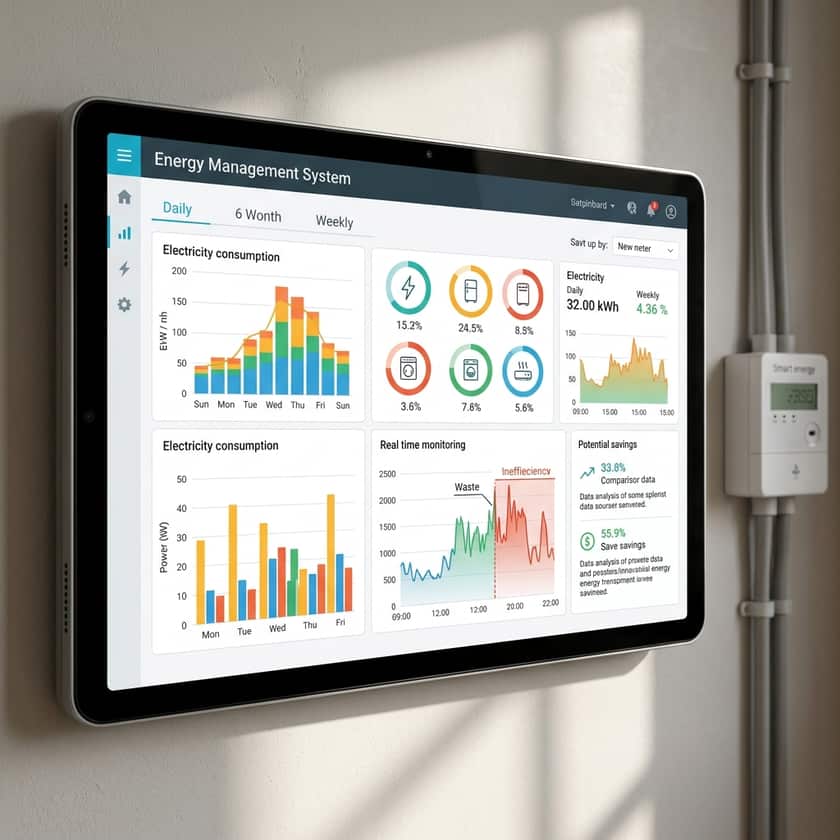
Energy management has evolved from simple manual meter reading to sophisticated digital ecosystems. Modern energy management tools provide actionable data that allows users to visualize their consumption patterns in real-time. By connecting directly to utility meters or using smart plugs and environmental sensors, these solutions translate raw data into clear, manageable metrics. Whether you are looking to optimize a smart home or manage the complex power loads of a commercial building, the right set of tools can identify inefficiencies that are often invisible to the naked eye. Reducing energy consumption is not merely about turning off lights; it is about strategic planning and continuous monitoring of building performance.
The Fundamentals of Energy Benchmarking
Before you can improve, you must measure. Benchmarking is the process of comparing your building's energy performance against national medians or your own historical data. Tools that offer automated benchmarking are essential for identifying 'energy hogs' within a property. For instance, commercial buildings might see improvements of up to 15 percent or more by simply addressing maintenance issues identified through benchmarking reports. By tracking data from 2018 or earlier, facility managers can establish a baseline. This context helps differentiate between seasonal fluctuations and genuine waste. Without a proper benchmark, you are essentially flying blind, unable to verify if your retrofits or behavior changes are having the intended impact on your monthly utility costs.
Leveraging ISO 50001 Standards for Efficiency
For organizations seeking a rigorous framework, ISO 50001 provides the gold standard for energy management systems. While often associated with large industrial operations, its principles are increasingly applied to smaller commercial settings. The standard emphasizes a continuous improvement cycle: planning, doing, checking, and acting. Tools that support ISO 50001 compliance often integrate features like automated alerts, reporting dashboards, and audit logs. By adopting these structured methodologies, managers can often reduce energy intensity by significant margins. Implementing this system requires a cultural shift, moving away from passive energy acceptance toward active management. It turns energy from an unavoidable overhead expense into a controllable variable, much like inventory or labor costs.
The barriers to entry for advanced energy management are lower than ever. Whereas older systems required massive, specialized servers, modern software-as-a-service (SaaS) platforms operate in the cloud, offering accessibility from anywhere. In many cases, these platforms aggregate data from over 100 different points in a single facility. Whether it is tracking a single family-sized dwelling or a large office complex, the objective remains the same: data transparency. These tools often integrate with existing building automation systems, allowing for remote overrides of HVAC or lighting schedules. This integration is critical because it bridges the gap between seeing a problem in the data and actually fixing it.
Key Features to Look For
- Real-time monitoring that updates at least every 60 seconds for accurate load tracking.
- Automated alerts that trigger when energy usage exceeds a pre-defined threshold.
- Integration compatibility with current smart devices, utility meters, and solar inverters.
- Intuitive visualization tools that present usage data in simple, actionable charts.
- Mobile access so you can monitor and manage your facility from any location.
- Scalability, allowing you to add more sensors or buildings as your portfolio grows.
Quantifying Potential Savings
It is estimated that up to 30 percent of energy consumed in the average building is avoidable waste. This inefficiency often stems from equipment running when not needed, poor insulation, or systems operating outside of optimal parameters. Energy management tools help capture these losses. For example, residential tools can help homeowners identify 'vampire loads'—devices that draw power even when turned off. By addressing these small but constant drains, users can see a measurable drop in their monthly bills. Furthermore, tools that calculate savings from upgrades—such as switching to LED lighting or adding attic insulation—can provide a clear return on investment timeline, helping users prioritize projects that offer the fastest payback period.
| Focus Area | Tool Utility | Typical Impact |
|---|---|---|
| HVAC Systems | Schedule Optimization | Moderate/High |
| Lighting | Motion/Daylight Sensors | Moderate |
| Plug Loads | Smart Outlet Tracking | Low/Moderate |
| Water Heating | Flow/Temp Regulation | Moderate |
| Building Envelope | Leak Detection | High |
As technology matures, the integration of artificial intelligence and machine learning is making energy management even more precise. Systems can now predict demand based on weather forecasts, occupancy patterns, and historical trends. This predictive capability allows the tools to pre-cool or pre-heat buildings, taking advantage of lower utility rates or better efficiency windows. The ultimate goal of these tools is to make the management process invisible. Instead of a facility manager manually checking dashboards all day, the system operates autonomously, only alerting staff when an anomaly is detected. This shift from reactive monitoring to proactive management is the most significant trend in the industry today, promising a more efficient and sustainable future for our built environment.