
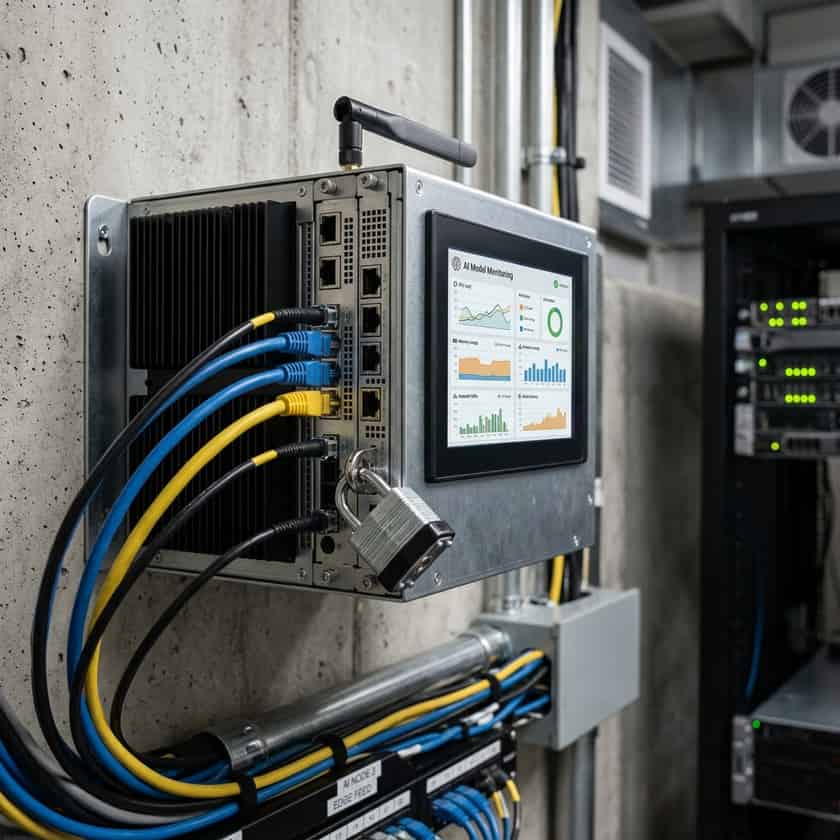
Understanding Remote AI Management
Remote AI management refers to the practice of overseeing, updating, and monitoring artificial intelligence models and infrastructure from decentralized locations. As businesses increasingly adopt AI solutions, the need to manage these complex systems without being physically present at a server site has grown substantially. This practice involves utilizing cloud-based dashboards, secure remote access protocols, and automated orchestration tools to maintain system health. Whether deploying small-scale machine learning models or managing vast enterprise neural networks, the ability to perform maintenance tasks remotely is critical for modern operational agility.
Beyond simple maintenance, effective remote AI management encompasses performance tuning, data drift detection, and security auditing. Because AI models are dynamic entities that often require real-time adjustments based on incoming data streams, the management layer acts as the bridge between raw data processing and actionable insights. By leveraging centralized management systems, IT administrators can ensure consistent performance across global environments, minimizing downtime and reducing the friction often associated with on-premises hardware management. This shift toward remote control allows organizations to scale their AI capabilities more efficiently and respond rapidly to emergent technical challenges.
Key Components of Effective Remote Operations
To successfully manage AI systems remotely, infrastructure teams must rely on several core components. Automation is perhaps the most significant pillar, enabling the scheduling of routine updates and system health checks without human intervention. Monitoring tools that provide real-time alerts are equally vital; they allow administrators to visualize performance metrics and latency issues from anywhere in the world. Furthermore, the use of containerization technology, such as Docker or Kubernetes, has revolutionized how we deploy and manage AI models by ensuring consistency across different environments, regardless of the underlying hardware specifics.
- Cloud-native orchestration platforms for scalable deployment.
- Secure VPNs or Zero Trust access architectures for remote connectivity.
- Automated monitoring and alerting systems to detect model drift.
- CI/CD pipelines designed specifically for machine learning models.
- Version control systems to manage training data and model weights.
- Comprehensive audit logs to track configuration changes and access.
Security Considerations in Remote Environments
Security is the paramount concern when exposing AI management interfaces to remote networks. Unlike traditional software, AI systems often contain sensitive data or valuable intellectual property in the form of trained models. Access to these systems must be strictly controlled through multi-factor authentication (MFA) and granular role-based access control (RBAC). Protecting the management pipeline—the path through which administrators push updates or query models—is essential to prevent malicious actors from injecting adversarial inputs or unauthorized configurations into the system. Security protocols must evolve as quickly as the AI models themselves to combat emerging threats effectively.
| Strategy | Primary Benefit | Security Level |
|---|---|---|
| On-Premises | Total Control | High (Air-Gapped) |
| Cloud-Hybrid | Scalability | High (With Proper Config) |
| Fully Cloud | Ease of Use | Dependent on Provider |
| Edge-Compute | Low Latency | Requires Hardened Hardware |
Challenges and Future Trends
Despite the advantages, remote management of AI is not without its difficulties. Network latency remains a significant barrier for models that require real-time processing, as the data transit time between the edge device and the management server can impact accuracy. Additionally, managing the lifecycle of AI models—ensuring that production models do not degrade over time due to data changes—requires continuous oversight and sophisticated automated retraining loops. As machine learning models become larger and more complex, the industry is shifting toward federated learning and decentralized management architectures to mitigate these bandwidth and latency issues.
Looking ahead, the integration of autonomous agents for system maintenance is on the horizon. These AI-driven management tools will increasingly be able to self-diagnose performance issues, optimize resource allocation, and even roll back problematic updates without manual oversight. While human expertise will remain vital for high-level strategy and ethical oversight, the day-to-day administration of AI systems will become progressively more automated. Organizations that invest in robust remote management frameworks today will be best positioned to take advantage of these emerging capabilities while maintaining security and operational continuity in an increasingly digital world.