
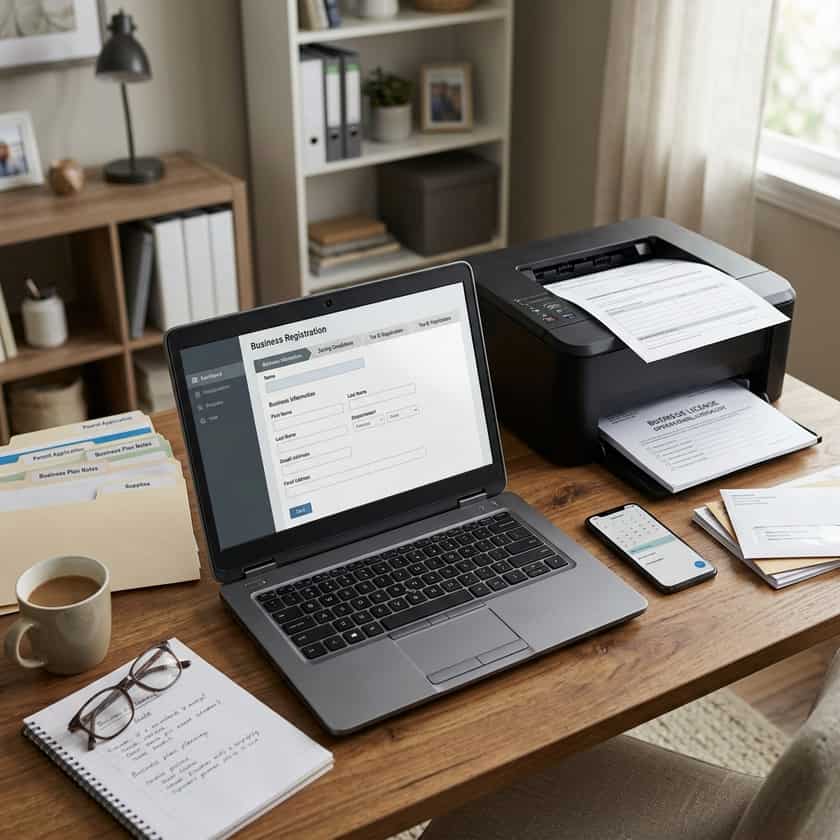
The Rise of Home-Based Entrepreneurship
Launching a business from the comfort of your home is an aspiration for millions of Americans, fueled by the flexibility of modern technology and the desire for greater professional autonomy. The transition from a traditional employment model to entrepreneurship involves a significant shift in mindset, logistics, and daily operations. While the allure of setting your own schedule is undeniable, success requires a structured approach that moves beyond simple ambition. Understanding the market, your personal capacity, and the fundamental administrative needs of a home-based entity provides the foundation necessary for sustainable growth. This guide outlines the essential steps required to move your venture from concept to execution.
Defining Your Business Concept
Before you invest money or significant time, you must validate your business idea. Many aspiring entrepreneurs fail because they focus on products or services they enjoy rather than those the market demands. Start by analyzing your specific skills and how they intersect with a profitable niche. Ask yourself if your proposed service or product solves a genuine problem or fulfills a specific need that others are willing to pay for. Conduct simple market research by looking at competitors, pricing models, and customer reviews. If you find existing businesses thriving in your chosen area, it is usually a sign of a healthy market, provided you can differentiate your offering through unique quality or service.
Planning and Legal Requirements
Formalizing your business is a non-negotiable step for any venture operating in the United States. While sole proprietorships are the simplest entry point, many home-based entrepreneurs choose to form a Limited Liability Company (LLC) to protect personal assets from business liabilities. You will need to check with your local jurisdiction regarding zoning laws, as some residential areas have specific regulations concerning commercial activity within the home. Additionally, obtaining the necessary business licenses and permits is vital for compliance. This is also the stage where you should separate your finances. Open a dedicated business bank account immediately to track revenue and expenses, ensuring you are prepared for tax obligations.
- Register your business name with the state or local clerk.
- Obtain a Federal Employer Identification Number (EIN) if you have employees.
- Research local zoning requirements and homeowner association rules.
- Draft a basic business plan outlining revenue goals and operational costs.
- Set up a dedicated business bank account to avoid commingling funds.
- Consult with a tax professional regarding home office deductions.
Setting Up a Productive Workspace
The physical environment of your home office plays a critical role in your productivity and professional mental state. Creating a designated zone—even if it is just a corner of a room—helps establish boundaries between your personal life and professional obligations. This physical separation is vital for maintaining focus during work hours and allowing you to disconnect at the end of the day. Invest in ergonomic furniture and reliable technology to ensure your daily workflow remains efficient. Poor lighting or uncomfortable seating can quickly lead to fatigue, which negatively impacts decision-making and productivity over time. Treat your home workspace as a professional asset rather than an afterthought.
| Factor | Key Consideration | Impact on Business |
|---|---|---|
| Connectivity | High-speed, stable internet | Maintains communication and sales flow |
| Ergonomics | Chair and desk height | Prevents long-term strain and injury |
| Zoning | Dedicated space allocation | Reduces distractions, improves focus |
| Security | Data backups and passwords | Protects client and business information |
Marketing and Financial Reality
Marketing is the engine that drives your revenue. For a home-based business, leverage digital channels to build visibility without requiring a significant physical retail footprint. Social media presence, content marketing, and email campaigns are effective, low-cost ways to reach your target audience. Focus on consistency rather than just intensity. Regarding finances, maintain a realistic view of profitability. You may spend the first 25 to 30 percent of your effort purely on lead generation and administrative work, which does not immediately yield profit. Keeping a tight control on overhead costs is your biggest advantage as a home-based owner. Do not overspend on expensive software or equipment until your cash flow supports it.
Remember that growth is incremental. It is common for new owners to become discouraged when the paycheck is not immediate or consistent. Successful entrepreneurs view these early periods as an investment in the system they are building. By tracking your progress, adjusting your marketing tactics based on data, and staying committed to the plan, you create a sustainable business model. Stay disciplined, manage your time as if you were reporting to a manager, and continue to refine your service or product based on direct customer feedback. The transition requires resilience, but the payoff of building your own future is significant.