
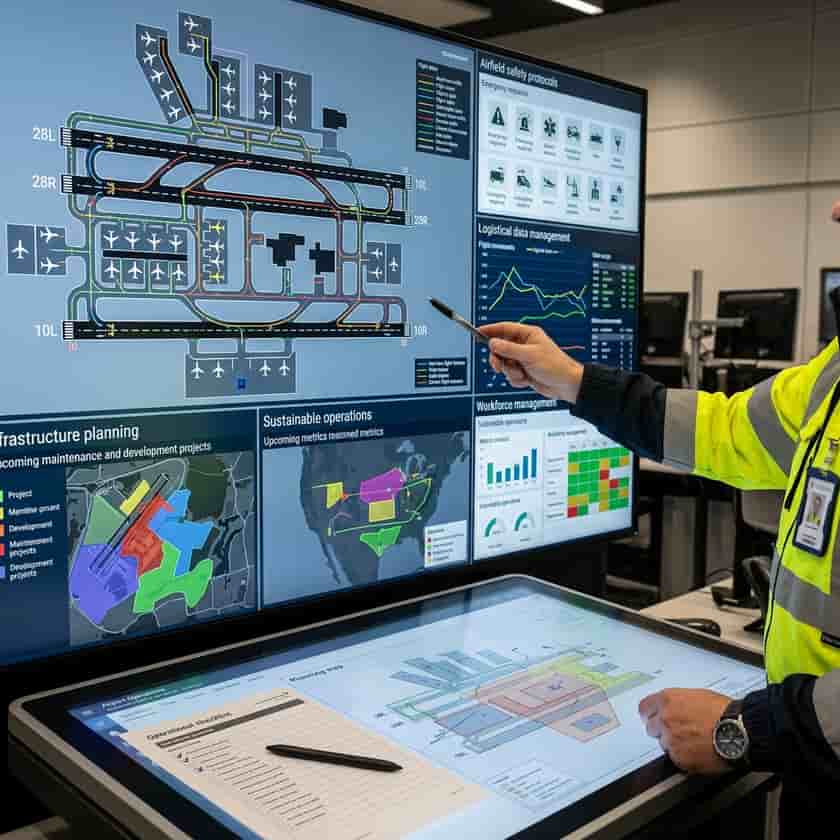
The Complex Ecosystem of Modern Airports
An airport is far more than a terminal for boarding planes. It is a highly specialized, self-contained city that operates twenty-four hours a day, seven days a week. At its core, an airport functions as a critical logistics hub, requiring the seamless synchronization of thousands of moving parts. From air traffic control towers to the maintenance of miles of runway, every system is designed to prioritize safety and efficiency. Understanding the sheer scale of these operations helps explain why modern aviation remains a marvel of engineering. Whether managing passenger flow or ensuring the stability of critical infrastructure, the work conducted behind the scenes is what makes global connectivity possible.
Critical Operational Infrastructure
The physical maintenance of an airport is a monumental task. Unlike standard roadways, runways and taxiways are subjected to extreme pressure from heavy aircraft and must be maintained to rigorous international standards. This infrastructure requires specialized engineering teams that monitor pavement integrity, lighting systems, and drainage to prevent any hazards. Furthermore, the operational side involves advanced security systems, extensive utility grids for power and water, and complex baggage handling networks. These systems often operate largely unnoticed by travelers, but they are the foundational elements that allow the entire airport ecosystem to function effectively under high-pressure conditions.
| Department | Primary Focus | Operational Impact |
|---|---|---|
| Airport Fire & Rescue | Emergency Response | High |
| Facility Maintenance | Infrastructure Upkeep | Medium/High |
| Ground Operations | Logistics & Flow | High |
| Security Services | Passenger & Asset Safety | Very High |
The Human Element: Building a Diverse Workforce
One of the most impressive aspects of any major airport is the human capital required to run it. A typical hub employs a massive, multicultural workforce where employees from dozens of different nations collaborate daily. This diversity is not just a cultural feature; it is an operational necessity. Effective airport management relies on the ability to communicate across barriers, handle complex cultural dynamics, and maintain a unified commitment to safety protocols. Training programs for these teams are rigorous and continuous, ensuring that every individual understands their role in the broader safety charter. The synergy created by this international team is essential for operational success.
Strategic Management and Capital Planning
Managing an airport requires looking years, sometimes decades, into the future. Strategic management teams engage in massive capital projects to anticipate changing global travel trends and aircraft technology. These investments are often measured in the billions and involve complex planning to ensure that expansions do not disrupt current operations. From upgrading terminal facilities to implementing new sustainable energy sources, the planning cycle is constant. Leadership must balance immediate operational demands with long-term goals for growth, sustainability, and technological integration, ensuring that the airport remains a competitive and viable asset for the decades to come.
Environmental Sustainability and Community Impact
Modern airports are increasingly focused on reducing their environmental footprint. This involves balancing growth with community responsibility. Initiatives often include noise abatement programs, investment in electric ground service equipment, and large-scale waste management systems. Because airports occupy such massive footprints, their impact on local ecosystems can be significant. Consequently, management teams work closely with environmental regulators to ensure that expansion projects meet strict sustainability benchmarks. By integrating green technologies, airports are not only improving efficiency but also fostering better relationships with the surrounding communities that host these critical transit hubs.
Technology Integration in Airfield Operations
Technology acts as the nervous system of an airport. Digital platforms are now used to track everything from baggage movement to real-time aircraft positioning. Data-driven decision-making allows operational managers to predict potential bottlenecks before they happen, adjusting staffing and gate allocation dynamically. Automation in security lanes and check-in kiosks has significantly enhanced passenger throughput, though these systems require dedicated IT and cyber-security teams to maintain integrity. As airports look toward the next decade, the focus is shifting toward AI-enhanced logistics and smart infrastructure that can adapt to changing traffic volumes in real-time, further increasing overall safety and reliability.
Navigating Careers in Aviation
- Airfield Operations: Focuses on runway safety, wildlife control, and daily ground coordination.
- Terminal Management: Involves customer experience, passenger flow, and facility cleanliness.
- Aviation Security: Dedicated to regulatory compliance, surveillance, and threat assessment.
- Logistics & Cargo: Managing the complex movement of goods through air freight channels.
- Capital Infrastructure: Engineering roles dedicated to planning and maintaining airport structures.
- Human Resources & Training: Managing the complex, multi-national workforce and safety certification.