
Navigating Your Journey to Affordable Dental Implants
Losing one or more teeth can profoundly impact a person's life, affecting everything from basic speech and dietary options to personal confidence and overall oral health. While traditional tooth-replacement solutions such as removable dentures and dental bridges offer functional fixes, dental implants have emerged as the premier long-term alternative. A dental implant consists of a tiny titanium post that acts as a natural tooth root, surgically placed and fused directly into the jawbone. This post is eventually topped with a custom-crafted prosthetic crown designed to match your surrounding teeth perfectly. For individuals across the United States searching for accessible dental care, understanding how to locate reputable local providers, compare pricing structures, and evaluate flexible payment options can make this exceptional restorative treatment highly accessible and affordable.
Breaking Down the Average Costs of Implant Procedures
The complete financial investment required for dental implants can vary widely due to an array of clinical and geographic factors. In the United States, patients routinely encounter price estimates that reflect the unique complexity of their dental health, the geographic location of the practice, and the specialist's level of advanced training. A standard single implant procedure is composed of three separate elements: the medical-grade implant post, the custom abutment connector, and the final porcelain crown. Additionally, preliminary treatments like bone grafting to strengthen the jawbone, sinus lifts, or extraction of damaged teeth will affect the total cost. By breaking down these individual components, patients can approach providers with confidence, identify where potential cost savings exist, and avoid hidden fees.
| Procedure Type | Average Cost Range | Key Considerations | Estimated Longevity |
|---|---|---|---|
| Single Dental Implant | $3,000 - $4,500 | Includes post, abutment, and crown. | 25+ years with proper care |
| Implant-Supported Bridge | $5,000 - $15,000 | Replaces multiple missing teeth in a row. | 15 - 20 years |
| Full-Arch Rehabilitation | $12,000 - $25,000 per arch | Often referred to as All-on-4 systems. | 20+ years |
| Bone Grafting (Optional) | $200 - $1,000 | Necessary if jawbone density is insufficient. | Permanent integration |
The Multi-Stage Timeline of the Treatment Plan
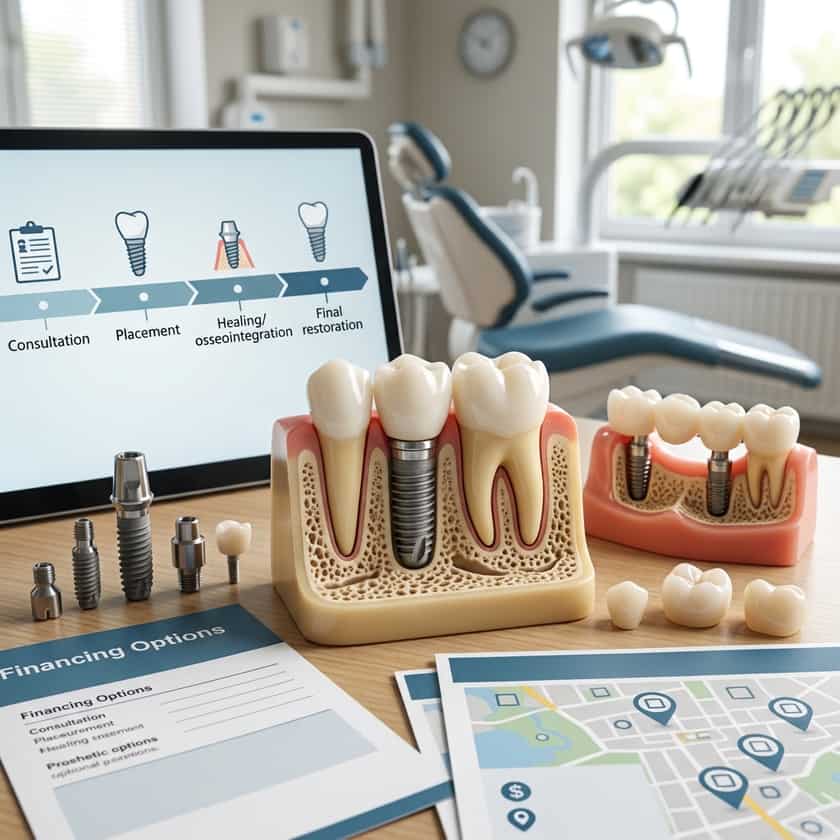
Unlike routine dental procedures that are completed in a single afternoon, receiving a dental implant is a sophisticated, multi-stage journey that typically unfolds over several months. The process begins with a comprehensive clinical evaluation and advanced digital imaging to evaluate the density of your jawbone. Once cleared for surgery, the titanium post is carefully placed. This is followed by a crucial healing phase lasting three to six months, known as osseointegration, during which the surrounding bone tissue fuses permanently with the metal post. Once stable, the abutment is attached, and after a brief healing period, your final custom-designed crown is securely anchored. This deliberate, paced timeline ensures maximum structural integrity, yielding a highly durable replacement that can last a lifetime.
How Modern Dental Technology Impacts Overall Pricing
Advancements in dental technology play a crucial role in determining the cost and efficacy of your implant procedure. Many modern clinics utilize state-of-the-art 3D cone beam computed tomography (CBCT) scans, which allow dentists to construct highly precise digital models of your jawbone and nerve pathways. While these diagnostic tools might increase the upfront cost of your initial assessment, they greatly minimize the risk of complications and implant failure. Computer-guided surgery is another innovation where a custom guide is printed to place the implant with extreme accuracy. Investing in these advanced techniques ensures a smoother recovery and safeguards your long-term financial and physical well-being.
Smart Strategies to Discover Cost-Effective Providers Near You
Locating competitive rates for dental restorations requires active research and comparative shopping across local clinics. Because dental fees are not standardized nationwide, clinics located in different neighborhoods or adjacent towns may offer vastly different pricing models for the exact same medical procedure. Patients are highly encouraged to schedule consultations with multiple credentialed oral surgeons, prosthodontists, or general dentists who specialize in implantology. Additionally, considering regional dental schools or university residency programs can lead to major savings, as these institutions offer exceptional care supervised by board-certified faculty at a fraction of standard commercial rates. Taking the time to explore multiple avenues ensures you receive superior care at a reasonable price point.
Key Financing and Savings Options to Consider
- Dental Insurance Verification: Check if your policy offers partial coverage for diagnostic work, preparatory extractions, or custom crowns.
- In-House Clinic Savings Plans: Many modern dental offices provide proprietary membership programs that deliver flat-rate discounts on major restorative work.
- Flexible Spending Accounts (FSA/HSA): Utilize pre-tax medical savings accounts to pay for qualified out-of-pocket dental costs, maximizing your tax savings.
- Third-Party Medical Financing: Services like CareCredit or Proceed Finance offer zero-interest or low-APR promotional payment plans designed for medical care.
- Dental School Clinics: Access high-caliber dental work performed by advanced students and residents overseen by veteran dentists at discounted rates.
Critical Questions to Ask During Your Initial Consultation
Your initial consultation is the most critical window of opportunity to protect your budget and establish complete financial clarity. Some aggressive regional advertisements showcase exceptionally low prices that only represent the surgical placement of the post itself, leaving out the costs of the vital connector abutment, the final crown, or necessary initial 3D imaging. When meeting with a potential provider, request a comprehensive, written treatment plan that outlines every single fee from diagnostic scanning to the final placement. Ask direct questions regarding the provider's specific training, the brand and quality of materials they utilize, and what remedial protocols are in place if the implant fails to integrate.
Evaluating the Long-Term Financial Value of Implants
While the initial capital required for dental implants is typically higher than that of removable dentures or fixed dental bridges, their long-term clinical and financial value is unmatched. Traditional bridges generally require replacement every seven to fifteen years and necessitate the permanent grinding down of adjacent healthy teeth. Similarly, removable dentures often require periodic professional relines, special adhesive creams, and replacement over time, while failing to prevent the bone loss that naturally occurs when teeth are missing. Dental implants stimulate the jawbone, preserving your natural facial structure and offering unmatched chewing stability. When analyzed over several decades, implants represent a highly cost-effective and life-improving investment in your long-term health.