
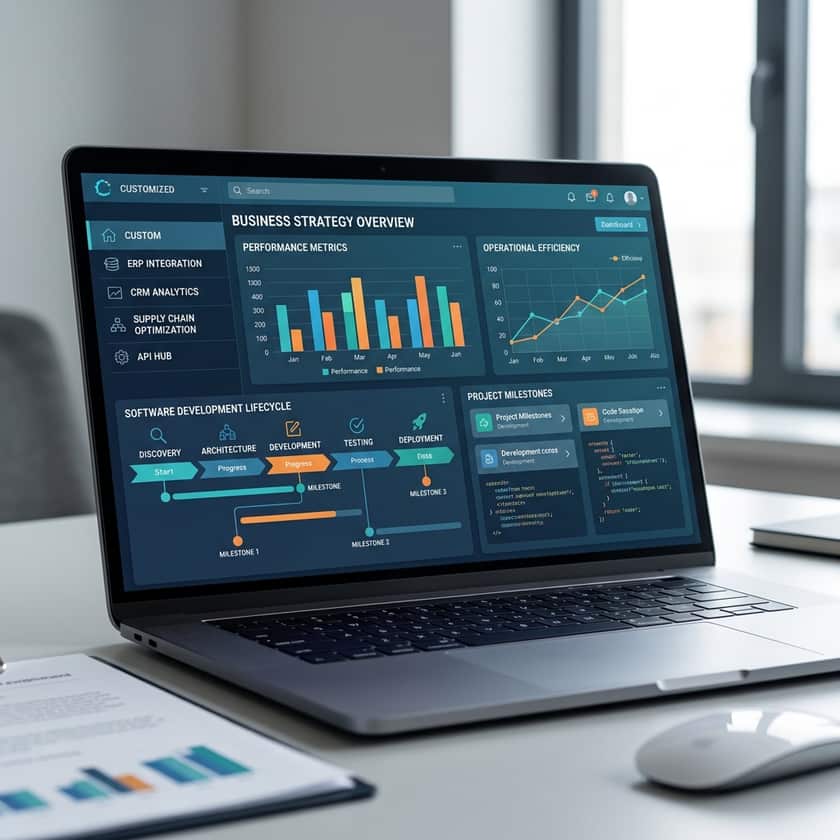
In the modern digital economy, technology is the backbone of operational efficiency. Many businesses start their journey using off-the-shelf software—commercial, ready-made products designed to serve a broad audience. While these solutions are often cost-effective and easy to deploy initially, they frequently become a bottleneck as companies scale. As processes become more complex and niche requirements emerge, the limitations of generic platforms become apparent. This is where custom build software enters the conversation as a strategic imperative rather than a luxury. By developing a system tailored to your specific workflows, your organization can optimize processes that were previously hindered by the rigid architecture of standardized products.
Understanding the Value of Bespoke Software
The primary advantage of custom software solutions is alignment. When you build software specifically for your business, every feature, integration, and interface is crafted to support your existing objectives. Unlike proprietary off-the-shelf software, which forces your team to adapt their workflow to match the software's capabilities, custom tools adapt to your team. This results in higher adoption rates, reduced training time, and a more intuitive user experience. Furthermore, custom builds provide intellectual property ownership. Instead of paying recurring licensing fees for a product you do not control, you invest in a company asset that grows in value and can be adjusted as your market dynamics shift or your business expands into new territories.
When to Consider Custom Development
Deciding to embark on a custom development project is a significant decision that requires a thorough cost-benefit analysis. Many organizations hesitate due to the upfront investment, yet they often overlook the long-term cost of technical debt or inefficiency associated with unsuitable software. You should consider moving toward a custom solution if you find yourself struggling with specific operational hurdles. If your business relies on multiple disconnected software programs to complete a single task, or if you are paying for features in a subscription software that your team never uses, you are essentially wasting resources. Custom software consolidates these needs into a unified environment.
- Inability to integrate with existing legacy databases or hardware.
- Manual data entry tasks that consume significant staff hours.
- Security requirements that are not met by standardized SaaS products.
- Customer experiences that are identical to your direct competitors.
- The need for high-performance processing capabilities that commercial tools cannot handle.
Comparing Software Acquisition Models
| Feature | Off-the-Shelf | Custom Solution |
|---|---|---|
| Implementation Speed | Rapid/Immediate | Slower (requires development) |
| Cost Structure | Predictable Licensing | High Initial, Lower Long-term |
| Scalability | Fixed Limits | High/Unlimited |
| Ownership | Vendor-Owned | Company-Owned |
| Technical Support | Included in Subscription | Managed Internally/Contracted |
The Software Development Lifecycle (SDLC)
A successful custom software project follows a structured methodology. Jumping straight into coding without a roadmap is a common cause of project failure. The process typically begins with 'Requirements Gathering,' where stakeholders define the problem and the desired outcomes. This is followed by 'Architectural Design,' where the technical structure and user interface wireframes are created. During the 'Development' phase, engineers write the code, often in iterative sprints if using Agile methodology. This iterative approach is crucial because it allows for testing and feedback at regular intervals. By reviewing functional components as they are built, businesses can pivot if a feature does not meet the expected utility, ensuring the final product remains highly relevant.
Post-Launch Maintenance and Security
Many businesses make the mistake of viewing custom software as a 'set it and forget it' product. In reality, software is a living entity that requires maintenance, security updates, and performance optimization. Because custom software is unique to your organization, it becomes a target if not properly secured. Modern development best practices involve integrating security from the very first line of code—often referred to as DevSecOps. Regular audits, code reviews, and dependency updates are mandatory to protect your intellectual property and customer data. Ensuring that your software remains compatible with new operating system updates and cloud infrastructure changes is vital for maximizing the lifecycle of your investment.