
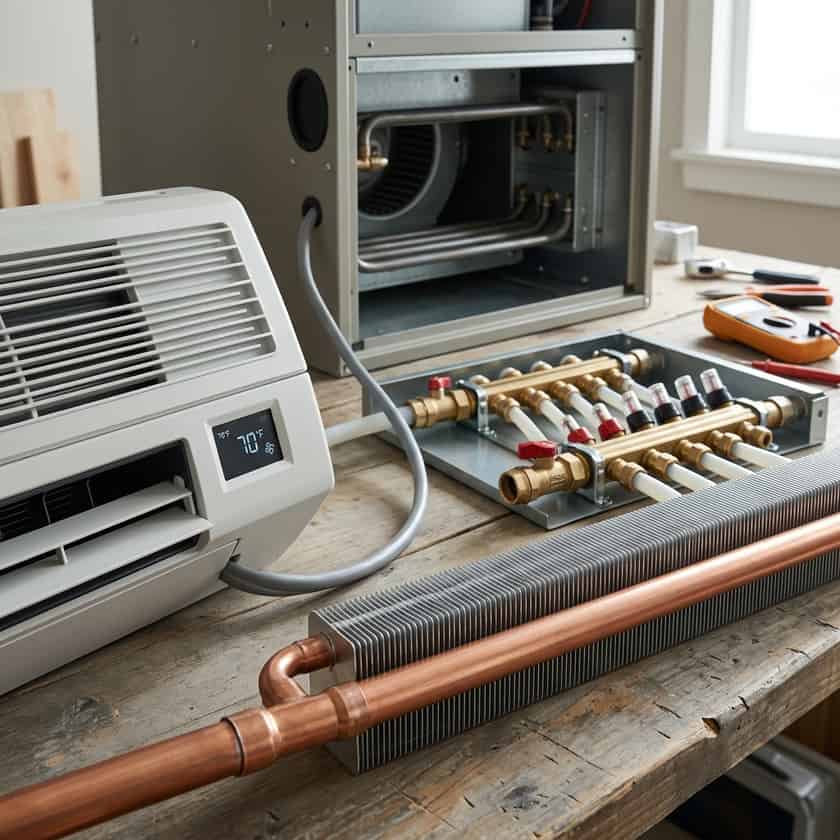
The Paradigm Shift in Home Comfort
Electric heating includes several technologies that work differently and can produce very different installation and operating results. A heat pump transfers heat, electric resistance equipment converts electricity to heat at the point of use, and radiant systems warm a floor or other surface. An appropriate fit depends on climate, utility rates, insulation, available electrical capacity, ductwork, room layout, and whether the project is a whole-home replacement or a limited-area upgrade. Homeowners should begin with the building and comfort problem, then compare equipment sizing, installation scope, total cost, and service support rather than assuming that every electric system offers the same benefits.
Electric resistance heaters are simple and can be useful for targeted spaces, but their operating cost depends heavily on local electricity prices and usage. Heat pumps use a refrigeration cycle to move heat and can provide both heating and cooling; performance varies with equipment selection, outdoor conditions, sizing, controls, and installation quality. Modern cold-climate models expand the range of applications, yet some homes may still need supplemental heat or building-envelope improvements. An installer should calculate the home's heating load instead of sizing equipment from square footage alone. Electrical-panel capacity and circuit requirements also need review before a final proposal.
Evaluating Popular Electric Heating Options
| Technology | How It Delivers Heat | Typical Installation Context | Questions to Compare |
|---|---|---|---|
| Air-source heat pump | Transfers heat between indoor and outdoor air | Whole-home or zoned replacement projects | Cold-weather capacity, sizing, backup heat, sound |
| Ground-source heat pump | Transfers heat through a ground loop | Sites that can support ground-loop installation | Site work, loop design, installer experience, access |
| Electric resistance | Converts electricity to heat at the unit | Baseboards, furnaces, or supplemental zones | Utility rates, circuit capacity, controls, usage |
| Ductless mini-split | Uses an outdoor heat pump with indoor units | Homes without ducts or rooms needing zones | Indoor-unit placement, condensate, cold-weather output |
| Electric radiant floor | Warms the floor surface using electric elements | Selected rooms or renovation areas | Floor assembly, controls, repair access, operating schedule |
Heat pumps are often considered when a homeowner wants heating and cooling from the same system. Because they transfer heat instead of producing all heat through resistance, they may use less electricity for heating than resistance equipment under comparable conditions. That comparison is not evidence of household savings: climate, thermostat settings, duct condition, installation quality, electricity prices, and the system being replaced all affect the result. Ask contractors to document the design heating load, proposed equipment capacity at local winter temperatures, efficiency ratings, backup-heat strategy, and estimated annual energy use based on stated assumptions.
The Utility of Ductless and Radiant Systems
Ductless mini-splits can serve additions, converted rooms, or homes without usable ducts. Zoning may reduce heating in unoccupied areas, but savings depend on how occupants use the zones and whether other parts of the house remain conditioned. Indoor-unit placement, condensate drainage, refrigerant-line routing, sound, and appearance should be reviewed before installation. Electric radiant floors can provide comfortable surface warmth in selected rooms, especially during a renovation, but they respond differently from forced air and may be expensive to operate as primary heat in some utility territories. Compare floor compatibility, insulation below the system, controls, and repair access.
Practical Benefits of Electrification
- Point-of-use combustion: Electric equipment does not burn fuel at the appliance, but whole-home safety still depends on correct wiring, installation, and maintenance.
- Zoning and controls: Room-level control can improve comfort; energy results depend on schedules and user behavior.
- Indoor air: Ductless and radiant options avoid distributing air through central ducts, while filtration and humidity needs must be evaluated separately.
- Electrical capacity: Panel, circuit, disconnect, and service upgrades may be required and should be included in the proposal.
- Climate performance: Heat-pump output and backup needs should be checked at local design temperatures.
- Installation quality: Load calculations, commissioning, drainage, airflow, and refrigerant work can materially affect performance.
Thermostats, occupancy schedules, and remote controls can make an electric system easier to operate, but automation cannot correct poor sizing or an inefficient building envelope. Air sealing, insulation, window condition, and duct leakage may influence comfort as much as the equipment choice. Ask how the controls handle setbacks, multiple zones, auxiliary heat, power interruptions, and household accessibility needs. If a contractor provides a projected utility-cost comparison, request the assumed weather data, energy prices, operating hours, and existing-system efficiency so the estimate can be evaluated rather than treated as a promise.
Financial Incentives and Long-Term Value
Rebates, tax provisions, and utility programs may be available for qualifying electric heating projects, but programs, funding, equipment requirements, income rules, and installation deadlines can change. Verify current eligibility with the responsible government agency or utility before signing a contract, and confirm whether the customer or contractor submits the application. Compare the net project cost only after identifying required electrical work, permits, building-envelope upgrades, maintenance, financing charges, and any equipment not covered by an incentive. Do not assume an advertised maximum amount applies to a particular household or system.
A useful final comparison puts comfort, capacity, installation disruption, operating assumptions, maintenance access, contractor support, and total cost on one page. Obtain itemized proposals using the same design conditions, check contractor licensing and permit requirements locally, and ask how the system will be tested at completion. Electric heating can be an effective option, but the outcome depends on the home and the implementation. A documented load calculation and a clear scope provide a better basis for the decision than broad claims about savings or environmental performance.