
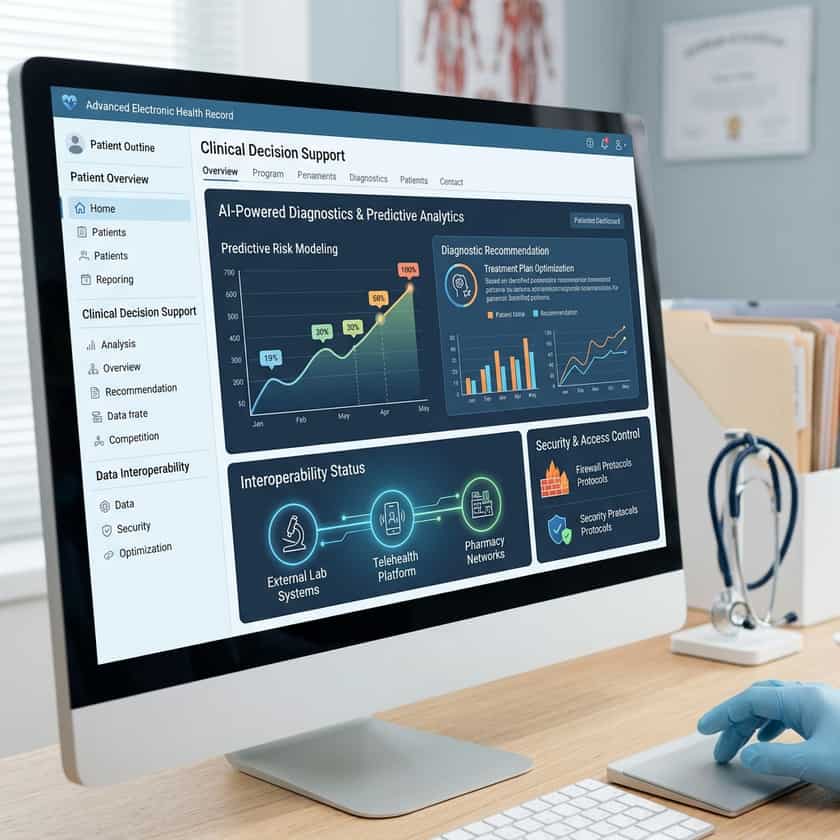
As we navigate the current landscape of healthcare technology, the medical software industry in 2026 has moved far beyond simple administrative record-keeping. The evolution of digital health platforms is now focused on creating an intelligent, connected ecosystem that bridges the gap between patient data and clinical action. Modern practices are no longer merely looking for software to manage billing or scheduling; they are seeking comprehensive solutions that offer predictive analytics, real-time diagnostic support, and seamless interoperability across various medical devices. This transition represents a fundamental shift in how physicians and clinical staff interact with technology, moving from passive documentation toward active clinical partnership.
The Rise of Intelligent AI-Driven Diagnostics
Artificial intelligence has transitioned from a buzzword to a fundamental component of the medical software stack in 2026. Current platforms integrate sophisticated AI algorithms that analyze patient health records, imaging, and lab results in real-time. This integration provides clinicians with decision support that was previously labor-intensive to synthesize manually. By highlighting potential diagnostic pathways or flagging unusual trends in longitudinal patient data, these systems empower physicians to make faster, more evidence-based decisions. The goal of this software is not to replace the clinician’s judgment but to act as a rigorous analytic partner, reducing cognitive load and helping staff navigate complex cases with greater efficiency and accuracy.
Core Pillars of Modern Medical Software
- Full-Scale Interoperability: The ability to exchange data securely and accurately with laboratories, hospitals, and specialized imaging centers without data loss.
- Predictive Analytics: Utilizing historical and real-time data to identify patients at risk of chronic condition progression before complications arise.
- User Experience (UX): Intuitive interfaces that reduce the time spent in front of screens, prioritizing natural workflows over complex menu structures.
- Cybersecurity Resilience: Built-in, automated compliance tools that protect patient data against emerging threats while ensuring strict HIPAA or regional compliance.
- Patient-Facing Portals: Integrated, accessible tools that allow patients to securely review their records, schedule appointments, and communicate with providers.
Prioritizing Data Security and Compliance
In 2026, the reliance on cloud-based infrastructure and interconnected device ecosystems makes cybersecurity the most critical concern for any medical practice. Software vendors are now expected to provide more than just basic encryption; they must offer comprehensive security suites that include multi-factor authentication, automated audit trails, and proactive vulnerability scanning. Compliance is no longer a static milestone but a continuous, automated process. Practices that choose software with integrated compliance monitoring can significantly reduce their risk of data breaches and ensure that patient information remains private, secure, and accessible only to authorized personnel during essential medical interventions.
Evaluating Vendor Partnerships
Selecting the right software for a medical practice is a long-term investment. Beyond the immediate features, it is vital to evaluate the vendor's roadmap and support philosophy. A robust software vendor in 2026 should demonstrate a commitment to continuous updates, responsive customer support, and training that helps staff adapt to new features. Implementation of a new system is often the most challenging phase, so identifying a vendor that provides hands-on migration assistance and modular implementation paths can prevent operational downtime. Practices should seek partners that prioritize scalability, ensuring the software grows alongside the clinic's patient volume and specialized technological needs.
| Evaluation Metric | Importance | Typical 2026 Standard | Impact on Practice |
|---|---|---|---|
| Interoperability | High | API-first integration | Reduces duplicate testing |
| Cloud Security | Critical | End-to-end encryption | Prevents data breaches |
| Mobile Access | Medium | Native app support | Enables remote monitoring |
| Training/Support | High | 24/7 dedicated portals | Ensures system adoption |
Enhancing the Patient Experience
The patient-facing side of medical software has undergone a significant transformation to mirror the convenience of modern consumer technology. Patients in 2026 expect to engage with their healthcare providers through digital platforms that are as intuitive as their banking or shopping apps. This includes streamlined appointment scheduling, digital intake forms that sync directly with electronic records, and secure, instant messaging platforms for non-emergency inquiries. By removing friction from these administrative tasks, practices not only improve patient satisfaction but also free up administrative staff to handle more complex coordination tasks, ultimately leading to a more efficient and patient-centered practice environment.