
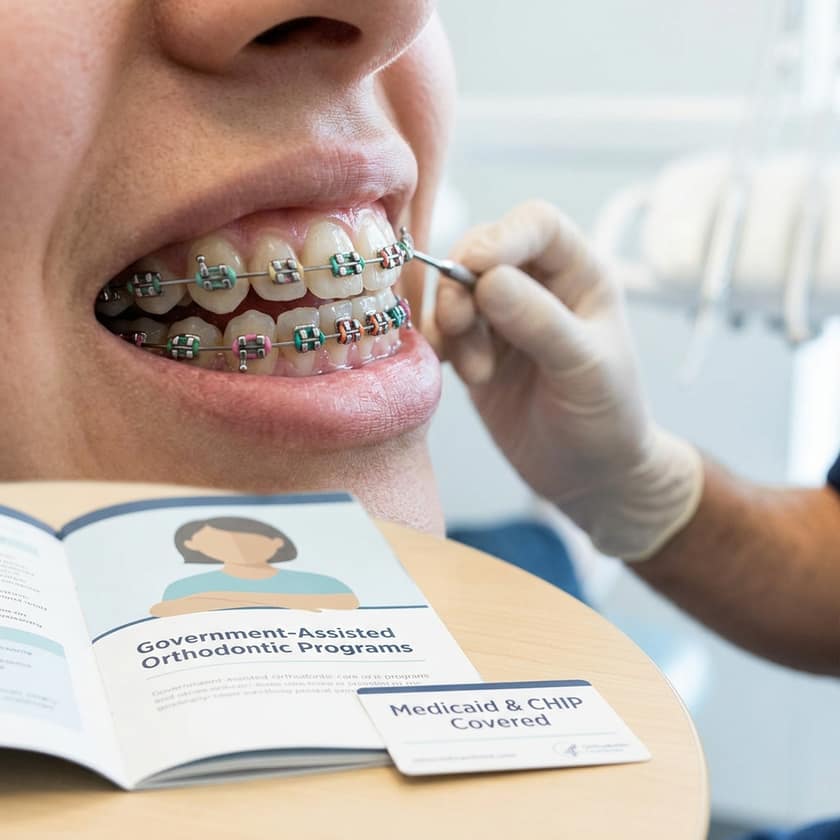
Navigating Public Orthodontic Assistance in 2026
As healthcare landscapes evolve, navigating the complexities of public assistance for orthodontic care remains a vital task for many families in the United States. For the year 2026, federal and state programs continue to provide pathways for qualifying individuals to receive essential orthodontic treatments, including braces. While dental hygiene and basic checkups are standard components of public healthcare plans, orthodontic treatments occupy a more specialized category. Generally, government programs do not subsidize braces for purely cosmetic improvements. Instead, they focus on correcting functional impairments that affect an individual's overall physical health. Understanding the distinction between cosmetic preferences and medical necessity is the first step toward successfully accessing these valuable public benefits.
The Core Public Programs: Medicaid and CHIP
The primary vehicles for government-assisted orthodontic care in the United States are Medicaid and the Children's Health Insurance Program, commonly known as CHIP. Administered jointly by federal and state governments, these programs are designed to provide comprehensive healthcare coverage to low-income families and children. Under federal guidelines, Medicaid must offer dental services to enrolled children through the Early and Periodic Screening, Diagnostic, and Treatment benefit. This mandate includes orthodontic services, but only when they are deemed medically necessary. Because each state manages its own Medicaid program, specific eligibility thresholds and coverage limits can vary significantly from one region to another. CHIP similarly provides dental benefits to children in families whose income is too high to qualify for Medicaid but too low to afford private coverage.
| Program Name | Target Demographic | Orthodontic Coverage Status | Key Requirements |
|---|---|---|---|
| Medicaid for Youth | Individuals under age 21 | Fully covered if medically necessary | Must meet state clinical threshold for severe malocclusion |
| CHIP (Children's Health Insurance) | Low-income children ineligible for Medicaid | Varies by state; focuses on functional necessity | Income limits vary by state; prior authorization required |
| Medicaid for Adults | Low-income adults (selected states) | Extremely limited; usually emergency only | Severe reconstructive needs from trauma or birth defects |
| Community Health Centers | All ages, low-income residents | Sliding-scale discounts on basic care | Income verification; may refer out for complex orthodontics |
Understanding 'Medical Necessity' in Orthodontics
To qualify for government-funded braces, a patient must demonstrate that their orthodontic condition constitutes a medical necessity rather than an aesthetic concern. States rely on standardized clinical tools to objectively evaluate the severity of a patient's malocclusion. One widely used diagnostic framework is the Handicapping Labiolingual Deviation index, which assigns numerical scores based on specific physical measurements of the teeth and jaw alignment. Conditions that typically meet the threshold for medical necessity include cleft palate, severe craniofacial anomalies, extreme overbites or underbites that impede proper chewing or speech, and impacted teeth that threaten surrounding dental structures. An official assessment by a licensed orthodontist is always required to document these conditions and submit the necessary evidence to state administrators for approval.
State-by-State Variations and Managed Care Plans
State-by-state variations play a massive role in how orthodontic benefits are administered and approved. Many states utilize Managed Care Organizations to manage their Medicaid and CHIP networks. These private insurance entities coordinate the delivery of care and enforce the specific criteria established by state legislation. Consequently, families may find that the approval process, network density of participating orthodontists, and wait times differ dramatically between neighboring states. Some states offer streamlined online portals for tracking prior authorizations, while others rely on traditional paper documentation. It is critical for parents to contact their local caseworkers or managed care plan representatives to obtain the most current guidelines and directories of participating local providers.
Step-by-Step Guide to Applying for Government-Subsidized Braces
- Verify active enrollment in your state's Medicaid or CHIP program before scheduling any specialist consultations.
- Locate a licensed orthodontist who explicitly accepts public assistance plans and is currently taking new patients.
- Schedule an initial evaluation where the specialist can perform a comprehensive clinical exam and take dental X-rays.
- Request that the orthodontist complete the state-mandated malocclusion index assessment to document medical necessity.
- Ensure the provider submits a comprehensive prior authorization request, including clinical narratives and photographic evidence, to the state program.
- Await formal written approval from the state agency or managed care organization before initiating any active orthodontic treatment.
Alternatives for Families Denied Public Coverage
When public health programs deny coverage for braces, families still have viable pathways to explore. Many dental schools and orthodontic residency programs affiliated with major universities offer high-quality care at a fraction of standard retail prices. In these settings, treatment is provided by advanced students under the direct supervision of board-certified orthodontists. Additionally, non-profit organizations such as Smiles Change Lives and the Donated Orthodontic Services program connect qualified low-income youth with local orthodontists who donate their services. These alternative options can bridge the gap for families who do not meet the strict clinical thresholds for government assistance but still require affordable solutions for their children's orthodontic needs.
Key Milestones and Timelines for 2026 Enrollments
Staying informed about key milestones and administrative timelines is essential for maintaining eligibility throughout the orthodontic treatment cycle, which often spans several years. In 2026, families must remain vigilant regarding their annual Medicaid redetermination dates. Failing to renew coverage on time can lead to a temporary lapse in benefits, which may interrupt active orthodontic care and lead to unexpected out-of-pocket costs. Furthermore, pediatric dentists recommend that children receive an initial orthodontic screening by age seven. Early evaluation allows specialists to monitor jaw development and identify severe functional issues early, ensuring that the documentation process for public coverage can begin at the optimal developmental milestone.
Preparing for Your Orthodontic Consultation
Preparing thoroughly for your initial orthodontic consultation can significantly increase the likelihood of receiving authorization for government-assisted braces. Parents should compile a comprehensive dental history file for their child, including records of past treatments, referrals from general dentists, and documentation of any physical symptoms. If the malocclusion causes difficulty chewing, severe pain, or speech impediments, obtaining supporting letters from pediatricians or speech therapists can strengthen the case. Presenting a clear, well-documented clinical history helps the orthodontist build a persuasive prior authorization request, demonstrating to state reviewers that the requested orthodontic intervention is indeed vital for the child's health and development.