
Understanding Modern Energy Management Tools
In an era of rising utility rates and growing environmental awareness, organizations and homeowners across the United States are seeking active solutions to control their power consumption. Energy management tools represent a diverse category of hardware and software designed to track, analyze, and optimize utility usage. By collecting granular data from smart meters, HVAC systems, and production machinery, these platforms transform raw consumption figures into actionable insights. Implementing these tools is no longer just an environmental statement; it is a critical strategy for fiscal sustainability and operational resilience. From small households deploying smart plugs to multi-facility enterprises integrating complex industrial platforms, the adoption of energy management solutions is reshaping how we interact with the electrical grid.
Key Features of Effective Platforms
At the core of any robust energy management platform lies the ability to perform continuous, real-time data ingestion. Traditional utility monitoring relied on monthly billing statements, which offered retrospective data that was virtually useless for active intervention. Modern tools utilize Internet of Things (IoT) sensors to capture consumption metrics at second or minute intervals. This immediate feedback loop allows facility managers to detect anomalies-such as a failing compressor drawing excess power or heating systems operating during unoccupied weekend hours-long before they manifest as costly billing surprises. Furthermore, cloud-based interfaces allow administrators to view performance dashboards from anywhere, streamlining decentralized operations.
- Real-time consumption telemetry for immediate operational visibility
- Automated utility bill auditing to quickly detect costly billing errors
- Predictive modeling based on dynamic local weather patterns
- Carbon footprint tracking for localized environmental compliance
- Customizable alert protocols delivered via email or mobile push alerts
- Interoperability with existing Building Automation Systems
Comparing Tool Categories
| Category | Target Audience | Core Functions | Typical ROI |
|---|---|---|---|
| Residential Smart Tech | Homeowners | Automated climate adjustments and appliance tracking | 12 to 18 Months |
| Commercial EMS | Office Buildings | Multi-site dashboarding, peak demand shaving, scheduling | 18 to 36 Months |
| Industrial IoT Systems | Manufacturing | Machine-level sub-metering, predictive maintenance | 24 to 48 Months |
| Utility-Scale Software | Grid Operators | Demand response coordination, load balancing | Varies by Grid |
Strategic Benefits: Financial and Environmental
Beyond the immediate reduction in kilowatt-hour consumption, energy management tools deliver substantial economic advantages by targeting peak demand charges. Utilities often charge commercial customers a premium based on their highest period of electricity usage during a billing cycle. By scheduling energy-intensive processes during off-peak hours or utilizing on-site battery storage systems, organizations can flatten their demand curve and significantly reduce their monthly bills. Additionally, as state and federal governments in the United States enact stricter carbon reduction mandates, these software platforms provide the verifiable data trails required for regulatory compliance, ESG reporting, and capturing valuable green building certifications.
Navigating Common Deployment Obstacles
Despite the clear advantages, implementing new utility software often introduces distinct challenges that organizations must proactively navigate. One of the most prevalent hurdles is data fragmentation, where older properties run on proprietary, legacy control systems that do not easily communicate with modern cloud platforms. Additionally, organizations frequently encounter internal resistance from staff who are accustomed to manual operational routines and may view automated tracking as intrusive. Overcoming these barriers requires investing in highly compatible, open-protocol hardware and prioritizing comprehensive training sessions that clearly demonstrate how the software simplifies daily maintenance tasks rather than complicating them.
- Conduct an initial audit of all legacy hardware and communication protocols
- Establish a cross-functional utility team to champion the software rollout
- Select software with open API access to prevent proprietary vendor lock-in
- Develop a structured training curriculum tailored for facility maintenance staff
- Review automated recommendations weekly to refine control loops
Step-by-Step Implementation Guide
Adopting a systematic approach is vital when introducing energy management tools to any organization. The process begins with establishing an accurate baseline, which involves gathering historical billing data to understand typical seasonal consumption patterns. Once this baseline is established, organizations can deploy sub-metering hardware at key structural points to isolate high-use zones. It is critical to involve staff at all levels during this transition; even the most advanced automated software relies on human operators to respond to alerts and adjust physical operational habits. Pilot testing a software platform on a single facility or floor helps identify configuration challenges before a full-scale corporate rollout.
The Future of Smart Utility Optimization
The landscape of utility management is evolving rapidly, driven by advancements in artificial intelligence and machine learning. Tomorrow's energy management tools will do far more than report historical data or send simple threshold alerts; they will dynamically adjust building operations autonomously. AI-driven systems can analyze incoming weather patterns, spot grid pricing fluctuations, and automatically pre-cool commercial spaces when energy rates are lowest. Furthermore, the rapid growth of corporate electric vehicle (EV) fleets requires sophisticated fleet-charging integration, ensuring that vehicle charging does not push a facility into a punitive peak-demand pricing tier. Embracing these advanced capabilities prepares organizations for a highly dynamic energy future.
The Role of Data Visualization in Energy Metrics
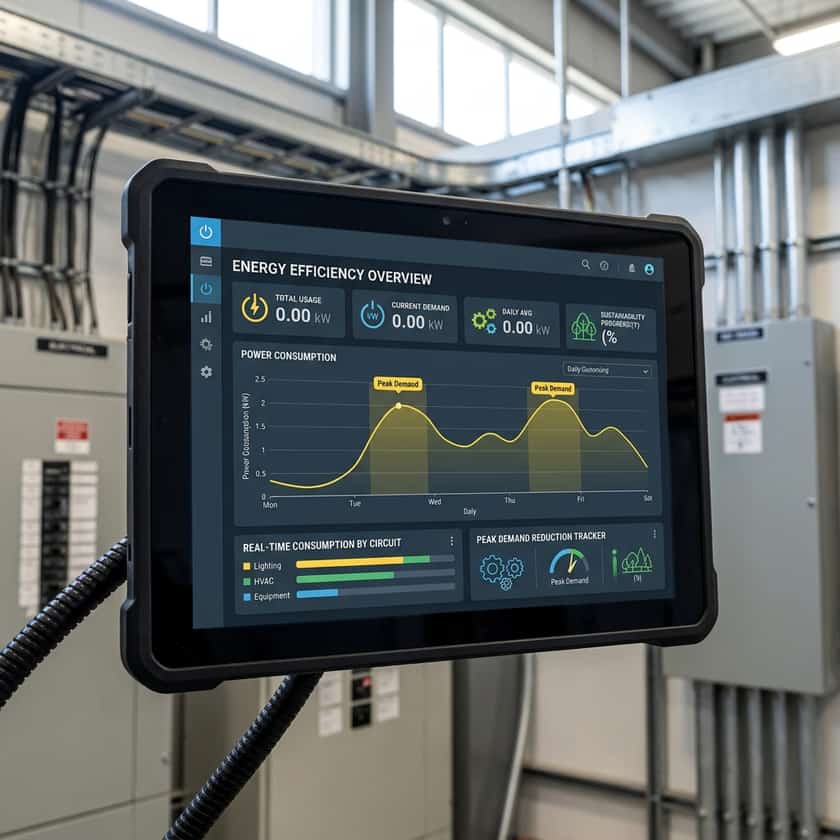
A major factor in the success of energy management systems is how information is displayed to stakeholders. Raw numbers can be overwhelming, but intuitive data visualization makes energy consumption patterns immediately clear. Modern tools feature user-friendly dashboards that use color-coded heat maps, historical comparisons, and projection graphs to represent power usage. These visual representations allow executive boards to see the financial impact of green initiatives at a glance, while maintenance crews can quickly spot operational spikes. By translating technical engineering metrics into accessible charts, visualization software helps bridge the gap between financial decision-makers and technical operations teams, building a shared commitment to efficiency.