
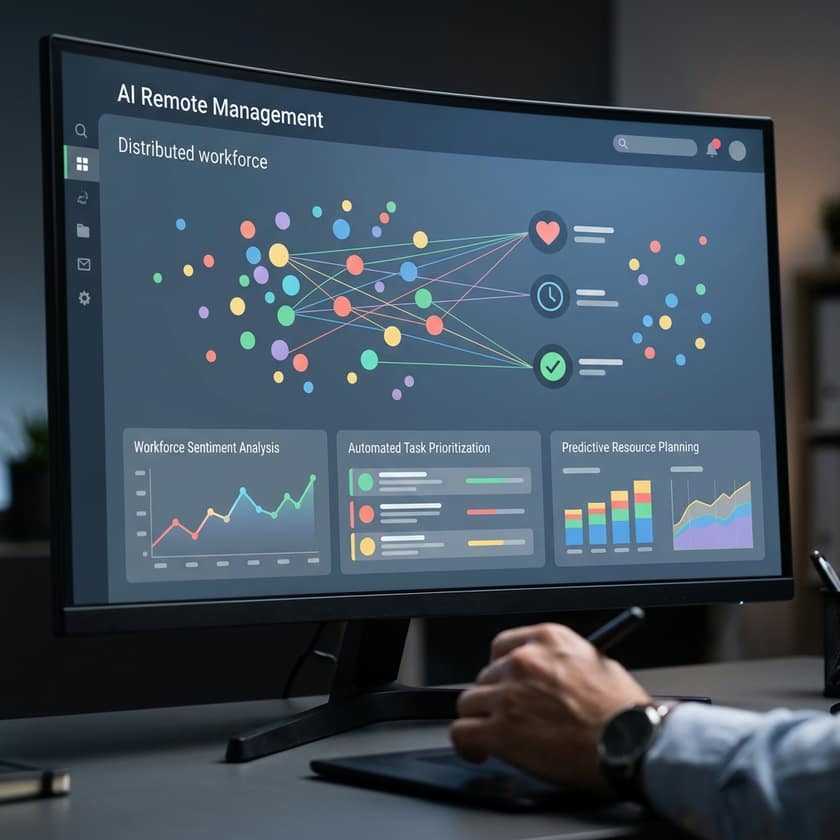
The shift toward distributed workforces has fundamentally altered the management landscape, creating new challenges in communication, productivity tracking, and employee engagement. As organizations scale, manual management processes often struggle to keep pace with the needs of global teams. Enter AI remote management—a framework that utilizes artificial intelligence to streamline operations, provide actionable data insights, and reduce the administrative burden on managers. By integrating intelligent software into daily workflows, leaders can focus less on micromanagement and more on strategic growth, while employees benefit from improved clarity and support.
The Core Components of AI-Driven Management
Effective AI remote management is not about replacing human leadership but enhancing it with powerful analytical capabilities. At its core, this approach involves deploying tools that process vast amounts of project data to highlight bottlenecks, predict potential delays, and suggest optimal resource allocation. When managers use AI to handle routine status checks or meeting scheduling, they free up significant time for mentorship and high-level decision-making. Furthermore, AI analytics can surface patterns in performance that might otherwise go unnoticed, such as identifying early signs of burnout or flagging communication silos that could hinder project progress.
- Automated task prioritization based on deadlines and dependencies.
- Sentiment analysis of team communication tools to gauge morale.
- Predictive resource planning to prevent team overloading.
- Intelligent meeting summarization and follow-up tracking.
- Real-time progress visualization for complex cross-functional projects.
Optimizing Workflows and Communication
One of the most immediate benefits of implementing AI solutions is the optimization of daily workflows. Remote teams often struggle with the overhead of constant status updates and fragmented documentation. AI-powered platforms can integrate with existing communication channels to aggregate information, creating centralized hubs of truth that eliminate the need for repetitive inquiries. By automating the synthesis of project updates, AI tools ensure that every team member remains aligned without the fatigue of endless sync meetings. This transparency allows for a more asynchronous work environment, which is highly valued by top talent in distributed settings.
| Feature | Traditional Management | AI-Augmented Management |
|---|---|---|
| Communication | Synchronous meetings | Asynchronous documentation |
| Workload | Manual tracking | Predictive balancing |
| Burnout | Reactive detection | Proactive signaling |
| Planning | Static spreadsheets | Dynamic, AI-driven projections |
Ethical Considerations and Building Trust
While the technological advantages are significant, leaders must navigate the ethical terrain of monitoring and data privacy. Employees may naturally feel uneasy about the introduction of AI tools that analyze their work patterns. To counter this, transparency is paramount. Management must clearly define what data is being collected and, more importantly, how that data serves to benefit the employee rather than punish them. Using AI to 'police' productivity is a surefire way to erode trust. Instead, organizations should focus on using these tools to identify where they can provide better resources, remove blockers, or optimize team workloads.
- Involve the team in the selection process for new software.
- Focus metrics on outcomes and goals rather than keystrokes.
- Ensure all AI-driven insights are used for development, not punitive action.
- Regularly audit automated processes for bias.
- Keep the 'human-in-the-loop' for all critical performance reviews.
Future Trends in Distributed Team Operations
The future of remote management points toward greater autonomy and deeper personalization. As AI models become more adept at understanding project context, we can expect to see 'AI managers' that offer personalized coaching suggestions based on an individual's specific work style and career aspirations. Furthermore, the convergence of AI with other technologies like virtual reality could create collaborative spaces that feel as organic as in-person offices. Organizations that invest in learning how to leverage these tools today will likely develop a competitive advantage, attracting talent that demands both flexibility and operational excellence.