
Understanding Modern SME Communication Requirements
The landscape of business telephony has undergone significant changes as we enter 2026. Small and Medium Enterprises (SMEs) are no longer tethered to traditional, costly landline infrastructures. Instead, the market has pivoted toward flexible, cloud-based systems that prioritize scalability and integration. For a growing business, the choice of a phone package is not just about connectivity; it is about building an ecosystem that supports your team’s workflow, client engagement, and long-term financial health. Selecting the wrong plan can lead to unnecessary operational friction, while a well-chosen system can provide the reliability needed to maintain competitive advantages in a fast-paced market. Business owners should weigh the balance between initial entry costs and the long-term utility of integrated features.
Comparing Pricing Models and Service Tiers
| Provider | Monthly Cost (Approx.) | User Score (Out of 5) | Key Standout Feature |
|---|---|---|---|
| Core/RingCentral | $20 (Annual Pay) | 4.3 | 300+ App Integrations |
| Google Voice | $10 | 4.1 | Workspace Sync |
| Quo Systems | $15 | 4.7 | Advanced CRM |
| SMB Free Tier | $0 | N/A | 10 User Capacity |
Analyzing the data reveals that pricing strategies vary wildly across the industry. Some providers focus on 'forever free' tiers, which can be an excellent starting point for micro-businesses or startups with minimal traffic. However, these often lack the depth required for scaling operations. Mid-range options, typically hovering around $15 to $30 per line, often include the 'heavy lifting' tools like CRM integration, auto-attendants, and call routing analytics. The key is to avoid paying for features you do not need while ensuring you do not outgrow your plan too quickly, which can result in abrupt service interruptions or sudden, hidden upgrade costs when your team expands.
Essential Features for Scaling Small Teams
- Auto-Attendant: Ensures callers are directed to the right department immediately.
- CRM Integration: Automatically logs caller history into your existing sales software.
- Mobile App Support: Allows team members to take business calls from personal devices.
- Scalability: The ability to add or remove lines instantly based on seasonal demand.
- Data & Hotspot Add-ons: Useful for field teams requiring consistent connectivity.
- Analytics Dashboard: Tracks call volumes and peak times to optimize staffing.
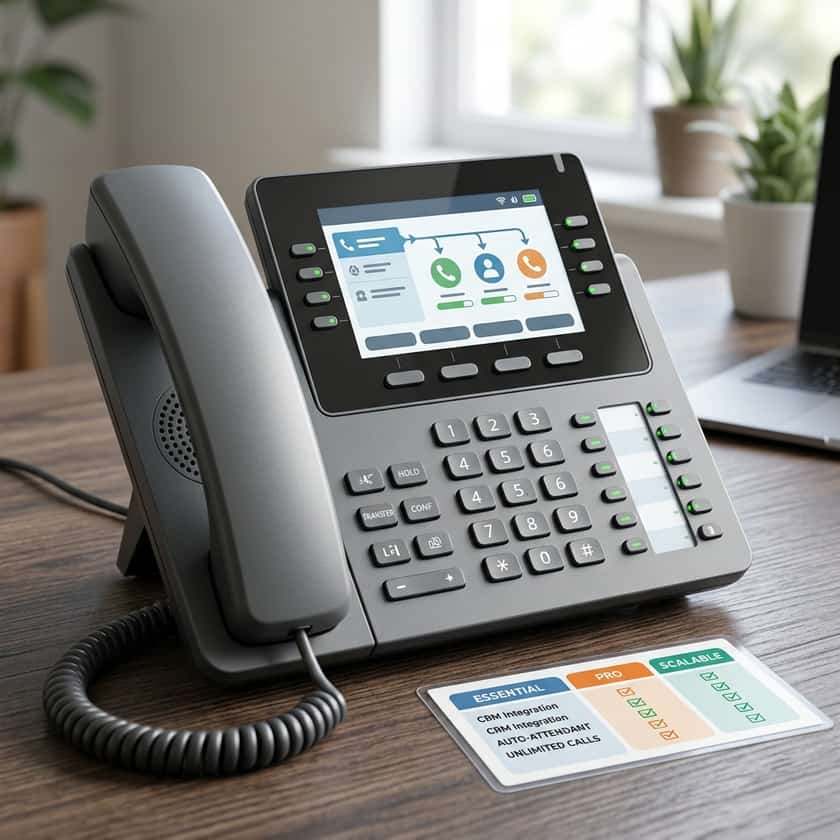
The integration of a robust auto-attendant system is frequently cited as the most critical upgrade for growing businesses. By automating the sorting of incoming calls, a business can maintain a high level of professionalism without needing a dedicated receptionist. Furthermore, CRM integration allows teams to personalize their service by having client data readily available on screen before a call is even answered. These features, while appearing optional, directly correlate with improved client retention and team efficiency. In 2026, look for providers that bundle these tools into their core packages rather than charging high premiums for each individual 'add-on' service, which can quickly inflate your monthly recurring costs.
Strategies to Control Operational Costs
Maintaining a lean budget is often the primary concern for SME owners. Many businesses hover over their phone bills, wondering why they are paying for excessive bloat. Industry data suggests that companies can often cut their communication bills by up to 80% simply by switching from legacy carriers to optimized cloud-based alternatives. The strategy is to audit your usage every quarter. If your team is paying for 300 minutes of talk time but only utilizing a fraction of that, you are over-spending. Many modern carriers offer 'by-the-gig' or 'by-the-line' models that allow you to pay only for the exact bandwidth and user count you occupy, effectively erasing hidden fees and unused overhead.
Reliability and Future-Proofing in 2026
Technical reliability is non-negotiable for any business operation. When vetting providers, prioritize those offering at least 99.9% guaranteed uptime. In 2026, reliability extends beyond just voice clarity; it includes the stability of your internet-based connections and the security of your data. Consider asking potential providers about their backup protocols. In the event of a local outage, does their system allow for automated call forwarding to mobile devices or satellite offices? A resilient system ensures that your business stays 'alive' and accessible even when local infrastructure fails, protecting your revenue streams and maintaining the trust of your clients.