
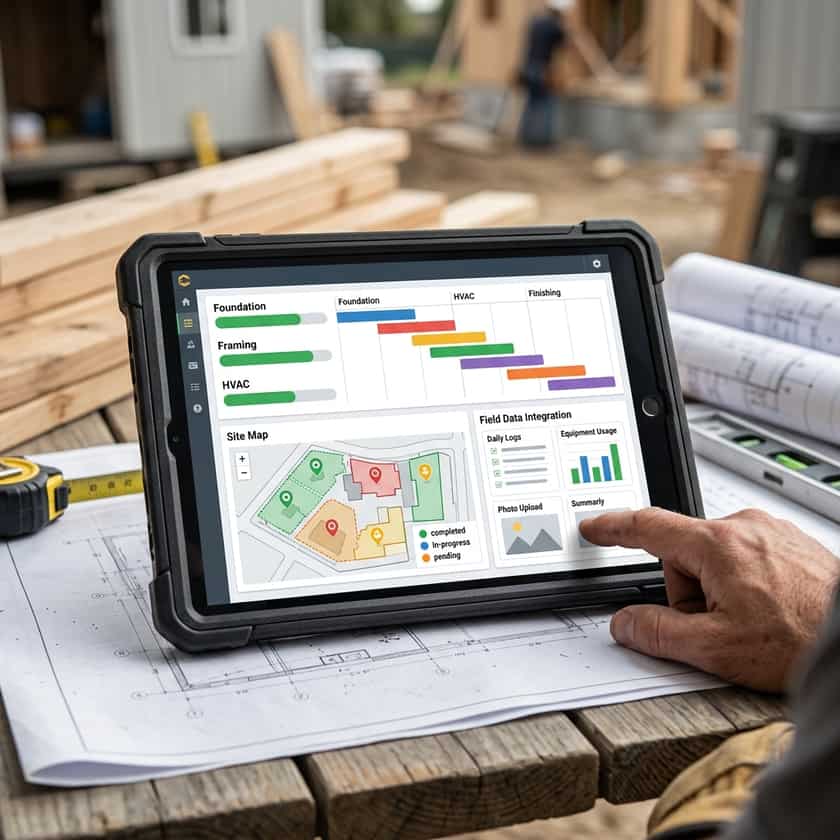
The construction industry is inherently complex, involving intricate coordination between architects, engineers, contractors, and subcontractors. For many firms, off-the-shelf project management tools offer a solid foundation. However, as companies grow or specialize in niche sectors, these standardized platforms often hit a performance ceiling. This is where custom construction software enters the conversation. By tailoring digital infrastructure to match specific operational workflows, construction businesses can eliminate bottlenecks, reduce data fragmentation, and gain a competitive edge that generic platforms simply cannot provide.
Why Consider Custom Construction Software?
Standardized software is designed for the average user, meaning it often includes a surplus of features you don't need while lacking the specialized tools required for unique project demands. A custom solution changes this dynamic by putting your business processes at the center of the design. Whether your firm focuses on high-end residential builds, complex industrial infrastructure, or specialized civil engineering, custom software allows for seamless integration with existing field systems, specialized accounting practices, or proprietary project tracking methods that off-the-shelf tools might struggle to accommodate.
One of the most significant advantages is the reduction of 'app fatigue.' Construction teams are often juggling multiple disconnected applications—one for time tracking, another for blueprints, and a third for communication. Custom development enables the creation of a centralized hub, consolidating these disparate tasks into a single, cohesive user experience. This not only improves team adoption rates but also ensures that data is entered once and utilized across the entire project lifecycle, significantly reducing the probability of human error and duplicated effort.
Core Features to Prioritize
When commissioning custom construction software, the development scope must be rigorously defined. A feature-heavy system is not necessarily a better one. Instead, prioritize functionality that drives productivity and ROI. You want to ensure that the architecture is scalable, secure, and intuitive for field crews who may be using tablets or smartphones in rugged environments.
- Real-time field reporting and photo documentation
- Automated safety compliance and audit logs
- Integration with existing ERP or accounting platforms
- Interactive digital blueprints and version control
- Resource allocation and subcontractor scheduling modules
- Mobile-first offline access for remote jobsites
Comparing Off-the-Shelf vs. Custom Solutions
| Factor | Off-the-Shelf | Custom Software |
|---|---|---|
| Initial Cost | Lower (Subscription) | Higher (Capital Investment) |
| Implementation | Immediate | Phased Development |
| Flexibility | Limited to Vendor Updates | High/Unlimited |
| Maintenance | Handled by Provider | Internal or Contracted |
| Competitive Advantage | Common Industry Baseline | Unique Workflow Efficiency |
The Development Lifecycle: What to Expect
Building bespoke software is not a linear path; it is an iterative journey. It begins with a deep dive into your business requirements. Developers must shadow project managers, visit jobsites, and interview foremen to understand the actual friction points. Skipping this discovery phase is the primary reason custom projects fail. Once the requirements are set, the focus shifts to prototyping, where you will see wireframes of the user interface before a single line of production code is written.
Following the prototype phase, the development usually proceeds in 'sprints.' This agile methodology allows you to test small modules of the software as they are completed. It is a critical risk-mitigation strategy. By reviewing the progress at each sprint, you can course-correct before significant time and budget are spent on features that might not align with your operational needs. The final stage involves rigorous quality assurance, ensuring that the software remains stable under the extreme conditions often found in the field.
Data Security and Long-term Scalability
Construction firms are increasingly becoming targets for cyberattacks due to the vast amounts of financial and client data they manage. When building custom software, security cannot be an afterthought; it must be baked into the architecture. Encryption standards, role-based access control, and secure cloud storage are mandatory. Furthermore, you must consider the long-term technical debt. Software is a living asset that requires ongoing updates, patches, and feature improvements. Ensure that your agreement includes provisions for ongoing support or that you have a plan to transition the code to an internal maintenance team.