
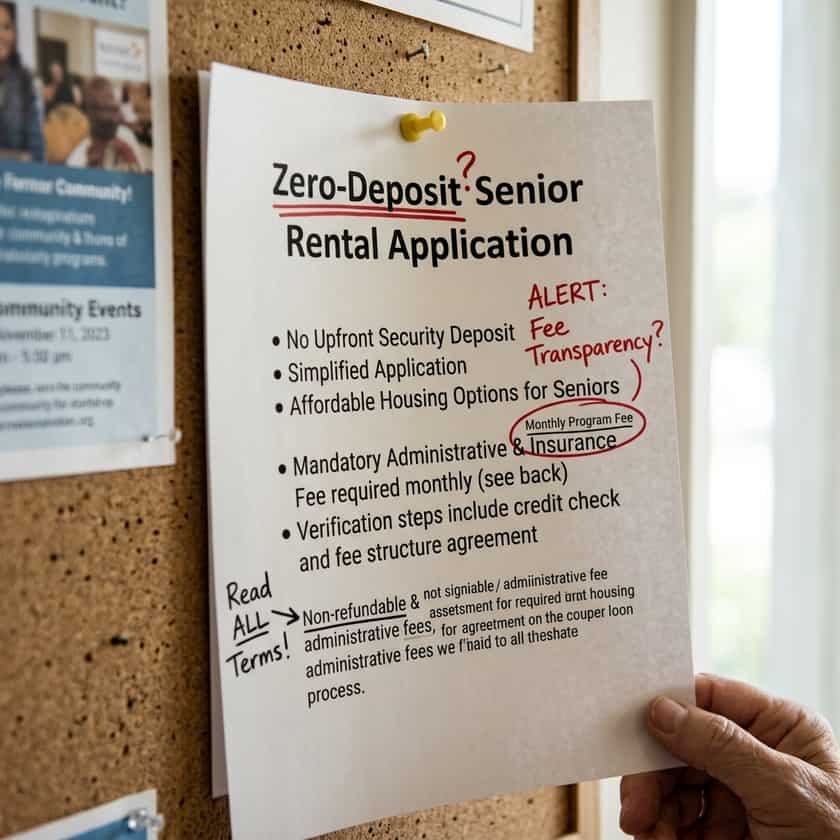
The Appeal and Reality of Deposit-Free Senior Rentals
For many older adults living on fixed retirement incomes, securing safe, stable, and affordable housing is a paramount priority. In the continuous search for budget-friendly apartments, advertisements promising 'zero-deposit' rentals for low-income seniors often look incredibly attractive. While these promotions can sound like the ideal solution to avoid draining your hard-earned savings on high upfront costs, navigating them requires a high level of critical caution. Some legitimate programs or property policies may reduce upfront costs, but their terms and availability vary and must be verified independently. Seniors, family members, and caregivers must learn how to distinguish genuine community housing support from misleading marketing and potential rental scams.
The heavy financial strain of relocating can be overwhelming for seniors over the age of 65. When deposits, rent, screening charges, and moving expenses are combined, the total cost can become difficult to manage. It is completely natural to look for ways to minimize these immediate out-of-pocket expenses. However, advertisements that promise immediate, guaranteed zero-deposit apartments with no waiting lists should always be approached with healthy skepticism. Subsidized properties and voucher programs use program-specific eligibility and waitlist rules that applicants should verify locally. Knowing how these official programs truly operate is your first and strongest line of defense.
Understanding True Fee Transparency
When evaluating any affordable senior rental offer, complete fee transparency is a critical metric of legitimacy. A housing provider or local agency should be willing to provide a clear, itemized explanation of known rental and move-in charges. This comprehensive breakdown should cover application fees, background check costs, administrative fees, monthly rent, utilities, and any specific security deposit requirements or alternative deposit programs. If a landlord or advertising agency is hesitant to provide written documentation detailing these costs before you sign a formal agreement or transfer any funds, you should treat this as a major warning sign. Fee transparency means there are no surprise fees, hidden monthly surcharges, or unvouched administrative fees waiting for you after you commit.
Spotting Rental Scam Warning Signs
Scammers frequently target vulnerable populations, including low-income seniors, by creating fraudulent advertisements for highly desirable, low-cost properties that may not even be available. These bad actors often copy legitimate rental listings from other websites, lower the monthly rental price, and alter the contact information to present themselves as the owner or an authorized leasing agent. They may claim that because the demand for low-income housing is extremely high, you must pay an immediate application fee, holding deposit, or first month's rent via wire transfer, gift cards, or mobile payment apps to reserve the unit. Requests for untraceable payments or strong pressure to send money before reasonable verification are serious warning signs.
- Demands for immediate payment via wire transfer, cash apps, or gift cards to 'hold' a property.
- Refusal or excuses to avoid showing the property in person or via a live video tour.
- Vague, generic lease agreements that lack specific terms, physical addresses, or landlord contact details.
- High-pressure sales tactics claiming the offer will expire in hours if a deposit is not paid immediately.
- Lack of a formal physical office or verifiable credentials for the property management company.
- Listing prices that are significantly below the average market rate for similar units in the local area.
Safe and Reliable Verification Steps
To protect your finances, identity, and peace of mind during a housing search, you must establish a rigorous verification routine. Never rely solely on the information provided in an online advertisement or a phone call initiated by an unknown third party. Instead, take proactive, independent steps to confirm the identity of the landlord and the physical existence of the property. If an advertisement claims to represent a specific government program or subsidized senior housing initiative, contact your local Public Housing Agency (PHA) directly to verify their partnership. HUD-approved counselors and local agencies may offer free or low-cost guidance; confirm any charges and services in advance.
- Verify the property owner through local county tax assessor websites or property records.
- Schedule an in-person tour of the apartment and meet the landlord or property manager face-to-face.
- Contact the local Public Housing Authority to ask if the property participates in legitimate subsidy programs.
- Search the internet using the landlord's name, email, and phone number alongside words like 'scam' or 'complaint'.
- Ask a HUD-approved housing counselor about available free or low-cost guidance on local senior housing resources.
- Read every line of the lease agreement and verify all listed fees before signing or transferring funds.
Comparing Trusted Channels vs. Unverified Offers
| Housing Source | Payment Terms | Verification Method |
|---|---|---|
| Public Housing Authorities | Policies vary; confirm fees and accepted payment methods directly. | Directly call or visit the agency using contact information from an official government source. |
| Subsidized Senior Communities | Written fee and deposit policies vary by program and property. | Confirm the property and program through official agency or operator contact information. |
| Unverified Online Ads | Urgent or untraceable payment requests are warning signs. | Independently verify the property and require written terms before paying. |
| Private Landlords | Payment methods and deposit terms vary; obtain a written lease and receipt. | Cross-reference owner or manager information with available official property records. |
Protecting Your Personal Information
In addition to protecting your financial resources, safeguarding your highly sensitive personal information is paramount when searching for an affordable rental online. Fraudulent application portals are often designed to harvest Social Security numbers, exact dates of birth, and bank account details for the purpose of identity theft. Application processes vary. Before sharing sensitive information, independently verify the property and provider, confirm why each item is needed, and use the provider's secure application channel. Avoid sharing sensitive personal information through unsecure online forms, emails, or text messages. If an advertiser requests a credit check fee or personal banking access before you have seen the property, find housing elsewhere.
Taking Control of Your Housing Search
Finding affordable senior housing requires patience, diligence, and an unwavering commitment to personal safety. While zero-deposit rental advertisements can be highly appealing, your financial security should never be compromised for a quick or seemingly easy deal. By utilizing official government resources, demanding complete fee transparency, and executing systematic verification steps, you can find a secure, comfortable, and truly affordable home that fits your budget. Official public channels can help you verify resources, and a reputable provider should allow reasonable time to review information and make an informed decision.