
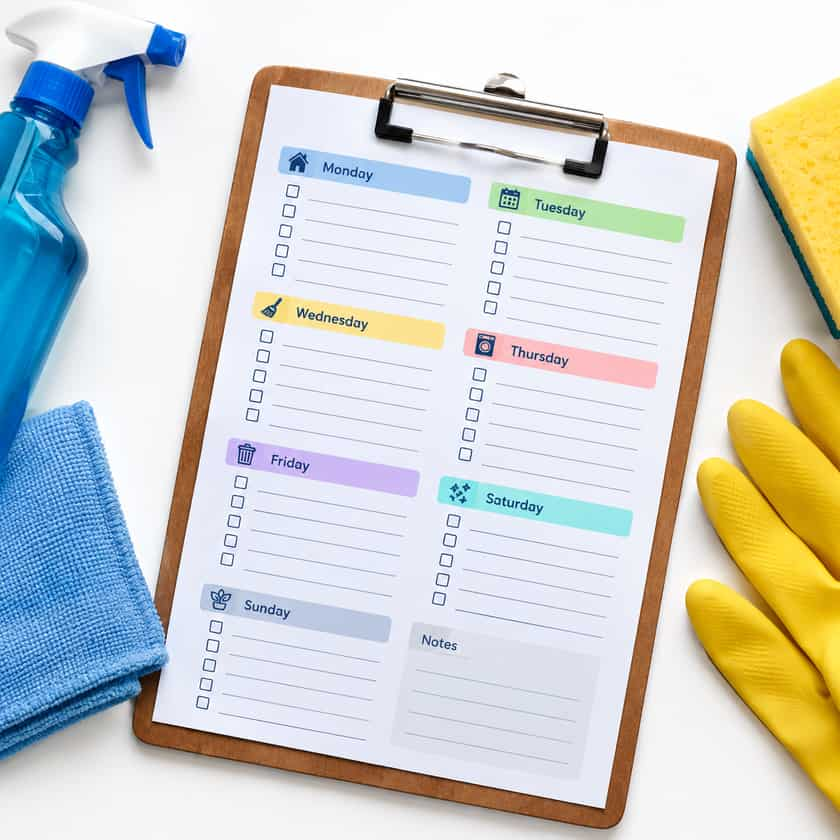
Establishing an Efficient Domestic Routine
Maintaining an orderly living environment requires consistent coordination rather than occasional marathon cleaning sessions. Planning a weekly household checklist provides an objective framework for managing recurring domestic duties without cognitive overload. When domestic tasks lack structure, small maintenance chores accumulate quickly, leading to cluttered living spaces, wasted time searching for misplaced essentials, and increased stress across the household. Establishing a predictable routine allows occupants to maintain cleanliness, protect home assets, and streamline domestic labor into manageable daily increments.
A well-conceived checklist serves as both an operational log and a preventative maintenance strategy. Instead of reacting to visible disorder or deferred maintenance emergencies, occupants can proactively address sanitation, appliance upkeep, and resource inventory. Developing this system requires an understanding of how distinct chores interact with household schedules, physical space, and available labor.
Beyond physical order, externalizing chores into an explicit schedule alleviates the invisible mental burden of home management. When tasks exist only as mental reminders, individuals constantly scan rooms for impending work, creating persistent low-grade stress. A visible, objective system transfers this cognitive burden onto paper or digital media, ensuring every resident knows what needs attention and when.
Assessing Household Needs and Operational Cadence
Before drafting a specific task sheet, conduct an operational audit of the physical environment. Every residence features unique variables, including square footage, flooring types, occupant density, presence of pets, and daily foot traffic. A studio apartment occupied by a single remote worker requires a distinct cadence compared to a multi-story home accommodating a family with young children and pets.
To design a functional system, categorize household obligations into three distinct tiers based on required frequency:
- Daily Maintenance: Foundational tasks that preserve basic hygiene and prevent operational disruption, such as washing dishes, wiping food preparation surfaces, making beds, taking out perishable trash, and performing a quick evening reset of common areas.
- Weekly Maintenance: Targeted chores that address accumulated dust, grime, and organizational drift. These tasks include vacuuming, mopping floors, scrubbing bathroom fixtures, laundering bed linens, changing bath towels, cleaning interior appliances, and conducting food inventory reviews.
- Periodic or Seasonal Tasks: Deep-cleaning and preventive care items performed monthly, quarterly, or semi-annually, such as descaling coffee makers, washing baseboards, cleaning refrigerator coils, inspecting HVAC filters, and rotating mattresses.
By clearly separating daily hygiene from weekly maintenance, the weekly checklist remains focused and realistic. Overloading a weekly list with daily essentials dilutes focus, while packing it with intensive seasonal tasks causes routine abandonment due to fatigue.
Structural Frameworks: Batching, Zoning, and Day-Specific Allocation
There are three proven structural frameworks for organizing weekly chores. Selecting the right model depends on household availability and personal work rhythms:
The Day-Specific Focus Model
This approach assigns a dedicated category of tasks to each day of the week. For example, Monday might be reserved for floor care across all dry rooms, Tuesday for surface dusting and wiping, Wednesday for deep bathroom sanitization, Thursday for laundry, and Friday for administrative logistics and meal preparation. This method minimizes cognitive switching, allowing individuals to retrieve a specific set of tools and complete an entire operational phase in one continuous block of twenty to forty-five minutes.
The Zone-Based Rotation Model
Under a zone system, the residence is divided into four or five geographic sectors, such as the kitchen and pantry, bathrooms, bedrooms, and living areas. The household focuses entirely on one specific zone each day, performing all relevant tasks within that perimeter, including wiping surfaces, cleaning mirrors, vacuuming, and trash removal. Zone cleaning is highly efficient for multi-room layouts because it concentrates supplies and physical presence in one area at a time.
The Concentrated Block Model
For households with rigid work commitments during the workweek, daily cleaning may prove impractical. The concentrated block model schedules two distinct ninety-minute blocks, typically on Friday evening and Saturday morning, during which the entire weekly checklist is completed sequentially. While physically demanding, this approach guarantees full completion and frees the remainder of the week from chore-related overhead.
The Hybrid System for Variable Lifestyles
Many modern households find that a single rigid structure does not fit rotating work shifts or fluctuating domestic demands. A hybrid system combines daily fifteen-minute zone maintenance during weekdays with a single sixty-minute batch session on the weekend for heavier tasks like floor washing or linen changes. This flexibility prevents guilt when busy weekdays prevent full execution while preserving baseline cleanliness.
Comprehensive Weekly Task Blueprint
The following schedule illustrates how weekly domestic responsibilities can be distributed across a standard seven-day period to prevent bottlenecks.
| Day | Focus Area | Essential Tasks | Recommended Supplies | Estimated Duration |
|---|---|---|---|---|
| Monday | Bathrooms and Sanitation | Disinfect sinks, toilets, and shower walls; wipe mirrors; replace hand towels | Disinfectant spray, microfiber cloths, toilet bowl brush, glass cleaner | 30 to 40 minutes |
| Tuesday | Dusting and Surfaces | Dust blinds, ceiling fans, shelves, picture frames, electronics, and moldings | Electrostatic duster, microfiber cloths, gentle surface cleaner | 20 to 30 minutes |
| Wednesday | Floor Care | Vacuum high-traffic carpets and rugs; sweep and damp-mop hard surface floors | Vacuum with HEPA filter, microfiber spray mop, floor cleaner | 35 to 45 minutes |
| Thursday | Linens and Textiles | Wash, dry, and replace bed sheets, duvet covers, and bath towels; air out rugs | Laundry detergent, drying rack or tumble dryer, fabric freshener | 30 minutes active |
| Friday | Kitchen Reset and Inventory | Clean microwave and oven exterior; discard expired food; sanitize sink drain | Degreaser, baking soda, surface disinfectant, garbage bags | 25 to 35 minutes |
| Saturday | Administration and Upkeep | Inspect smoke alarms, audit pantry supplies, file mail, assemble recycling | Recycle bins, shredder, basic household tool kit | 20 to 30 minutes |
| Sunday | Meal Planning and Prep | Create grocery shopping list, prep meals, stage weekly work items | Notepad, digital planner, food storage containers | 30 to 45 minutes |
Task Delegation and Collective Accountability
In multi-person households, checklist execution should not fall upon a single individual. Clear task delegation prevents domestic friction and reinforces shared ownership of the living environment.
To delegate effectively across household members:
- Map Tasks to Capability and Availability: Assign tasks according to age, physical ability, and scheduling realities. Younger family members can manage dry dusting, trash collection, and laundry folding, while adults handle chemical disinfection, floor care, and equipment maintenance.
- Establish Defined Completion Standards: Subjective instructions like "clean the bathroom" often lead to mismatched expectations. Define explicit criteria: for instance, "wipe the vanity surface until dry, replace the hand towel, scrub the toilet bowl, and empty the wastebasket."
- Rotate Unpopular Responsibilities: If specific duties are widely disliked, such as scrubbing ovens or sorting bulky recycling, rotate them on a bi-weekly cadence to ensure parity and team morale.
Tool Selection and Workspace Preparation
Operational friction is one of the primary reasons household checklists fail. If retrieving a mop requires unjamming a crowded closet, or if multiple spray bottles must be hunted down across different rooms, procrastination increases dramatically.
To streamline execution:
- Assemble a Portable Cleaning Caddy: Consolidate essential multi-surface sprays, microfiber cloths, glass cleaners, sponges, and rubber gloves into a single portable container. Move the caddy from room to room to minimize transit time.
- Dedicate Supplies by Hygiene Zone: Never use the same cloths or sponges in bathrooms that are used in food preparation areas. Adopt a color-coded microfiber system—for example, yellow for bathroom surfaces, blue for glass, and green for general kitchen counters—to eliminate cross-contamination risks.
- Maintain an Active Supply Inventory: Track remaining detergent, trash liners, and cleaning fluids directly alongside the weekly checklist. Add items to the shopping list before containers run completely empty to avoid stalled chore sessions.
- Maintain Cleaning Tools in Working Order: Dirty tools cannot produce clean surfaces. Empty vacuum canisters or replace bags before they reach capacity, regularly wash microfiber cloths in hot water without fabric softeners, and disinfect mop heads after each use. Keeping tools clean ensures each scheduled session operates at peak efficiency.
Managing Backlog and Troubleshooting Routine Failures
A household checklist is a dynamic tool rather than a rigid contract. Seasonal shifts, lifestyle changes, and unexpected life events require periodic recalibration.
If tasks consistently carry over uncompleted week after week, diagnose the underlying breakdown:
- Overly Optimistic Time Estimates: If a task allocated for fifteen minutes consistently requires forty-five minutes, recalibrate the schedule or split the task across multiple sessions.
- Excessive Task Volume: Pare down secondary tasks to protect essential hygiene routines. It is far better to execute five core tasks reliably than to abandon a list of fifteen items midway through the week.
- Unexpected Disruptions: When illness, travel, or demanding professional deadlines disrupt the routine, invoke a simplified triage mode. Focus exclusively on daily essentials—dishes, basic surface hygiene, and waste disposal—until regular household rhythms can be safely resumed.
By treating the weekly routine as an iterative framework, households establish an organized, calm, and predictable home environment that supports daily well-being without creating undue stress.