
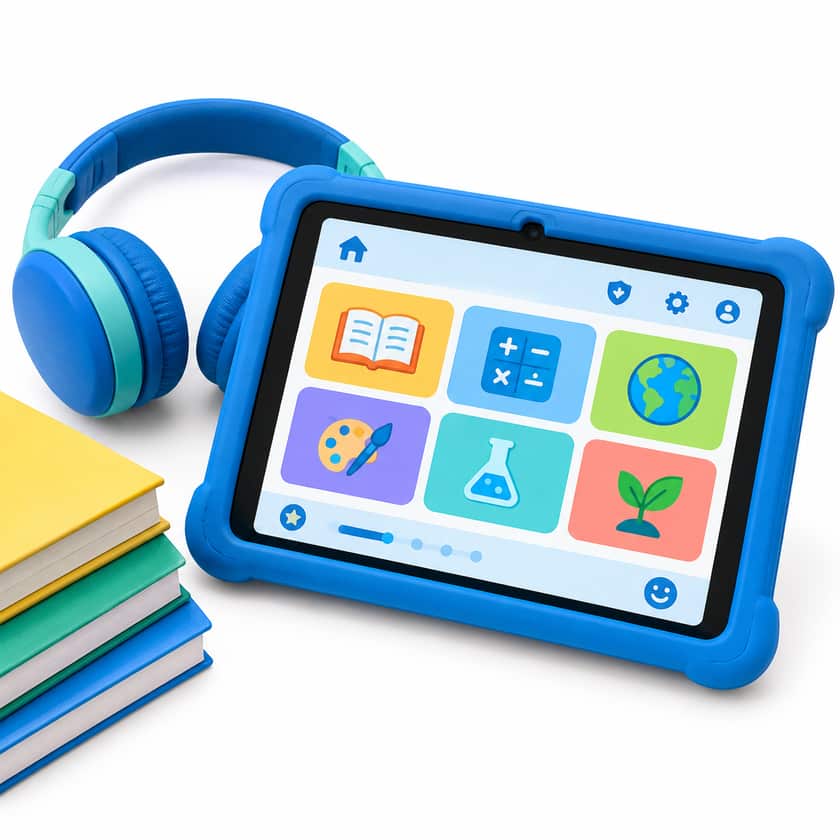
Architectural Pitfalls of Consumer Software in Early Education
Standard consumer software frequently fails young learners because the commercial digital ecosystem treats children as standard web users. Most mass-market educational software repurposes generic web frameworks or ad-driven engagement loops thinly disguised as gamification. When parents, tutors, and school administrators search for safe digital learning platforms for kids, they regularly confront a severe structural mismatch between commercial software incentives and pediatric developmental requirements.
Commercial application development relies primarily on algorithmic retention loops, continuous telemetry data harvesting, and behavioral conditioning to maximize active screen time. Applying these aggressive consumer paradigms to early childhood or primary education causes cognitive friction, digital fatigue, and severe privacy vulnerabilities. The resulting breakdown is not the fault of parental supervision lapses or inadequate device monitoring; rather, it stems from systemic design flaws where monetization engines, third-party analytics trackers, and unvetted content delivery networks fundamentally compromise the learning environment. A truly safe, effective digital learning platform requires an intentional, isolated software architecture that rigorously aligns regulatory data protection mandates with developmentally sound instructional scaffolding.
Evaluating Safe Digital Learning Platforms for Kids Across Core Digital Environments
Families and educational institutions navigating the modern digital ecosystem face an intricate operational challenge. Deploying unverified learning software exposes household networks and student profiles to covert digital fingerprinting, behavioral data harvesting, and accidental exposure to predatory marketing or unmoderated user-generated content. Parents often observe their children transitioning from focused educational lessons to hyper-stimulating mini-games designed to sell microtransactions or prompt banner ad interactions. This structural breakdown turns supposed educational screen time into an unregulated vector for commercial tracking and mental fatigue, fracturing attention spans and exposing household IP addresses to corporate brokers.
Common consumer-level workarounds fail because they do not address the foundational software architecture. Parents routinely rely on basic operating system screen-time timers, browser-based content filters, or local router-level DNS blocks. While these tools can limit total screen exposure or block known adult domains, they completely fail to establish a protective educational sandbox. Local DNS blockers and generic ad-filtering browser extensions do not stop first-party behavioral tracking, in-app microtransactions, or algorithmic engagement rabbit holes embedded directly within free-to-play educational applications. Furthermore, heavy-handed operating system restrictions frequently break necessary instructional functionality—such as interactive audio exercises or cloud-saved curriculum progress—creating technical friction without neutralizing the underlying tracking code embedded in the platform's core programming.
To overcome these structural pitfalls and secure reliable learning environments, procurement must adhere to three non-negotiable engineering criteria:
- Formal Regulatory Compliance: Safe digital learning platforms for kids must demonstrate independent, third-party certification under the Children's Online Privacy Protection Act (COPPA Safe Harbor designation) and the Family Educational Rights and Privacy Act (FERPA). This ensures complete legal immunity from behavioral tracking, retargeting pixels, and unauthorized student profiling.
- Walled-Garden Closed Delivery Architecture: The platform must run within an isolated content delivery network (CDN) that strictly prohibits outbound external links, open-web redirects, embedded video players from commercial platforms, and unmoderated peer-to-peer messaging.
- Pedagogical Mastery Algorithms: Platforms must replace randomized variable reward systems—such as infinite coin collection, countdown timers, and sudden difficulty spikes—with linear, mastery-based adaptive scaffolding designed by certified pediatric curriculum experts. Such linear frameworks ensure that educational advancements reflect genuine skill acquisition rather than compulsive interface interaction.
When benchmarking safe digital learning platforms for kids against industry baselines, four established entities represent the modern gold standards of safety, transparency, and pedagogical rigor:
- Khan Academy Kids: Operates as the premier zero-cost benchmark, maintaining an ad-free, non-profit ecosystem entirely free from commercial monetization, subscriptions, or external tracking code.
- PBS KIDS: Serves as the public broadcasting benchmark for early childhood education, combining curriculum-tested media with strict privacy frameworks verified by independent privacy seals like PRIVO.
- ABCmouse (Age of Learning): Serves as the commercial subscription benchmark for comprehensive, walled-garden early learning, offering structured multi-subject pathways without external ad networks.
- Common Sense Media Standards: Functions as the objective regulatory benchmark for software safety, auditing digital platforms across privacy transparency, commercial pressure, and developmental appropriateness.
Granular Architecture Breakdown and Platform Comparison Matrix
| Strategy / Option | Price/Cost Range | Structural/Technical Efficiency | Common Hidden Pitfalls / Traps | Ideal Use-Case Scenario |
|---|---|---|---|---|
| Dedicated Walled-Garden Subscriptions | $10 - $25 / month | High: Encrypted sandboxes, zero external links, zero commercial ad SDKs | Auto-renewal subscription creep; content fragmentation across multiple subjects | Early childhood literacy, phonics, and foundational mathematics (Ages 2–8) |
| Open-Access Non-Profit Platforms | 100% Free / Donor-Supported | High: Full COPPA Safe Harbor compliance, zero data monetization, open access | Slower interface updates; limited real-time technical customer support | Core K-12 academic mastery, supplemental home study, and independent remedial practice |
| Commercial Freemium Applications | Free base tier; $2 - $15 microtransactions | Low: Embedded tracking SDKs, banner ads, high cognitive disruption | Aggressive monetization pop-ups, telemetry tracking, and superficial gamification | Casual, short-duration skill reinforcement under direct continuous adult supervision |
| Institutional School-Licensed Portals | $50 - $150 / student / year | Very High: Strict FERPA/COPPA compliance, enterprise single-sign-on (SSO) | Inflexible home access; highly rigid curricula unsuited for self-directed pace | Formal hybrid school assignments, district-aligned curricula, and classroom integration |
To make an informed selection among these architectural models, administrators and families must evaluate three granular technical parameters:
- Telemetry and Third-Party SDK Footprint: Software architecture must be evaluated based on the third-party software development kits (SDKs) compiled into the codebase. Commercial apps frequently embed tracking libraries from social media networks or analytical firms to optimize user acquisition. A secure platform completely strips non-essential SDKs, ensuring that zero persistent device identifiers, MAC addresses, or coarse location tokens are broadcast across network requests. Independent network packet inspection should demonstrate zero outbound telemetry packets routed to known consumer advertising domains during active gameplay.
- Communication Sandbox and Interaction Design: When evaluating collaborative features, the communication framework must be strictly audited. Platforms that allow unmonitored text entry or direct file uploads introduce severe moderation risks. Safe platforms implement closed, pre-scripted phrase menus or strictly moderated, asynchronous teacher-reviewed portals, preventing any possibility of malicious contact or personal identity disclosure.
- Algorithmic Pacing versus Dopamine Engineering: The underlying learning engine must be engineered around deliberate cognitive load theory rather than gamified retention hacking. Systems should employ adaptive difficulty curves that adjust to student comprehension, paired with mandatory session cooldowns or natural chapter conclusions. Pedagogical platforms should emphasize cognitive mastery over artificial streaks that trigger emotional distress, discouraging addictive screen attachment while supporting deep conceptual retention.
Implementation Checklist and Vendor Consultation Protocol
Deploying digital tools in home or classroom settings demands rigorous quality control before granting unsupervised student access. Use this structured physical and technical protocol to verify system integrity.
Four-Point Platform Inspection Checklist
- Verify Active Privacy Seals: Check the platform's website footer and privacy policy for active, clickable trust badges from authorized COPPA Safe Harbor organizations such as PRIVO, CARU, or iKeepSafe, verifying the seal links to a valid certificate.
- Audit System Permissions: During initial setup on mobile or desktop devices, review requested operating system privileges; immediately flag and deny unneeded permissions such as contacts, ambient microphone capture, precise GPS location, or external photo library access.
- Test Link and Redirect Boundaries: Systematically click all internal hyperlinks, parent gates, help screens, and user terms on the target device to confirm the application cannot open an unmanaged, unrestricted web browser window.
- Review Administrative Account Deletion: Ensure the user management console provides an immediate, self-service option to permanently wipe all student profile data, voice recordings, and diagnostic logs from cloud databases.
Four-Point Vendor Consultation Script
When consulting with software representatives, school procurement officers, or platform advisors, demand precise answers to these four technical questions:
- "Can you provide third-party audit documentation verifying that your platform complies with COPPA Safe Harbor and FERPA standards without transmitting student telemetry to external commercial brokers?"
- "What specific software guardrails are hardcoded into the application to guarantee that students cannot navigate out of the learning module into unmoderated web environments?"
- "How does your engineering team calibrate progression algorithms to ensure students are rewarded for academic comprehension rather than continuous screen exposure?"
- "What is your legally binding data retention timeline, and what exact process is required for parents or schools to permanently purge student diagnostic history from your servers?"