
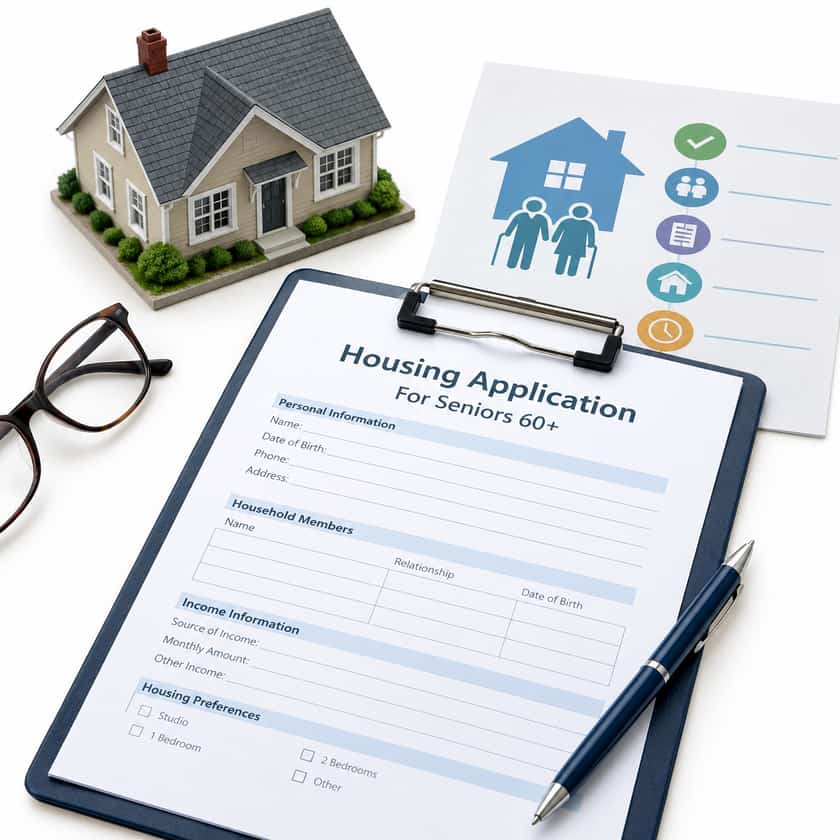
Entering your golden years on a fixed income often presents severe residential challenges. Standard market-rate rental housing across North America and Europe has grown increasingly unaffordable, forcing many older adults to allocate upwards of fifty percent of their monthly retirement benefits toward rent alone. This financial pressure creates severe vulnerability, as standard commercial lease agreements rarely account for the physical mobility adjustments or strict budgetary boundaries required by aging populations. Private housing markets rely on competitive, speculative pricing that frequently pricing out fixed-income pensioners, leaving many vulnerable to sudden rent hikes, lease non-renewals, or unmaintained structural hazards. Social housing, municipal public housing, and government-subsidized senior apartments exist precisely to remedy this systematic market failure. However, navigating the bureaucratic qualification criteria, regional waiting lists, and strict income thresholds requires a structured, strategic approach. Understanding how these social safety nets operate empowers seniors aged sixty and older to secure safe, accessible, and permanently affordable long-term living arrangements.
Understanding Social Housing Eligibility for Seniors Over 60
Applying for social housing as a senior involves navigating distinct public policy frameworks designed to prioritize low-to-moderate-income retirees. Local housing authorities, such as the U.S. Department of Housing and Urban Development (HUD) through Section 8 and Section 202 programs, or municipal housing trusts in Canada and the UK, establish clear admission baselines. The primary qualification criterion centers on household income relative to the Area Median Income (AMI). For most senior-dedicated social housing developments, an applicant's total annual gross income—including Social Security pensions, annuity payouts, and investment distributions—must fall below fifty percent (Very Low Income) or thirty percent (Extremely Low Income) of the regional median.
Common quick fixes, such as relying on informal family sublets or temporary commercial rental discounts, fail to provide long-term housing stability. Temporary private leases lack statutory rent controls, exposing seniors to future market shifts. To qualify officially, applicants must compile a comprehensive dossier verifying their age, citizenship or legal residency status, and financial standing. Assets such as savings accounts, real estate holdings, and liquid investments are evaluated through asset-imputation formulas, where a tiny percentage of the total asset value is added to annual income calculations rather than disqualifying the applicant entirely.
Additionally, medical verification plays a crucial role. Seniors with mobility limitations or chronic health conditions can request specific physical accessibility features, such as zero-step entries, roll-in showers, and widened doorways, which can impact unit assignment priority.
Navigating Waiting Lists and Priority Status
One of the most daunting aspects of applying for public housing or subsidized senior apartments is managing lengthy wait times. Due to high demand, public waiting lists frequently remain open for short windows or operate via randomized lottery systems. Once on a list, waiting periods can range from several months to several years depending on regional demand and unit availability.
To manage this process effectively, senior applicants should leverage local administrative preference points. Most municipal housing authorities assign priority status based on specific vulnerability factors. Applicants who are currently unhoused, facing imminent no-fault eviction, spending over fifty percent of their gross income on shelter, or living in substandard conditions receive elevated placement on waiting lists.
Failing to update contact information or missing annual recertification notices from housing agencies often results in immediate removal from waiting lists—a critical error that sets applicants back years. Maintaining continuous communication with caseworkers and utilizing designated housing navigators, such as those funded by Area Agencies on Aging (AAA) or local housing authorities, ensures your application remains active and accurately reflects any changes in income or health status.
Comparing Senior Housing Options and Programs
Selecting the right housing model requires evaluating financial structures, operational models, and long-term care accessibility. The following matrix details the core social and subsidized housing pathways available to older adults.
| Strategy / Option | Price/Cost Range | Structural/Technical Efficiency | Common Hidden Pitfalls / Traps | Ideal Use-Case Scenario |
| --- | --- | --- | --- | --- ||
| HUD Section 202 Supportive Housing | 30% of adjusted gross monthly income | High: Purpose-built for seniors with built-in accessibility features | Strict income caps; long waiting lists; mandatory age 62+ minimum | Low-income seniors needing independent living with supportive services |
| Housing Choice Vouchers (Section 8) | Tenant pays 30-40% of income; voucher covers balance | Moderate: Flexibility to rent in private market if landlord accepts voucher | Finding landlords accepting vouchers within Fair Market Rent limits | Seniors wishing to remain in their existing communities or near family |
| Low-Income Housing Tax Credit (LIHTC) | Fixed below-market rent based on Area Median Income | High: Modern construction with modern energy standards | Rent is fixed, not adjusted to individual income; annual re-qualification required | Moderate-income seniors who do not qualify for deeply subsidized housing |
| Municipal Public Housing Developments | 30% of adjusted gross monthly income | Variable: Depends on local authority management and building age | Deferred maintenance in older complexes; localized safety concerns | Fixed-income retirees seeking permanent, deeply subsidized community living |
Critical Technical and Operational Parameters
When evaluating these programs, applicants must analyze three essential operational factors:
- Rent Calculation Ratios: Deeply subsidized housing programs (such as HUD Section 202 or Public Housing) cap rent strictly at thirty percent of adjusted monthly income after deducting allowed medical expenses. Conversely, tax-credit properties (LIHTC) cap rent at a set rate tied to unit size and median area income, meaning the rent remains fixed even if the tenant's personal income drops.
- Physical Accessibility Standards: Facilities governed by Federal Section 504 rules must adhere to strict Uniform Federal Accessibility Standards (UFAS). These mandate specific grab bar reinforcement, lowered counter heights, lever-style door handles, and emergency call systems throughout the apartment.
- Medical Expense Deductions: Under federal subsidized programs, senior households qualify for an unreimbursed medical expense deduction. Out-of-pocket expenses exceeding three percent of annual gross income—including Medicare premiums, prescription drugs, dental care, and home health assistance—are deducted from total income, directly reducing the monthly tenant rent contribution.
Application Verification and Action Plan
Executing a successful social housing application demands thorough preparation and diligent administrative follow-up. Follow this practical verification and consultation plan to secure your placement efficiently.
Pre-Submission Verification Checklist
- Identity and Age Documentation: Gather original government-issued photo IDs, birth certificates, and Social Security cards for all household members.
- Financial Proof: Compile twelve consecutive months of bank statements, pension award letters, Social Security benefit statements, and documentation of all liquid assets.
- Medical and Expense Verification: Collect pharmacy printouts for the past twelve months, health insurance premium receipts, and doctor statements confirming required mobility modifications or caregiver needs.
- Residential History: Secure contact information for all landlords over the past five years, along with copy proof of utility payments and formal lease agreements.
Housing Intake Consultation Script
When meeting with a municipal housing caseworker, housing navigator, or property manager, ask these four crucial questions to clarify terms and avoid delays:
- "What local preference categories do I qualify for, and what specific documentation is required to formally claim priority status on this waiting list?"
- "How does this property calculate allowable out-of-pocket medical deductions when establishing my final monthly rental payment?"
- "Is this building funded under Section 202, Public Housing, or LIHTC, and will my rent automatically adjust downward if my personal pension income changes?"
- "What is the precise protocol for updating my contact information, and how frequently must I submit recertification paperwork to ensure I am not purged from the waitlist?"