
Introduction & The Core Problem
When evaluating high-capacity energy resilience options, off-the-rack traditional portable power stations often fail to meet residential and mobile power demands. Homeowners and outdoor enthusiasts frequently encounter a fundamental structural mismatch: standard consumer power stations lack either the continuous inverter wattage, battery capacity, or specific physical connection interfaces required to sustain continuous electrical loads. Selecting an off-grid energy system requires matching continuous wattage, surge requirements, battery chemistry, and system voltage to the specific application.
Moving beyond basic battery packs requires evaluating total surge capabilities, transfer switch compatibility, and solar array charging limits. A properly configured system ensures reliable backup during extended power outages, off-grid camping trips, and heavy RV travel while eliminating the maintenance drawbacks of traditional gas generators.
Scenario-Based Solution Guides
Locating Local Suppliers: Solar Generators for Sale Near Me
Finding dependable suppliers when searching for Solar Generators for Sale Near Me requires evaluating local inventory for high-output systems alongside manufacturer warranty fulfillment. Relying solely on standard big-box retail inventory often leads to under-spec'd equipment that lacks proper NEMA outlets or expansion ports. To secure an appropriate setup, verify local dealer certifications, inspect shipping options for heavy LFP (Lithium Iron Phosphate) batteries, and compare local dealer pricing against direct-to-consumer benchmarks like EcoFlow, Bluetti, Goal Zero, and Anker. Working with authorized local dealers ensures immediate access to replacement cables and fast warranty service.
Whole-House Energy Backup: Solar Generator that Can Power a House & What Solar Generator Can Power a House
Determining What Solar Generator Can Power a House or finding a Solar Generator that Can Power a House requires calculating your household's baseline continuous wattage and simultaneous surge loads. Standard off-the-shelf power stations under 2,000 Wh fail when subjected to major household appliances like central air units, well pumps, and electric water heaters. A viable Solar Power Backup Generator for Home setup generally demands a 5,000W to 12,000W continuous output inverter paired with a minimum of 10kWh to 15kWh of scalable LFP battery capacity. Connecting these units to a home requires a professional manual transfer switch or an smart transfer panel, bypassing standard wall outlets to safely energize home circuits.
Regional Grid Systems: Solar Power Generator for Home Uk
Deploying a Solar Power Generator for Home Uk applications requires addressing unique regional grid standards, including 230V 50Hz AC voltage outputs and strict G98/G99 UK grid tie regulatory compliance. Standard international models designed strictly for North American 120V 60Hz architectures will not function. High-efficiency home backup units in the UK market must incorporate MCS-certified solar panels, dual-MPPT solar charge controllers, and robust IP65 weather-rated enclosures to handle lower winter solar irradiance levels while maintaining uninterrupted domestic power.
Portable Excursions: Recommend the Best Solar Generators for an Off Grid Camping Trip
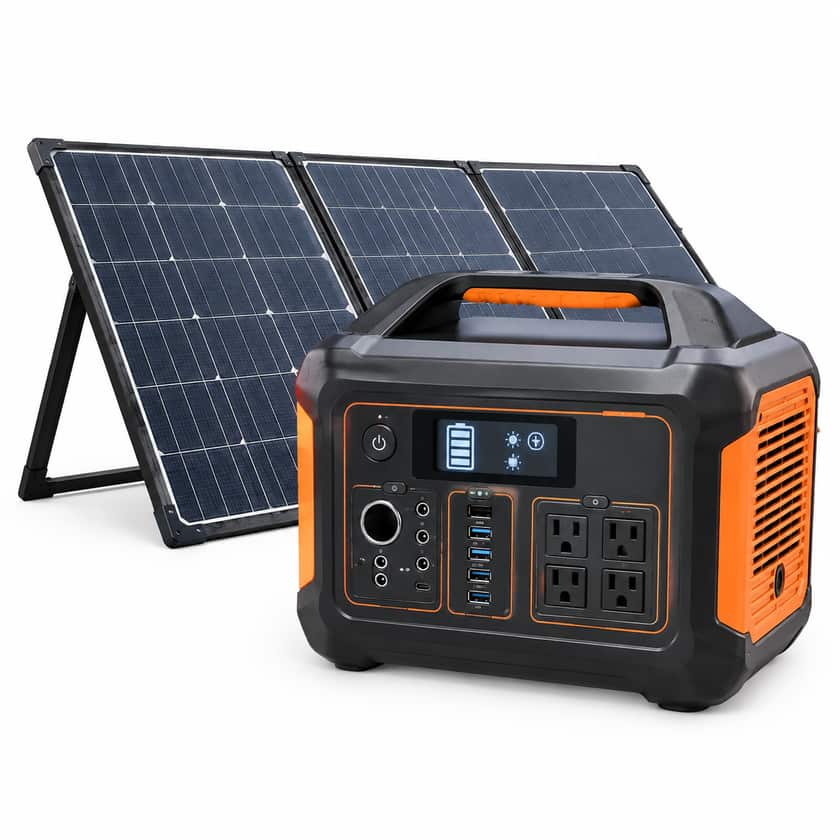
When asked to Recommend the Best Solar Generators for an Off Grid Camping Trip, lightweight durability and solar input efficiency take priority over massive output capacity. Small portable power stations around 500W to 1,500W equipped with folding solar panels represent the ideal sweet spot. Users often fail by carrying heavy, static power stations or under-sized solar panels that fail to recharge during overcast wilderness conditions. Look for IP67-rated solar panels, MPPT charging algorithms, and integrated CPAP power support from brands such as Jackery, Bluetti, and EcoFlow.
RV Connection Standards: Solar Generator with 30 Amp Rv Outlet & Best Solar Generator for Rv 30 Amp
Selecting the Best Solar Generator for Rv 30 Amp applications or locating a Solar Generator with 30 Amp Rv Outlet requires a integrated TT-30R receptacle delivering 120V up to 30 amps (3,600 watts continuous). Attempting to run a 30A RV electrical rig using household 15A adapters frequently trips thermal breakers on the generator when attempting to start an RV air conditioner. A dedicated 30A RV output provides clean power directly to the RV's main breaker panel without risking voltage drops or melted adapter plugs.
Heavy-Duty Mobile Power: Solar Generator for Rv 50 Amp
Running a heavy-duty Solar Generator for Rv 50 Amp system requires a split-phase generator capable of providing 120V/240V dual-voltage power up to 12,000 watts continuous through a NEMA 14-50R outlet. Standard 30A or single-phase 120V generators cannot supply both 120V legs of a 50A RV power center, leading to offline 120V appliances inside the coach. Systems designed by Victron Energy, EcoFlow (Delta Pro Ultra), and Bluetti (EP500 Pro / AC500) serve as benchmark reference standards for heavy 50A RV setups.
Refrigeration Loads: Solar Generator that Can Power a Refrigerator
Installing a Solar Generator that Can Power a Refrigerator requires accounting for compressor startup surge wattages. While a standard residential refrigerator consumes 150W to 250W during continuous running, compressor startup spikes reach 1,200W to 2,000W for several seconds. If a solar generator's inverter lacks peak surge capacity, the system triggers an overload fault. A system with at least 2,000W continuous output and 4,000W surge capacity paired with a 1,000Wh to 2,000Wh battery comfortably keeps a refrigerator running for 24 to 48 hours without active solar input.
Panel Generation Limits: What Can a 600 Watt Solar Panel Power
Understanding What Can a 600 Watt Solar Panel Power requires separating peak wattage ratings from daily kilowatt-hour (kWh) yield. In real-world conditions, a 600W solar panel array subjected to 5 peak sun hours daily generates approximately 2.4kWh to 2.7kWh of usable energy after standard thermal and inverter efficiency losses. This daily energy output can reliably power a mid-sized 150W refrigerator continuously for 18 hours, run a portable 500W air conditioner for 4 to 5 hours, or recharge a high-capacity portable power station, laptops, LED lighting, and mobile devices indefinitely.
Hybrid Battery Maintenance: Briggs and Stratton 7000 Watt Generator Battery
Maintaining hybrid setups involving traditional gas generators alongside solar storage often centers around starter battery maintenance, such as servicing a Briggs and Stratton 7000 Watt Generator Battery. Gas backup units rely on 12V AGM or lead-acid starter batteries that discharge over time during non-use. Pairing traditional 7,000W gas generators with solar storage arrays allows for automated dual-fuel or solar-hybrid operation, ensuring emergency auto-start functionality when solar storage reserves drop below critical levels.
Granular Breakdown & Comparison Matrix
| Strategy / Option | Price/Cost Range | Structural/Technical Efficiency | Common Hidden Pitfalls / Traps | Ideal Use-Case Scenario |
|---|---|---|---|---|
| Portable Modular Power Stations | $1,200 - $3,500 | High (90-93% Inverter, Modular LFP) | Limited continuous surge; proprietary battery cables | Off-grid camping trips, light RV setups, basic fridge backup |
| Split-Phase Heavy Solar Systems | $4,500 - $10,000 | Maximum (120V/240V, High MPPT Solar Input) | Heavy total weight; requires dedicated panel mounting | Whole-house backup, 50 Amp RV power, extended off-grid living |
| Hybrid Solar + Gas Generator Setup | $2,500 - $6,000 | Balanced (Solar priority with gas fail-safe) | Requires fuel storage and starter battery maintenance | Prolonged grid outages, severe winter emergency weather |
| Direct DIY Component Array | $2,000 - $5,000 | Highly Customizable (Raw Victron/Classified Components) | High technical setup complexity; no single warranty point | Custom RV builds, DIY off-grid cabins, specialized voltages |
Evaluating system efficiency requires examining three core technical decision parameters:
- Inverter Surge-to-Continuous Ratio: Verify that the inverter delivers at least a 2:1 peak surge rating for a minimum of 500 milliseconds to handle inductive motor loads from refrigerators, well pumps, and air conditioners.
- MPPT Voltage Input Window: High-efficiency MPPT (Maximum Power Point Tracking) controllers require wide DC voltage windows (e.g., 11V–150V DC or up to 500V DC on large units) to allow long series strings of solar panels without exceeding voltage limits.
- Battery Cycle Life (LFP vs NMC): Select Lithium Iron Phosphate (LiFePO4) chemistry for 3,500+ operational cycles to 80% capacity, compared to older Nickel Manganese Cobalt (NMC) formulations which degrade rapidly after 500 to 1,000 cycles.
Practical Vendor & Purchase Action Plan
Pre-Purchase Physical & Technical Inspection Checklist
- Interface Verification: Confirm the unit features native TT-30R (30A RV), NEMA 14-50R (50A RV), or split-phase L14-30R output options without needing third-party adapters.
- Solar PV Voltage Alignment: Ensure your intended solar panel array's open-circuit voltage ($V_{oc}$) remains at least 15% below the solar generator's maximum MPPT DC input limit under cold weather conditions.
- Transfer Switch Compatibility: Verify the generator uses a neutral-floating configuration or provides a ground-neutral bonding plug required by standard home transfer switches.
- Battery Expansion Capability: Check whether additional battery modules connect via plug-and-play high-amp DC expansion ports without requiring separate external inverters.