
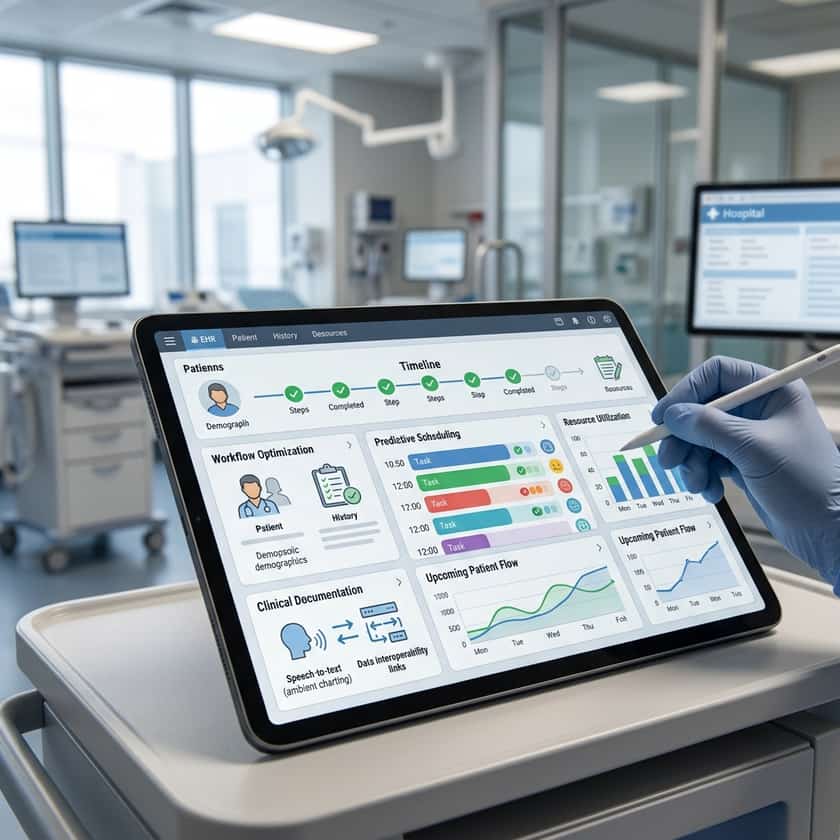
The New Era of Medical Software in US Healthcare
As healthcare systems across the United States face unprecedented demands, the integration of cutting-edge medical software has transitioned from a competitive advantage to an absolute operational necessity. In 2026, the primary focus of clinical technology is no longer just data storage, but the active optimization of daily operations. Medical facilities, ranging from multi-state hospital networks to independent private practices, are adopting highly specialized software systems designed to alleviate administrative burdens. By targeting the core bottlenecks in patient intake, clinical charting, and billing cycle management, these modern platforms allow healthcare providers to reclaim valuable hours of their day, shifting their focus back to direct patient care and clinical excellence.
The transition toward more agile, intuitive medical platforms is largely driven by the critical need to address clinical burnout. Clinicians have historically spent nearly half of their workdays navigating clumsy user interfaces and inputting repetitive electronic health record (EHR) data. In response, the latest generation of medical software leverages advanced automation and natural language processing to reshape the clinical environment. This shift is not merely about introducing new digital tools, but rather about creating cohesive, intelligent ecosystems where systems seamlessly communicate, predict staff needs, and significantly reduce cognitive fatigue.
Key Features Streamlining Modern Clinical Workflows
To truly streamline operations, 2026 medical software relies on a suite of integrated, intelligent features that address the entire patient journey. Ambient clinical intelligence, for instance, uses secure voice recognition to document patient encounters in real time, automatically translating conversations into structured, compliant clinical notes. Additionally, smart scheduling engines utilize predictive analytics to anticipate appointment cancellations and automatically optimize provider schedules, reducing idle time. By embedding intelligence directly into the software's architecture, healthcare facilities can automate routine administrative tasks, ensuring that every member of the medical staff operates at the top of their license.
- Ambient Clinical Documentation: Securely records and drafts clinical notes from patient-doctor conversations.
- Predictive Patient Scheduling: Maximizes daily appointments while minimizing patient wait times.
- Automated Prior Authorizations: Accelerates insurer approvals using integrated clinical decision rules.
- Unified Billing and Coding: Integrates automated ICD-11 coding suggestions to reduce billing rejections.
- Interoperable Health Information Exchange: Enables seamless, secure patient data transfer across disparate systems.
- Real-Time Analytics Dashboards: Offers immediate visibility into operational performance and patient flow.
The Impact on Interoperability and Compliance
Interoperability remains a cornerstone of the modern US healthcare infrastructure. Under recent federal mandates and updated standards from the Office of the National Coordinator for Health Information Technology (ONC), software must support seamless data exchange. Modern medical software uses advanced APIs and Fast Healthcare Interoperability Resources (FHIR) standards to guarantee that critical health information is securely accessible whenever and wherever it is needed. This level of connectivity ensures that emergency departments, specialists, and primary care physicians all operate with a comprehensive view of a patient’s medical history, drastically reducing the risk of medical errors and redundant testing.
Moreover, stringent compliance and data security protocols are deeply woven into the fabric of today’s medical software architectures. With cyber threats targeting healthcare facilities at an all-time high, platforms utilize zero-trust security models, end-to-end encryption, and multi-factor authentication to protect sensitive patient records. Adherence to HIPAA regulations and other state-specific privacy laws is automated through continuous compliance monitoring features. These built-in security guardrails provide administrators with peace of mind, knowing that while patient data flows freely between authorized clinical touchpoints, it remains fully protected from unauthorized access or external breaches.
| Workflow Area | Legacy Systems (Pre-2026) | Modern Medical Software | Key Benefit |
|---|---|---|---|
| Patient Intake | Manual paper forms, delayed manual entry | Digital pre-arrival check-in and automated validation | Reduces lobby wait times by 65% |
| Clinical Notes | Hours of typing after clinical shifts | Ambient voice recognition and auto-drafted notes | Saves up to 2 hours of daily documentation |
| Prior Authorization | Phoning insurers and manual faxing | Automated real-time electronic authorization | Speeds up treatment approvals by days |
| Data Sharing | Siloed databases requiring physical faxes | FHIR-compliant real-time query exchange | Instant access to external medical history |
| Billing & Coding | Manual code selection and frequent errors | AI-assisted ICD-11 accurate coding engine | Lowers claim rejection rates by up to 40% |
Enhancing Patient Engagement and Care Coordination
A truly streamlined workflow extends beyond the clinic walls to encompass the patient experience. The latest medical software integrates patient-centric portals that empower individuals to take an active role in their healthcare journeys. These platforms allow patients to schedule appointments, view lab results, message their providers, and make secure payments from any mobile device. By simplifying these patient-facing workflows, medical facilities can significantly reduce the volume of inbound phone calls and administrative inquiries, allowing front-desk staff to focus on in-person interactions and other high-priority tasks.
Furthermore, care coordination across multidisciplinary teams is greatly enhanced by centralized communication tools within the software. Care coordinators, nurses, and social workers can access shared care plans, track patient progress, and communicate instantly through secure, HIPAA-compliant messaging systems. This real-time collaboration is particularly vital for managing patients with chronic conditions, where timely interventions can prevent costly hospital readmissions. By bridging the communication gap between different care settings, modern software ensures a continuous, high-quality care experience that consistently improves clinical outcomes and patient satisfaction metrics.
Strategic Considerations for Software Implementation
Selecting and deploying new medical software is a significant undertaking that requires careful planning and a clear change management strategy. Facility leaders must begin by conducting a thorough needs assessment to identify specific clinical bottlenecks and operational goals. Engaging front-line clinicians, IT staff, and administrative personnel early in the selection process ensures that the chosen platform aligns with the actual daily workflows of its users. This collaborative approach not only helps in identifying the most suitable software solution but also fosters a sense of ownership among staff, which is critical for driving high adoption rates.
Comprehensive training and robust technical support are equally vital to a successful transition. Rather than overwhelming staff with a sudden system-wide rollout, many facilities find success in a phased implementation strategy, introducing core modules gradually. Providing continuous, hands-on training sessions and establishing internal 'super-users' who can offer peer-to-peer support significantly reduces the learning curve. Ultimately, investing in the right modern medical software, backed by a thoughtful implementation plan, equips healthcare organizations with the infrastructure necessary to thrive in an increasingly complex and demanding clinical landscape.