
The Limits of Off-the-Shelf Solutions
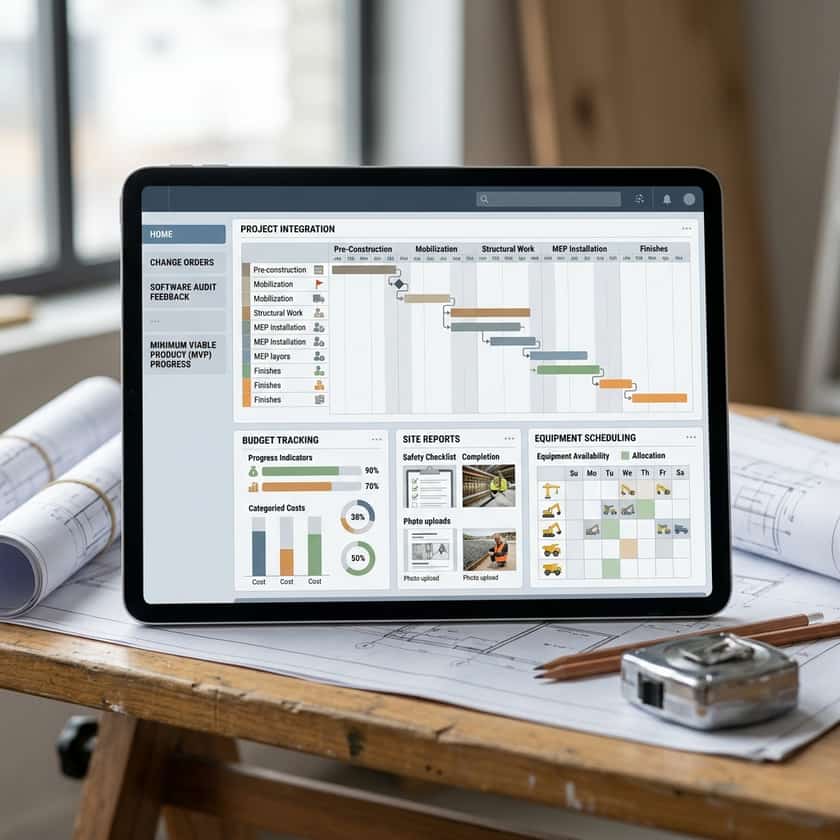
For many construction firms, the journey begins with popular, out-of-the-box management software. These platforms offer standardized features like basic scheduling, rudimentary budgeting, and simple document storage. While they work well for general contractors with straightforward workflows, they often hit a ceiling as a company scales. Specialized firms, such as those handling complex infrastructure or luxury residential projects, frequently find themselves wrestling with software that lacks the specific integration, reporting, or field-to-office communication capabilities they desperately need. This frustration is where the conversation about custom construction software often begins.
The primary issue with mass-market software is the 'one-size-fits-all' dilemma. A software vendor designs a product to satisfy the average user's needs, not necessarily your firm's unique operational DNA. When your workflows are forced to adapt to the software, rather than the software supporting your proven processes, inefficiencies creep in. Custom construction software solves this by flipping the script: the technology is engineered to match your firm's specific project lifecycle, compliance requirements, and communication protocols, effectively removing the friction that generic tools impose on daily operations.
Core Advantages of Tailored Development
Investing in bespoke construction software provides distinct competitive advantages that generic alternatives simply cannot match. By focusing on your specific pain points, you can automate manual tasks that currently bleed hours from your payroll every week. Whether it is automated material procurement, real-time safety reporting, or complex compliance tracking, custom tools can act as a force multiplier for your staff. Furthermore, owning your software means you control the roadmap. You are not at the mercy of a third-party vendor’s release schedule, which might prioritize features you never use while ignoring the ones you need.
- Scalability: Build the architecture to grow alongside your firm's revenue and complexity.
- Integration: Create seamless data bridges between existing accounting, CAD, and scheduling tools.
- Security: Implement proprietary data handling protocols tailored to your firm's security standards.
- User Experience: Design interfaces that your field workers actually find intuitive and easy to use.
- Competitive Edge: Utilize proprietary features that improve delivery speed and accuracy, differentiating your bid.
Assessing the Development Lifecycle
Embarking on custom software development is not a small commitment; it requires a strategic approach. It begins with a comprehensive audit of your current processes. Too often, firms attempt to digitize broken or outdated workflows, which only leads to more efficient versions of bad processes. Before writing a single line of code, your team must map out existing data silos, communication bottlenecks, and decision-making points. This discovery phase is the most critical step, as it dictates the functional requirements for the developers. A well-defined blueprint prevents scope creep and keeps the project within budget.
| Phase | Focus Area | Key Outcome |
|---|---|---|
| Discovery | Process Mapping | Functional Requirements |
| Prototyping | User Interface | Visual Feedback |
| Development | Coding Backend | Minimum Viable Product |
| Testing | QA/Field Trials | Bug-free Implementation |
| Deployment | Staff Training | Full Operational Use |
Overcoming Implementation Challenges
The transition to custom software is as much about change management as it is about technology. Even the most elegant software will fail if your field teams and office staff refuse to use it. Resistance often stems from a lack of involvement during the design phase. To mitigate this, include representatives from every level of your organization—from site superintendents to project managers—in the feedback loops. When employees see their own suggestions incorporated into the interface, they are significantly more likely to adopt the tool and provide valuable feedback during the pilot phase.
Another common pitfall is 'feature overload.' It is tempting to include every conceivable capability, but this often leads to bloated software that is difficult to navigate. Instead, prioritize a 'minimum viable product' approach. Build the core features that solve your biggest, most urgent bottleneck first. Once those are stable and the team is comfortable, you can release subsequent modules or enhancements. This phased approach also helps in managing capital expenditure, spreading costs out over time rather than requiring a massive, upfront investment before seeing any return on the software’s value.
Long-Term Considerations and Maintenance
Choosing the custom path also means accepting the responsibility of ownership. Unlike SaaS products where the vendor handles updates, security patches, and server uptime, custom software requires a maintenance strategy. You will need to decide whether to maintain an in-house IT team for these tasks or contract with a software development firm for ongoing support. A reputable development partner should offer a service-level agreement that covers bug fixes, performance monitoring, and occasional updates to keep the system compatible with the latest operating systems and security protocols.
Ultimately, the best custom construction software solution is one that stays agile. The construction industry is constantly evolving, with new materials, building codes, and sustainability standards emerging regularly. Your software should not be a static asset. By building modularly, you can ensure that your platform can adapt to future regulations or industry shifts without requiring a complete rewrite. When planned thoughtfully, custom software transforms from an expense into a long-term strategic asset that elevates the consistency and profitability of your construction projects.