
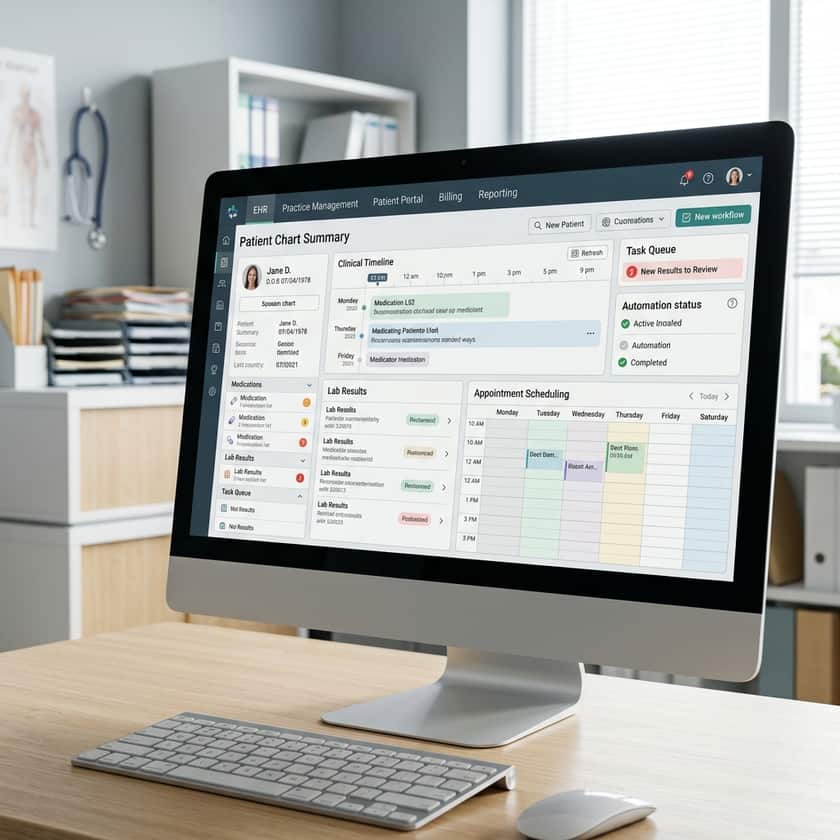
In 2026, the United States healthcare sector is navigating a highly complex landscape. Medical facilities are managing unprecedented workforce shortages, rising clinical overhead, and steadily growing patient volumes due to an aging population. These compounding pressures are forcing a fundamental shift in how practices manage daily operations. Rather than treating electronic health record (EHR) systems as static digital filing cabinets, modern medical facilities are actively adopting unified, intelligent medical software to optimize workflows. This digital transformation is not merely about eliminating physical paperwork; it is about deploying smart, secure systems that coordinate clinical operations, automate back-office tasks, and dramatically reduce clinician burnout. By establishing a robust digital core, providers can protect their operating margins while elevating the standard of patient care.
Core Features Redefining Medical Software in 2026
The latest generation of medical software is distinguished by its ability to transition from passive data capture to active clinical and administrative assistance. At the forefront of this shift is the seamless integration of generative artificial intelligence and machine learning. Rather than spending valuable hours manual-charting after patient visits have concluded, clinicians are now utilizing automated ambient clinical intelligence to draft comprehensive, compliant progress notes in real time during patient encounters. Furthermore, advanced interoperability standards have made seamless data exchange across disparate clinical locations, diagnostic networks, and laboratory registries an everyday reality. Modern platforms also feature clinical decision support systems that utilize real-time patient history to deliver proactive diagnostic recommendations directly to providers.
- Ambient AI Scribes: Real-time verbal translation into highly structured clinical notes to eliminate hours of evening administrative work [1.1.2].
- Unified EHR Integration: Consolidation of scheduling, clinical charting, and billing onto a single unified database to eliminate error-prone data replication.
- Interactive Patient Portals: Patient-facing tools that automate intake forms, collect digital signatures, and support online scheduling and payments.
- Remote Patient Monitoring (RPM) Portals: Automated triage systems that ingest data from wearable devices and flag exceptions, keeping care teams informed without data overload.
- Smart Revenue Cycle Management: AI-driven coding engines that cross-reference billing documentation against payer guidelines to maximize clean claim rates.
Empowering Patients Through Modern Access Portals
Beyond streamlining clinical documentation, modern medical software places a heavy emphasis on patient empowerment and communication. Patient portals have evolved from simple medical record viewing platforms into dynamic patient engagement hubs. Today's portals feature secure messaging systems, automated appointment reminders, and digital health surveys that collect patient-reported outcomes before clinical appointments. By giving patients direct access to their health metrics and simplified payment channels, facilities significantly reduce administrative telephone traffic and lower payment collection friction. This active engagement not only enhances patient satisfaction but also leads to higher adherence to treatment plans and better clinical outcomes overall.
Streamlining Clinical and Administrative Workflows
Optimizing a medical facility requires streamlining both the patient-facing front office and the complex administrative machinery running in the background. Modern workflow orchestration software serves as the vital connective layer between these historically siloed operational domains. For example, when a patient books an appointment online, the software automatically initiates real-time insurance eligibility checks, flags potential prior authorization requirements, and delivers digital pre-visit intake forms to the patient's mobile device. Inside the examination room, clinical decision support alerts are filtered using advanced machine learning models so that care teams only see high-priority, actionable alerts, avoiding the dangerous issue of alert fatigue. This end-to-end automation minimizes manual data entry errors and ensures clinical staff can spend less time looking at screens and more time with patients.
| Operational Focus Area | Legacy Workflows | Modern Automated Workflows | Impact on Medical Facility |
|---|---|---|---|
| Patient Intake & Registration | Manual physical clipboards, staff typing data into the database, delayed eligibility checks. | Digital self-service intake, automated OCR document scanning, instant real-time insurance verification. | Reduces waiting room bottlenecks and prevents frontend registration errors. |
| Clinical Note Documentation | Providers type charts after hours or speak into dictation software requiring manual edits. | Generative ambient AI listens to patient encounters and drafts notes instantly for clinician review. | Saves up to two hours daily per physician, significantly mitigating clinical burnout. |
| Medical Billing & Claims | Manual charge capture, delayed claim scrubbing, frequent rejections from coding errors. | Real-time automated code selection with immediate pre-submission claim scrubbers. | Accelerates reimbursement cycles and decreases claim rejection rates. |
| Patient Care Coordination | Manual phone outreach for post-discharge updates and scheduling follow-up appointments. | Automated text and email outreach, patient self-scheduling links, and proactive reminders. | Boosts patient retention and ensures continuity of care post-discharge. |
Securing Sensitive Patient Data in a Connected Ecosystem
As medical facilities become more integrated and data-dependent, cybersecurity has emerged as a top concern for health IT leaders. Modern software systems are built with a 'security-first' architecture that incorporates advanced multi-factor authentication, end-to-end data encryption, and robust audit trails. These built-in security features are essential for safeguarding Protected Health Information (PHI) and maintaining strict compliance with federal regulations such as HIPAA. Furthermore, cloud-based medical software providers continuously update their platforms to defend against emerging cyber threats, protecting clinical facilities from the catastrophic financial and reputational damage of data breaches. Selecting software with advanced security certifications ensures that clinical data remains confidential, available, and untampered with at all times.
Choosing the Right Implementation Strategy
Selecting the optimal software approach requires balancing initial capital expenditures against long-term operational efficiency. While large multi-specialty health systems may benefit from custom proprietary software developments, many medium-sized medical practices find incredible value in calibrating robust off-the-shelf software packages. Utilizing pre-built platforms with modular add-ons allows clinics to implement state-of-the-art technology rapidly without the massive budgets and extended deployment timelines associated with custom coding. Regardless of the deployment model selected, healthcare leaders must prioritize software vendors that demonstrate a clear commitment to continuous software updates, rigorous cybersecurity standards, and absolute compliance with federal patient privacy guidelines. Transitioning to a unified, forward-looking medical platform is the single most important investment a medical facility can make to ensure operational resilience in a demanding market.