
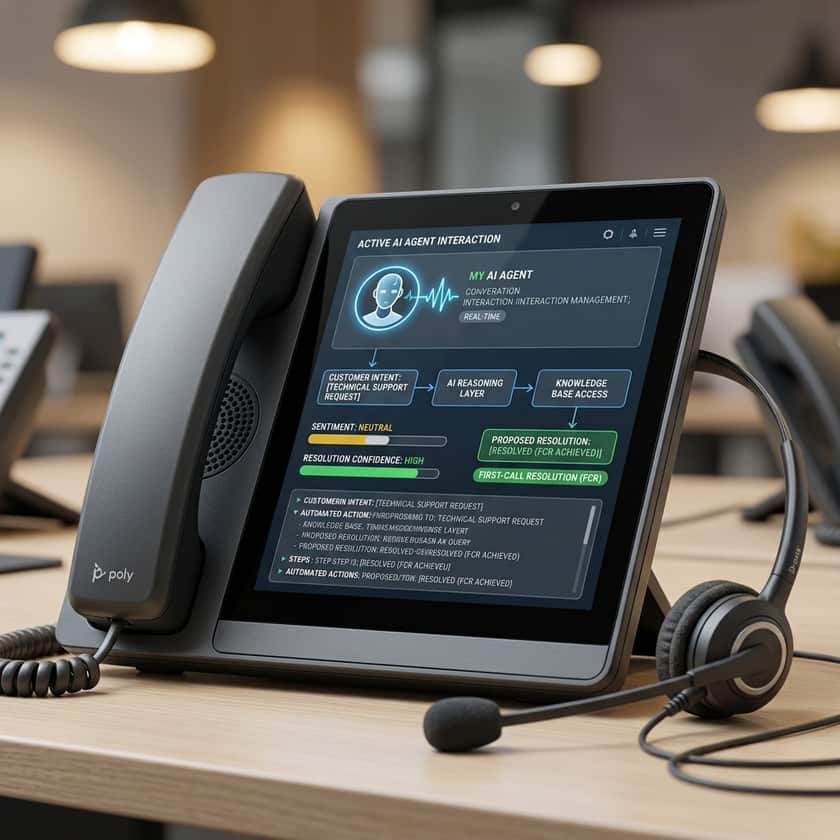
The Rise of AI-Powered Voice Technology
As we move further into 2026, the landscape of business communication has undergone a significant transformation. AI phone agents have evolved from basic automated answering systems into sophisticated, conversational partners capable of handling complex interactions. Organizations that were previously hesitant to adopt automation are now integrating these advanced assistants to manage high volumes of calls. This shift is driven by the need for scalability, ensuring that customer inquiries are addressed instantly regardless of the time of day or call volume fluctuations. By leveraging deep learning models, these agents provide a fluid, human-like experience that keeps customers engaged while simultaneously reducing the burden on human support staff.
Efficiency Metrics and Operational Improvements
Businesses measuring their success in 2026 are looking closely at specific performance benchmarks to justify their investment in artificial intelligence. For many enterprises, the goal is not just cost reduction but also the speed of resolution. Reports indicate that top-tier AI systems are now capable of resolving upwards of 75% of incoming inquiries without ever escalating the call to a human representative. This capability transforms the role of human agents, allowing them to focus exclusively on high-value, nuanced interactions that require empathy or complex problem-solving. By offloading repetitive, low-complexity tasks to AI phone agents, companies can ensure that every single interaction is managed efficiently, preventing backlogs during peak business hours.
Key Performance Indicators for Modern Support
- First-Call Resolution Rates: Leading AI platforms are hitting resolution rates as high as 72% on initial contact, reducing the need for callbacks.
- Monthly Request Volume: Advanced systems are currently processing over 43,000 unique customer inquiries per month per enterprise, showcasing immense scalability.
- Multichannel Synchronization: Modern AI agents handle up to 88% of interactions across unified platforms, including seamless transitions between chat, email, and phone.
- Peak Load Handling: During high-traffic events, sophisticated AI phone agents have maintained 97% availability for complex queries, outperforming traditional staffing models.
Comparing Support Resolution Methods
| Task Type | AI Agent Efficiency | Human Agent Reliance | Resolution Speed |
|---|---|---|---|
| Account Status Inquiries | 80% | Low | Instant |
| Technical Troubleshooting | 65% | Medium | Fast |
| Billing Disputes | 45% | High | Moderate |
| New Account Setup | 85% | Low | Instant |
Strategic Advantages in 2026
The primary advantage of deploying a modern AI phone agent in 2026 is the ability to maintain consistent service quality at a fraction of the traditional cost. Many businesses find that the cost per resolution drops significantly, sometimes costing as little as $3 per successful interaction. This economic efficiency allows companies to reinvest capital into product development and customer experience improvements. Furthermore, the 80% resolution benchmark on standard tasks mentioned earlier serves as a critical target for IT managers. When AI agents can handle the vast majority of 'ask' requests—such as hours of operation, status updates, or basic policy questions—the entire support infrastructure becomes more resilient against fluctuations in demand.
Future Considerations for AI Integration
As adoption rates continue to climb, organizations must remain vigilant regarding implementation standards. The most successful deployments in 2026 are those that prioritize data security and clear communication regarding the use of AI. Customers generally respond positively to AI phone agents when the technology is transparent and genuinely helpful, rather than a barrier to human support. By focusing on personalization—utilizing historical data to tailor responses—companies can ensure that their AI agents do not feel generic or cold. The future of customer service is a blend of the speed of artificial intelligence and the nuanced care of human support, creating a robust, 24/7 service model that serves the needs of every customer effectively.