
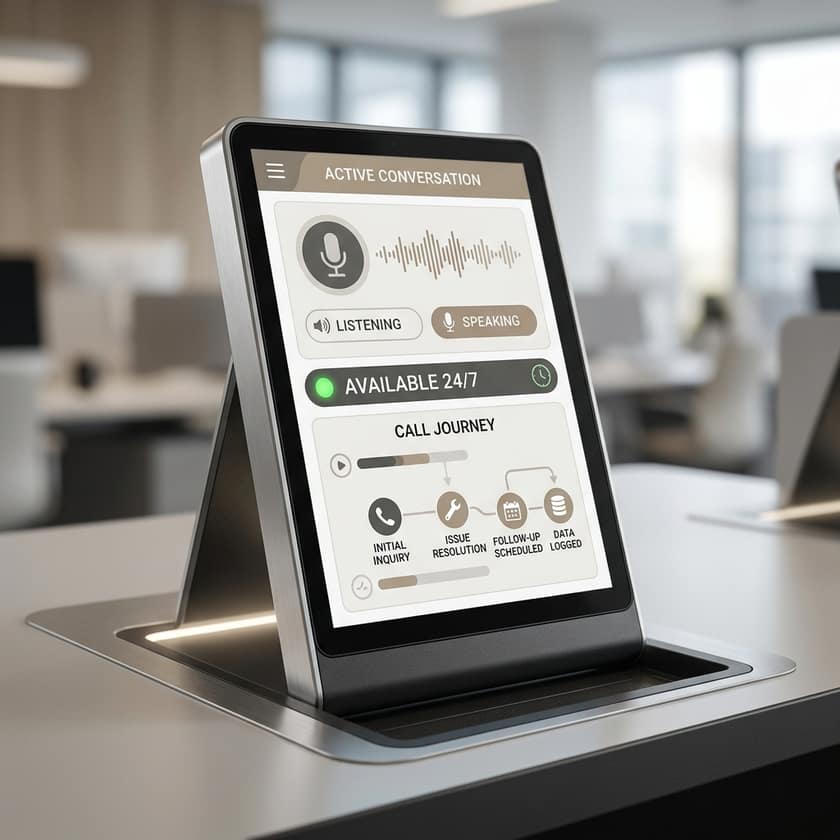
By 2026, the landscape of business communication has undergone a fundamental shift. Gone are the days when customer interactions were limited to traditional call centers or simple, scripted chatbots. The rise of sophisticated AI phone agents has bridged the gap between human empathy and machine efficiency. These agents are no longer merely reactive bots that read from a rigid script; they are dynamic, context-aware systems capable of understanding nuances, handling complex queries, and providing personalized assistance. As businesses strive to meet the demands of a global, always-on consumer base, the deployment of these intelligent voice systems has become a standard necessity rather than a cutting-edge experiment, fundamentally altering how companies operate day-to-day.
The Shift Beyond Basic Automation
In the earlier years of conversational AI, technology was often relegated to simple menu-driven interactions that frustrated users. In 2026, that narrative has changed entirely. Modern AI phone agents are designed with natural language processing (NLP) capabilities that allow them to hold fluid, bi-directional conversations. They can interpret sentiment, detect urgency in a caller's voice, and adapt their tone accordingly. This evolution means that the distinction between talking to a machine and a human agent has blurred significantly. Businesses are now utilizing these agents to handle everything from appointment scheduling and complex order modifications to detailed technical troubleshooting, ensuring that high-value human staff can focus on situations requiring true emotional intelligence.
Core Advantages of AI Phone Agents
- Uninterrupted Availability: Unlike human teams, AI agents do not require breaks, sleep, or holidays, providing reliable service 24/7.
- Zero Wait Times: By handling hundreds of calls simultaneously, these agents eliminate the dreaded hold music and waiting queues.
- Consistent Brand Voice: Every interaction adheres strictly to compliance guidelines and company branding, ensuring no variation in service quality.
- Rapid Scalability: During high-volume periods or unexpected events, AI systems can instantly scale up to handle thousands of extra calls.
- Multilingual Proficiency: Modern agents can switch languages mid-call, accommodating a diverse global customer base with ease.
Beyond the outward-facing customer benefits, businesses are seeing a massive internal impact. Internally, these systems are used to automate repetitive administrative tasks that once bogged down office workers. For example, employees can ask their internal AI agent to reset passwords, check payroll status, or schedule conference rooms without interrupting HR or IT staff. This optimization allows internal teams to focus on strategy and project execution rather than routine inquiries. By integrating these systems into the operational backbone, companies are seeing increased productivity and improved employee satisfaction, as the friction of daily operational tasks is largely removed.
Use Cases: From Retail to Internal HR
| Sector | Agent Function | Key Outcome |
|---|---|---|
| Retail/E-commerce | Order Tracking & Returns | Reduced Support Load |
| Internal Enterprise | AskHR Automated Help | 80% Task Automation |
| Healthcare (General) | Appointment Scheduling | Improved Attendance |
| Hospitality | Concierge Inquiries | 24/7 Guest Assistance |
While internal HR systems are becoming standard, the healthcare sector is also seeing significant interest in AI voice technology. However, it is important to note that when implementing AI agents in medical contexts, extreme caution is necessary. While an agent can efficiently handle appointment reminders or general policy questions, they should never be tasked with providing diagnostic advice, interpreting medical test results, or offering treatment recommendations. Any AI implementation in a medical environment must strictly adhere to data privacy regulations and prioritize human-in-the-loop oversight for all clinical matters to ensure patient safety and ethical compliance.
The Future: Building a Seamless Ecosystem
Looking ahead, the integration of AI phone agents into the broader tech stack is the next logical step. By 2026, we see agents that are not siloed but connected to CRM platforms, ERP systems, and data warehouses. This connectivity allows an agent to greet a customer by name, know their purchase history, and offer tailored recommendations in real-time. The technology is no longer an island; it is an intelligent layer that sits across the entire customer journey. As we move deeper into the decade, businesses that fail to adopt these integrated AI communication strategies risk falling behind competitors who can offer instant, frictionless support at scale.