
The Rise of Intelligent Automation
The business landscape is undergoing a significant shift as companies move away from static, rules-based chatbots toward dynamic AI virtual agents. These sophisticated digital entities are designed not merely to provide pre-programmed responses but to understand intent, manage complex queries, and execute tasks across diverse platforms. By leveraging advanced natural language processing and machine learning models, modern AI virtual agents can simulate human-like conversations while maintaining the consistency and speed that only digital systems can offer. As industries across the United States increasingly digitize their operations, these agents serve as the frontline defense for customer interactions, data management, and workflow optimization, ensuring that businesses can scale their operations without necessarily scaling their overhead.
Core Capabilities and Operational Precision
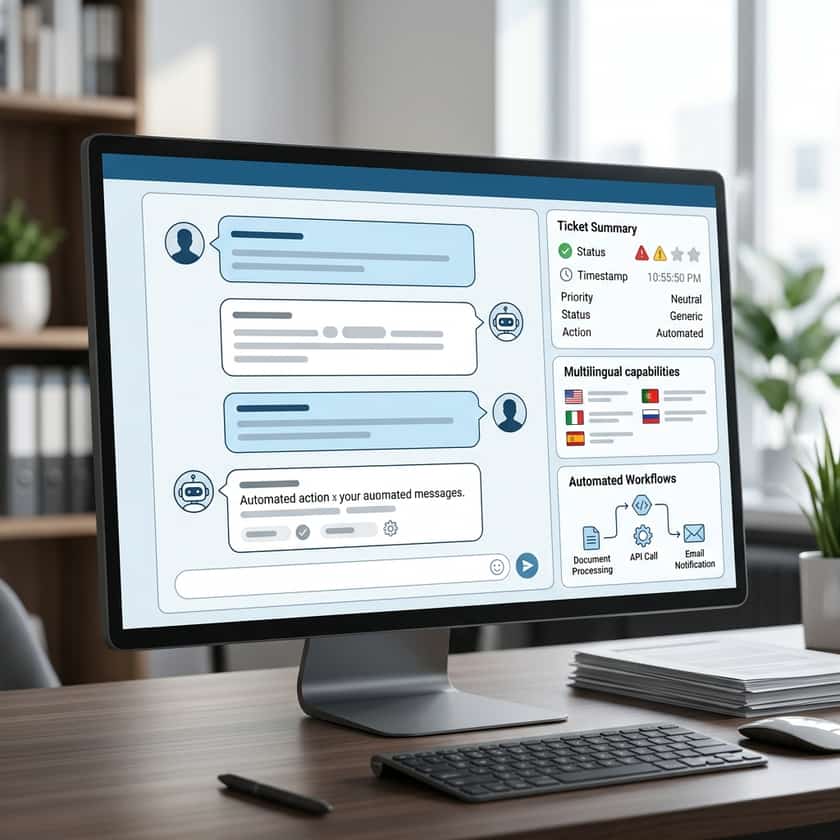
What distinguishes the current generation of AI virtual agents is their measurable performance. Rather than acting as simple text-repeaters, these tools are built to achieve remarkable accuracy. Many leading platforms now boast a 99.8% precision rate when parsing documents or answering standard queries, effectively removing the margin of error often associated with manual data entry. Furthermore, their multilingual fluency is a game-changer for global operations; they can communicate seamlessly in over 50 languages. This ensures that a company can provide native-level support to international customers, breaking down language barriers that once required localized call centers to resolve. By automating the resolution of common support tickets, these agents can handle up to 90% of routine inquiries automatically, allowing human teams to focus on complex, high-value problem solving.
- Uninterrupted Availability: Operate 24/7, providing constant support without rest periods.
- Rapid Resolution: Drastically reduce wait times by resolving common issues in minutes rather than hours.
- Scalable Communication: Support 50+ languages to engage a truly global customer base.
- Data Accuracy: Achieve near-perfect precision in document processing and data extraction tasks.
- Consistent Tone: Maintain brand guidelines and communication standards in every interaction.
Comparing Human and Automated Processing Times
| Task Category | Human Processing Time | AI Agent Processing Time |
|---|---|---|
| Invoice Processing | 3 Hours | 2 Minutes |
| Help-Desk Ticket Resolution | 24-48 Hours | 10 Minutes |
| General Support Resolution | Hours | 90% Resolved Autonomously |
| Data Extraction Accuracy | Variable | 90% Data Consistency |
Design, Customization, and Engagement
Beyond raw functionality, the aesthetic and personality design of an AI virtual agent plays a critical role in user adoption. Modern developers allow companies to choose from a vast library of digital avatars, offering up to 200 distinct characters or animations. These visual representations help establish an emotional connection with users, which can significantly boost satisfaction ratings. When a customer interacts with an interface that feels personalized rather than robotic, engagement rates typically climb. Businesses are no longer limited to simple text boxes; they can customize the look, the specific dialect, and the behavioral tendencies of their agents. This level of granular control ensures that the virtual agent not only functions as an efficient support tool but also acts as an extension of the brand's unique identity.
The Future of Autonomous Support
The trajectory of artificial intelligence points toward even greater autonomy. As these systems evolve, the goal is not to replace human personnel but to augment them. By handling the 90% of standard tasks that are repetitive or basic, AI agents free up human staff to concentrate on creative strategy and high-stakes decision-making. The transition to an AI-driven support model is becoming a standard best practice for companies aiming to remain competitive. With earned accuracy rates often hovering between 98% and 99.8%, the argument for implementation is becoming increasingly compelling. Organizations that begin this integration early gain a significant edge in operational agility, lower overhead costs, and improved customer loyalty, setting a new standard for excellence in digital service.