
The Foundations of Preservation and Early Innovation
In 1809, the French government held a contest seeking better food preservation methods for Napoleon’s troops, offering a 12,000-franc reward. Nicolas Appert won by perfecting a process of boiling food in sealed glass jars. By 1810, Peter Durand patented the use of metal tins, sparking the canning industry. This innovation fundamentally changed how food could be transported and stored, effectively ending the severe limitations on military logistics. What began as a strategic necessity soon transitioned into a commercial revolution, as the principles of air-tight sealing allowed for year-round access to food supplies that were previously restricted by seasonal availability. This early push for shelf stability laid the essential groundwork for modern consumer goods distribution.
The packaging narrative shifted dramatically in the 19th century with the arrival of mass-produced cardboard. By 1844, cardboard boxes were already appearing in limited use, but it was an accidental discovery in 1879 that revolutionized the industry. A printing press operator misaligned a cutting rule, unintentionally scoring the paperboard rather than cutting it, which created a clean, foldable crease. This serendipitous error birthed the die-cut cardboard carton. By the late 1800s, this development allowed manufacturers to ship fragile goods in lightweight, protective packaging. This transition replaced bulky wooden crates with efficient, customizable containers, setting the stage for the modern retail experience where branding and physical protection became one cohesive entity.
The Aluminum Revolution and Industrial Scaling
| Year | Aluminum Price (Per Pound) |
|---|---|
| 1825 | $545 |
| 1942 | $14 |
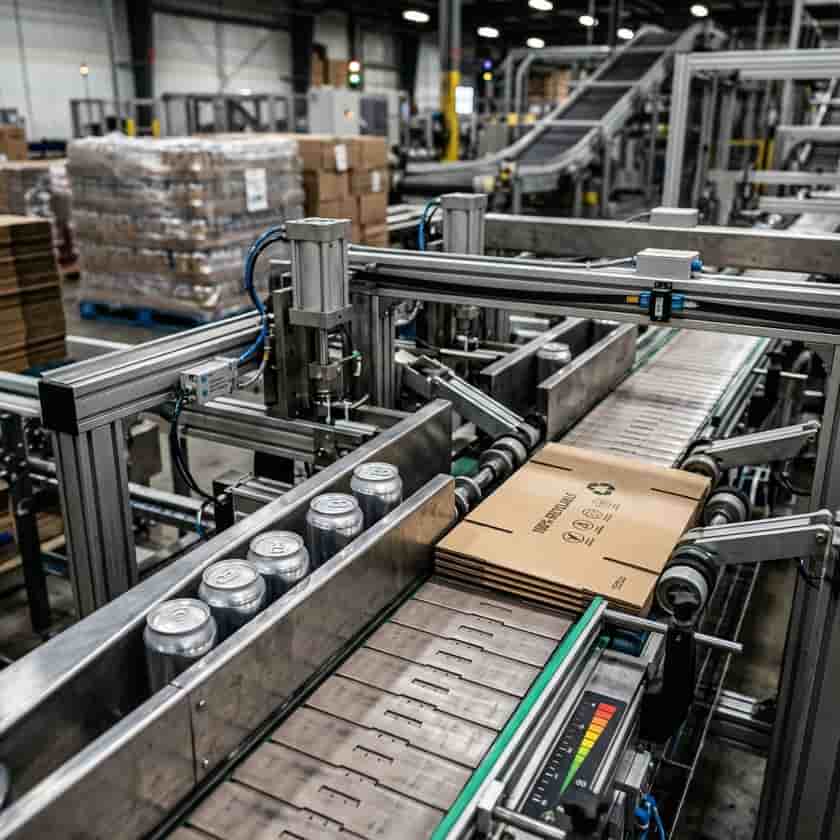
The mid-20th century marked the dawn of the modern beverage era, specifically with the widespread introduction of the aluminum can in 1959. This innovation transformed consumer convenience, providing a durable, lightweight vessel for carbonated drinks. Industry leaders quickly adopted high-speed automation; by utilizing advanced machinery, companies were soon capable of producing over 20,000 units per day. These automated systems streamlined manufacturing, drastically reducing waste and increasing consistency across different global climates. As the speed of production accelerated, the cost of packaging plummeted, making single-serve beverage options accessible to the general public and fostering massive growth in global retail markets, effectively changing the landscape of consumer behavior.
- Sustainability: A shift toward 30% compostable and recyclable content to meet environmental mandates.
- Automation: Increased integration of robotic systems that operate 24/7 with minimal human intervention.
- Smart Packaging: The incorporation of digital sensors to monitor freshness and supply chain integrity.
- Lightweighting: Engineering thinner materials that maintain structural integrity while reducing shipping weight and costs.
- Customization: Advanced printing technologies allowing for localized, smaller-batch branding runs.
- Logistics Efficiency: New buckle and locking designs for cardboard shipping containers to reduce transit damage.
Economic Outlook and Future Trajectory
Looking ahead to 2026, the global packaging industry is projected to maintain a valuation well over $200 billion. This growth is driven by the rise of e-commerce and the necessity for robust, beautiful, and secure packaging solutions that can withstand the rigors of global shipping. Companies are now focusing on the intersection of aesthetic appeal and functionality. As consumer awareness regarding environmental impact grows, the industry is investing heavily in material science to create packaging that is durable enough to protect products during transit but biodegradable enough to minimize long-term environmental consequences. The packaging sector remains a bright, fast-growing segment of the global economy, constantly balancing the need for cost efficiency with the demand for responsible stewardship.