
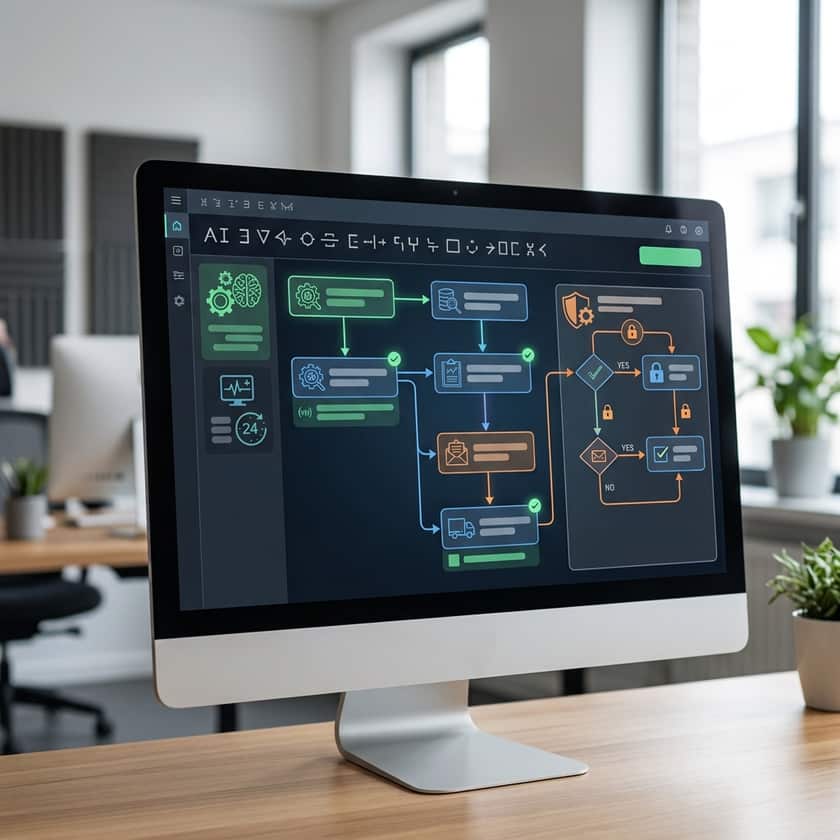
The Rise of Autonomous Intelligence
In recent years, the conversation surrounding artificial intelligence has shifted from static generative models—which primarily create text or images—toward dynamic AI agents. Unlike standard large language models that merely respond to prompts, an AI agent acts. It is a system designed to perceive its environment, reason through complex goals, and execute a sequence of steps to complete a task. This shift represents a fundamental change in how we interact with technology, moving from a paradigm of command-and-control to one of delegation and partnership.
At its core, an AI agent is a software entity that can take action on your behalf. Whether it is searching the internet, managing a calendar, writing and executing code, or communicating with other software APIs, these systems are built to handle the 'doing' phase of productivity. By bridging the gap between thought and execution, AI agents allow users to focus on high-level decision-making while delegating the mundane, repetitive work to an autonomous digital worker that operates continuously.
How AI Agents Differ from Traditional Chatbots
To understand the utility of AI agents, it is essential to distinguish them from standard chatbots. A chatbot is typically reactive; it waits for a user to input a question and then provides a text-based answer. It operates within a closed loop of information retrieval and display. An AI agent, conversely, is proactive and task-oriented. It possesses the capability to utilize tools—such as web browsers, file systems, or specialized databases—to achieve an objective that spans multiple sessions and software environments.
For instance, while a chatbot might explain how to book a flight based on current travel industry standards, an AI agent can be authorized to visit the airline's website, compare prices according to specific user constraints, select the optimal itinerary, and initiate the booking process. The difference lies in the agent's ability to plan, iterate, and adapt its approach if it encounters obstacles, such as an error message or a sudden change in availability, without requiring human intervention at every step.
Key Operational Advantages of AI Agents
| Benefit Category | Operational Value |
|---|---|
| System Availability | Operates 24/7 without interruption |
| Response Latency | Near-instant processing of incoming triggers |
| Task Continuity | Seamless hand-off of multi-step workflows |
| Scalability | Can manage thousands of concurrent tasks |
The 24/7 operational cycle is perhaps the most significant differentiator. Because AI agents do not require rest, they can monitor email inboxes, track social media engagement, or analyze market shifts across the globe around the clock. This creates a state of continuous productivity where the business environment is always being serviced. When a customer inquiry arrives at 3:00 AM, an agent can immediately classify, prioritize, and initiate a draft response or solve the issue entirely, ensuring that global operations remain fluid regardless of the time zone.
Core Components of Modern Agent Architectures
- Perception Module: The ability to ingest data from diverse inputs, such as text, code, images, or API logs, to understand the current state of a task.
- Reasoning and Planning Engine: A logical core that decomposes a high-level goal into smaller, actionable sub-tasks while prioritizing steps based on success probability.
- Tool Integration Layer: A set of interfaces that allow the agent to read from and write to external software, databases, and internet-based services.
- Memory Management: A system for storing previous interactions and results, ensuring the agent learns from outcomes and maintains context over extended projects.
- Safety and Guardrails: Pre-defined constraints that monitor the agent's actions to prevent unauthorized access, data leaks, or repetitive loop errors.
Navigating Safety and Ethical Considerations
As with any powerful technology, the deployment of AI agents introduces new responsibilities. Because these agents are capable of executing actions autonomously, the risk profile changes from passive information processing to active intervention. If an agent is granted access to financial accounts or sensitive customer databases, strict access controls and human-in-the-loop verification processes become mandatory. Organizations must implement granular permission structures to ensure that agents can only perform functions essential to their designated roles, effectively creating a 'least-privilege' environment.
Furthermore, the transparency of agentic reasoning is a critical area of ongoing development. Developers are focusing on 'explainable AI' (XAI) features, which allow human supervisors to inspect the logs of an agent's reasoning process. By understanding why an agent chose a specific path to solve a problem, managers can better audit performance, debug errors, and fine-tune the agent's behavior. Balancing autonomy with control is the defining challenge of the current AI era, and thoughtful architecture is the primary tool for achieving this equilibrium.