
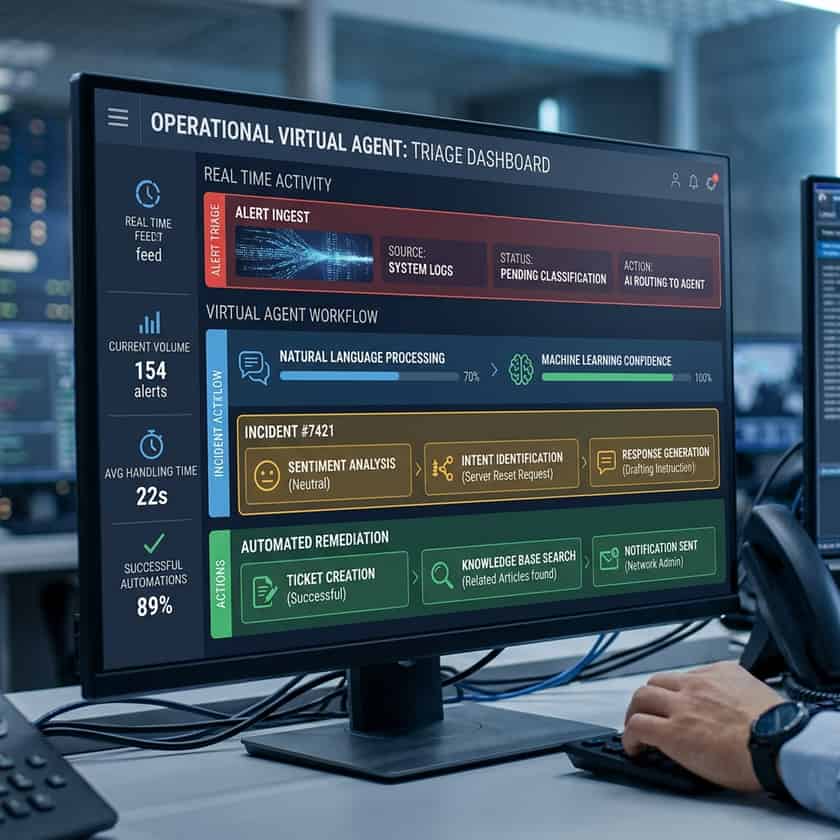
The Evolution of AI Virtual Agents
Artificial intelligence virtual agents have transcended the realm of simple chatbots, evolving into sophisticated digital workers capable of managing complex workflows. In modern enterprise environments, these tools act as the first line of defense or the primary point of contact for routine inquiries. By integrating natural language processing with deep learning models, they interpret intent, context, and sentiment to provide accurate, real-time responses. As businesses face increasingly global and digital demands, the deployment of virtual agents has become less of a competitive advantage and more of a standard operational requirement. These systems are designed to operate 24/7, providing consistent support without the fatigue that naturally affects human personnel during long, high-stress shifts.
Key Operational Mechanisms
At their core, AI virtual agents function by ingesting vast amounts of structured and unstructured data. This data is processed through machine learning algorithms that continuously refine the agent's decision-making accuracy. When a task arrives, the agent categorizes it based on predefined parameters. For example, in an IT environment, a virtual agent can distinguish between a routine password reset request and a critical security breach incident. By applying logic based on historical data patterns—often analyzing millions of past interactions—the agent can autonomously resolve routine queries. This allows human analysts to focus on complex geopolitical or technical escalations that require intuition and nuanced judgment, which algorithms cannot yet fully replicate.
Strategic Use Cases for AI Agents
- Financial Processing: Automating complex payroll reconciliations and tax form validation, such as verifying 401(k) contributions or identifying discrepancies in expense reports.
- Security Operations: Acting as an initial triage layer for network security alerts, filtering out false positives before notifying human analysts.
- Customer Support Logistics: Managing high volumes of routine inquiries, effectively reducing wait times and allowing human staff to provide personalized attention to sensitive cases.
Managing the Information Avalanche
One of the most significant challenges in modern data-heavy industries is the sheer volume of incoming alerts. Security operations centers and data hubs often face a daily barrage that can overwhelm even the largest teams. Advanced AI virtual agents address this by performing intelligent triage. In many high-capacity environments, these agents are now capable of filtering up to 98 percent of noise alerts. By analyzing incoming data streams against known baselines and historical context, the agent ensures that security teams only deal with the critical 2 percent of incidents that actually require human intervention. This shift preserves analyst energy for high-stakes decision-making while maintaining constant vigilance over the entire digital infrastructure.
| Feature | Traditional System | AI-Driven System |
|---|---|---|
| Alert Triage | Manual Review | Automated Filtering |
| Processing Time | Variable | Instantaneous |
| Scalability | Limited by Staff | Elastic |
| Error Rate | Human-dependent | Low |
The Human-AI Synergy
While automation brings immense efficiency, the human element remains irreplaceable. Successful integration of AI virtual agents relies on the concept of 'human-in-the-loop.' When an agent encounters a scenario that falls outside its confidence threshold, it must seamlessly hand off the interaction to a human expert. This handoff requires context, intent, and historical data to be passed along clearly, preventing the customer or user from having to repeat themselves. Furthermore, human staff must be trained to oversee these agents, rather than fearing them as replacements. By offloading monotonous, repetitive, and high-volume tasks, AI allows humans to focus on the compassionate and creative aspects of their roles that drive long-term business value.