
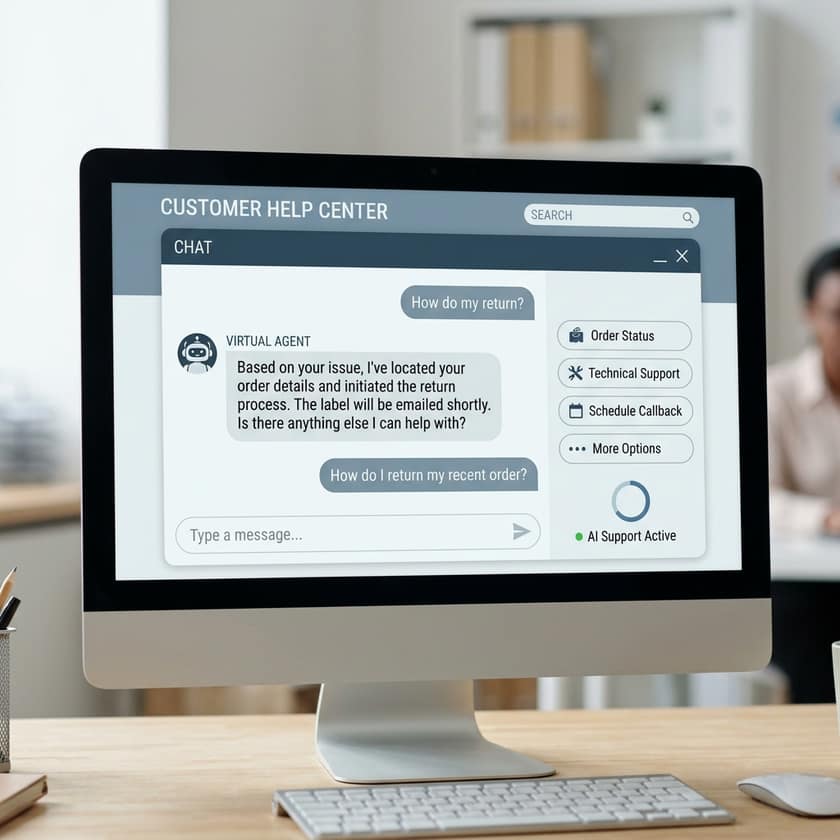
The landscape of customer support and operational efficiency is undergoing a seismic shift as we head deeper into 2025. Businesses across the United States are increasingly integrating AI virtual agents to handle routine tasks, answer inquiries, and manage complex workflows. These sophisticated software entities, powered by advanced machine learning models, are no longer experimental novelties; they are essential infrastructure for organizations seeking to scale operations without exponentially increasing human headcount. By automating repetitive interactions, companies are freeing their human teams to focus on high-value problem solving, strategic planning, and creative initiatives, ultimately driving a more balanced and productive workforce.
What Defines an AI Virtual Agent?
At its core, an AI virtual agent is a digital interface capable of interacting with human users in a natural, conversational manner. Unlike static chatbots of the past, which relied on rigid, pre-programmed decision trees, modern virtual agents leverage Natural Language Processing (NLP) to understand context, intent, and sentiment. This enables them to provide accurate answers, perform transactions, and guide users through multi-step processes—all without human intervention. Whether deployed via voice, text, or web widgets, these agents act as the first line of engagement for customers, providing personalized experiences that align with modern consumer expectations for immediacy and relevance.
Key Advantages of Implementation
The primary driver for the widespread adoption of AI virtual agents is their ability to maintain operational continuity. In a global economy where customers expect support at any time of day, the 24/7 availability provided by these systems is a decisive competitive advantage. Unlike human staff, AI agents do not require sleep, breaks, or holidays, ensuring that customer inquiries are addressed instantly regardless of the time zone. Furthermore, the scalability of these systems allows businesses to handle massive spikes in traffic—such as during sales events or product launches—without needing to hire or train additional seasonal support staff, resulting in significant long-term cost reductions.
- Consistent 24/7 availability for global customer bases.
- Rapid scalability to handle high volumes of simultaneous inquiries.
- Reduced operational costs associated with manual labor.
- Increased accuracy in data collection and retrieval.
- Seamless integration with existing CRM and enterprise software.
Strategic Integration and Growth in 2025
As we move further into 2025, industry analysts suggest that up to 95% of customer interactions may soon involve some form of automated support or AI-enhanced interface. This trend represents a fundamental change in how companies approach consumer relationships. Rather than replacing human support entirely, the most successful organizations are using AI agents as a collaborative tool. The AI handles the high-volume, low-complexity tasks—such as tracking orders, resetting passwords, or verifying account details—while human agents are seamlessly brought into the conversation for high-empathy or highly complex scenarios. This 'human-in-the-loop' approach is proving to be the most effective strategy for maximizing both customer satisfaction and operational efficiency.
Best Practices for Success
Deploying an AI virtual agent successfully requires more than just installing software; it demands a clear strategy focused on data quality and user experience design. Businesses must prioritize training their agents on accurate, company-specific data to ensure the information provided to users is reliable and up-to-date. Regular auditing of conversation logs is essential to identify areas where the AI might be struggling or providing suboptimal responses. By continuously refining the agent's knowledge base and adjusting its tone to match the brand's identity, companies can create a trustworthy and helpful digital representative that strengthens rather than detracts from the customer experience.