
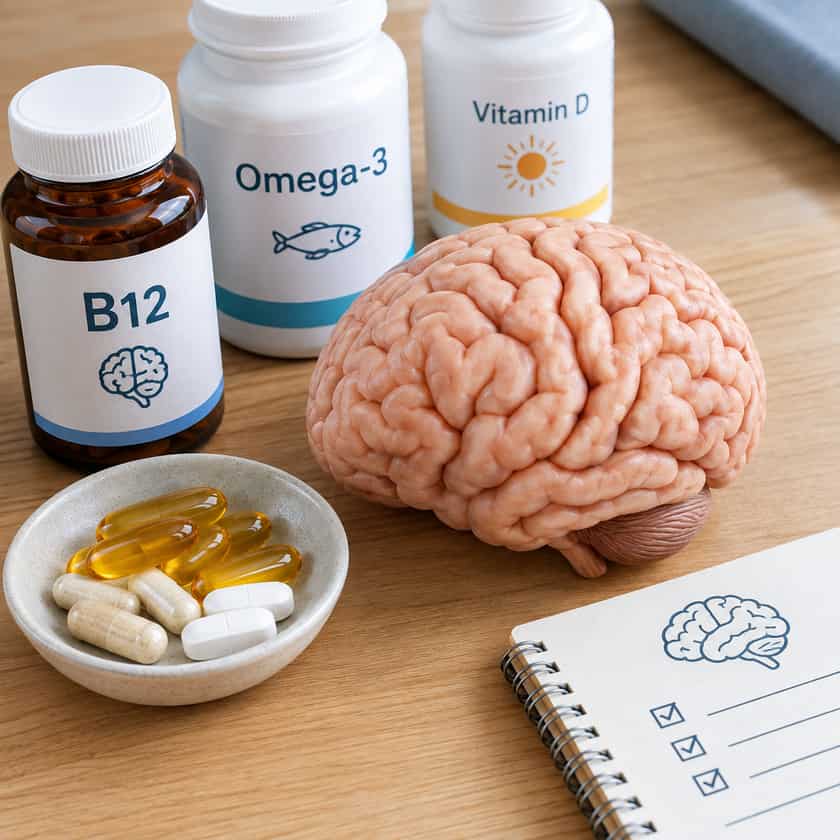
Understanding Neurochemical Mismatches in Modern Cognitive Fatigue
Experiencing persistent memory slips, mental sluggishness, or afternoon brain fog is frequently dismissed as normal aging or temporary stress. Many individuals instinctively reach for conventional quick fixes, such as excessive caffeine intake, sugary energy drinks, or generic multivitamin tablets. However, these off-the-shelf options almost universally fail to restore mental sharpness. The failure does not stem from personal willpower or irreversible mental decline; rather, it indicates a structural misalignment between cellular nutritional requirements and modern lifestyle demands.
The human central nervous system maintains an extraordinarily high metabolic rate, consuming roughly twenty percent of daily systemic energy despite comprising only two percent of total body mass. Optimal cognitive performance depends entirely on precise micronutrient cofactors to maintain neuronal myelin sheaths, sustain mitochondrial adenosine triphosphate production, and synthesize vital neurotransmitters such as acetylcholine and dopamine. Off-the-shelf supplements often utilize cheap, poorly absorbed nutrient forms that never achieve the biological concentration required to penetrate the blood-brain barrier. When daily psychological strain or age-related absorption declines deplete these essential biochemical reservoirs, generalized solutions fall short. Restoring sustained focus demands a systematic approach targeting specific cellular pathways.
Targeted Interventions for Cognitive Deficits
Clinical Support for Vitamins for Memory and Focus
Sustained concentration requires balanced levels of acetylcholine, the neurotransmitter responsible for processing speed and neuroplasticity. Individuals experiencing working-memory deficits often struggle with tasks requiring dual processing, such as tracking multi-step instructions or recalling recent conversations. A common misstep involves taking standard low-dose choline salt tablets or unstandardized botanical blends found in generic retail outlets. These rudimentary forms break down in the gut long before reaching neuronal receptors, offering virtually zero measurable cognitive benefit.
Addressing acetylcholine depletion requires targeted precursor supplementation using highly bioavailable phospholipid carriers. Optimal protocols integrate Alpha-GPC (L-alpha glycerylphosphorylcholine) standardized at 300 to 600 milligrams daily, or Citicoline (CDP-Choline) at 250 to 500 milligrams, alongside active Vitamin B6 as Pyridoxal-5-Phosphate (P-5-P) to facilitate enzymatic conversion. When evaluating cognitive formulations, look for recognized industry benchmarks such as Thorne Research, Pure Encapsulations, and Cognizin Citicoline, which comply strictly with United States Pharmacopeia standards for purity and active compound bioavailability.
Correcting Vitamin B12 Deficiency Brain Fog
Profound mental haze, lethargy, and lexical retrieval failures frequently signal functional subclinical deficiencies in cobalamin. Standard medical evaluations often rely on serum B12 blood tests that fail to detect intracellular deficiency states where active cobalamin cannot successfully convert methylmalonic acid into succinyl-CoA. Many consumers attempt self-treatment using synthetic cyanocobalamin pills, which require multiple hepatic conversion stages and offer poor absorption in individuals with compromised gastrointestinal health or common genetic variations.
Effective intervention requires sublingual or liposomal delivery of biologically active coenzyme forms: methylcobalamin combined with adenosylcobalamin, administered at therapeutic thresholds of 1,000 to 2,000 micrograms daily. Pairing cobalamin with active L-5-methyltetrahydrofolate (L-5-MTHF) at 400 micrograms provides comprehensive support for the critical methylation cycle. High-grade clinical benchmarks such as Life Extension, Seeking Health, and Jarrow Formulas adhere to NSF International manufacturing standards, guaranteeing authentic coenzymatic potency capable of bypassing common digestive assimilation bottlenecks.
Neuroprotective Protocols with Omega-3 DHA Cognitive Supplements
Structural cognitive decline, poor spatial reasoning, and slow processing velocity frequently correlate with depleted cerebral lipid architectures. Neuronal membranes require unhindered fluidity to support signal transmission across synaptic junctions. Many consumers purchase economy fish oil softgels, unaware that prolonged storage, inadequate stabilization, and low active concentrations render these products vulnerable to severe lipid peroxidation. Consuming rancid, oxidized lipids exacerbates cerebral neuroinflammation rather than soothing it.
Rigorous remediation demands targeted long-chain polyunsaturated fatty acids delivering a minimum of 600 to 1,000 milligrams of docosahexaenoic acid (DHA) paired with 400 milligrams of eicosapentaenoic acid (EPA) in superior re-esterified triglyceride (rTG) form. Look for products verified through third-party testing programs such as the International Fish Oil Standards (IFOS), which enforce strict limits on total oxidation, peroxide values, and heavy metals. Premium industry standards are consistently exemplified by Nordic Naturals, Carlson Labs, and Wiley's Finest, ensuring unadulterated structural protection for brain lipid membranes.
Evaluating the Best Nootropic Vitamins for Adults
Executive burnout, mental fatigue, and erratic attention spans drive many professionals toward fragmented stimulant stacks. Self-directed experimentation with excessive caffeine anhydrous, non-standardized herbal powders, and poorly regulated multi-ingredient cognitive boosters often triggers adrenal overstimulation, rebound anxiety, and sleep architecture disruption without fixing underlying biochemical deficiencies.
Sustainable cognitive enhancement relies on synergistic, clean nootropic compounds that modulate brain wave patterns and promote cellular energy without overtaxing the central nervous system. A clinically supported stack combines 200 milligrams of Suntheanine (L-theanine) with active B-complex vitamins, 150 milligrams of standardized Bacopa Monnieri extract containing at least 55 percent bacosides, and 100 milligrams of phosphatidylserine. Benchmark organizations such as Qualia Mind, Nootropics Depot, and Thorne adhere strictly to the Current Good Manufacturing Practice (cGMP) regulations enforced by the FDA, providing clean, batch-tested nootropic blends that enhance executive function without causing jitteriness or metabolic dependency.
Granular Breakdown & Comparison Matrix
| Strategy / Option | Price/Cost Range | Structural/Technical Efficiency | Common Hidden Pitfalls / Traps | Ideal Use-Case Scenario |
|---|---|---|---|---|
| Standard Synthetic Multivitamins | $8 - $18 per month | Very Low (10% - 25% systemic bioavailability) | Uses cyanocobalamin, unchelated minerals, and minimal inactive lipid carriers | Broad preventive baseline for healthy individuals on restrictive budgets |
| Clinical Co-Enzyme Monotherapies | $35 - $75 per month | High (80% - 95% targeted cell delivery) | Requires tracking multiple single-ingredient bottles and variable intake timing | Targeted correction of diagnosed single deficiencies (e.g., confirmed low B12) |
| Advanced Bioavailable Nootropic Formulations | $65 - $125 per month | Very High (Combined synergistic pathways) | Elevated cost; proprietary blends masking underdosed active raw ingredients | Demanding professional or academic phases requiring optimized processing speed |
| High-Yield Phospholipid & Lipid Complexes | $40 - $70 per month | High to Very High (Overcomes intestinal absorption limits) | Short shelf life; vulnerability to oxidation if storage temperatures are ignored | Sustained memory protection, membrane repair, and neuro-inflammation management |
Critical Technical Decision Parameters
- Bioavailability and Molecular Form: Evaluating cognitive formulations requires assessing molecular configuration. Generic supplements rely on inorganic salts and synthetic forms like pyridoxine hydrochloride or folic acid, which require complex enzymatic conversions before cellular uptake. Prioritize active, pre-converted nutrients including methylcobalamin, folinic acid or L-methylfolate, and pyridoxal-5-phosphate. These active molecules cross physiological barriers efficiently and avoid metabolic conversion bottlenecks.
- Liposomal and Phospholipid Delivery Mechanisms: Hydrophobic and large-molecule nootropic compounds often face poor gastrointestinal absorption, with up to ninety percent degraded by digestive enzymes. Formulations utilizing liposomal encapsulation or phospholipid-bound complexes (such as sunflower lecithin-derived phosphatidylserine or marine-sourced omega-3 phospholipids) protect sensitive compounds through the stomach. This architecture significantly enhances mucosal uptake and elevates systemic plasma concentration.
- Third-Party Purity Verification and Oxidation Metrics: Natural lipid and botanical compounds are vulnerable to degradation, heavy metal contamination, and oxidation. For omega-3 lipid products, review the Total Oxidation (TOTOX) value, which must remain strictly under 26 to avoid inflammatory cellular stress. Ensure botanical extracts carry clean independent certificates of analysis confirming absence of lead, cadmium, and biological contaminants from organizations like Eurofins, ConsumerLab, or USP.
Practical Vendor & Purchase Action Plan
Inspection Checklist
- Validate the Molecular Structure: Review the supplement facts panel to verify that active co-enzyme forms (such as Methylcobalamin, CDP-Choline, or P-5-P) are explicitly named rather than cheap synthetic substitutes like cyanocobalamin or choline bitartrate.
- Verify Independent Lab Certifications: Look for recognized third-party verification seals on the packaging, such as NSF International Certified for Sport, USP Verified, or IFOS 5-Star ratings, confirming label accuracy and contaminant screening.
- Inspect Packaging Integrity: High-potency active neuro-nutrients degrade when exposed to ultraviolet light and ambient moisture. Choose amber glass, opaque high-density polyethylene containers, or individual nitrogen-flushed blister packs.
- Review Excipient and Inactive Lists: Confirm the product is free of unnecessary fillers, artificial colorings, hydrogenated oils, titanium dioxide, and magnesium stearate, ensuring maximal digestive tolerance and metabolic safety.
Consultation Script
- "Can we measure my serum methylmalonic acid and homocysteine levels to determine intracellular B12 and folate utilization rather than relying solely on total serum cobalamin?"
- "Given my current health profile, are there any metabolic or pharmacodynamic contraindications to initiating therapeutic dosages of active Alpha-GPC or CDP-Choline?"
- "Do the specific supplements you recommend utilize active, methylated co-factors, and are their manufacturing facilities cGMP-certified with transparent, batch-specific certificates of analysis?"
- "What specific timeline and measurable clinical markers should we establish to evaluate the neurological efficacy of this cognitive supplementation protocol before adjusting doses?"