
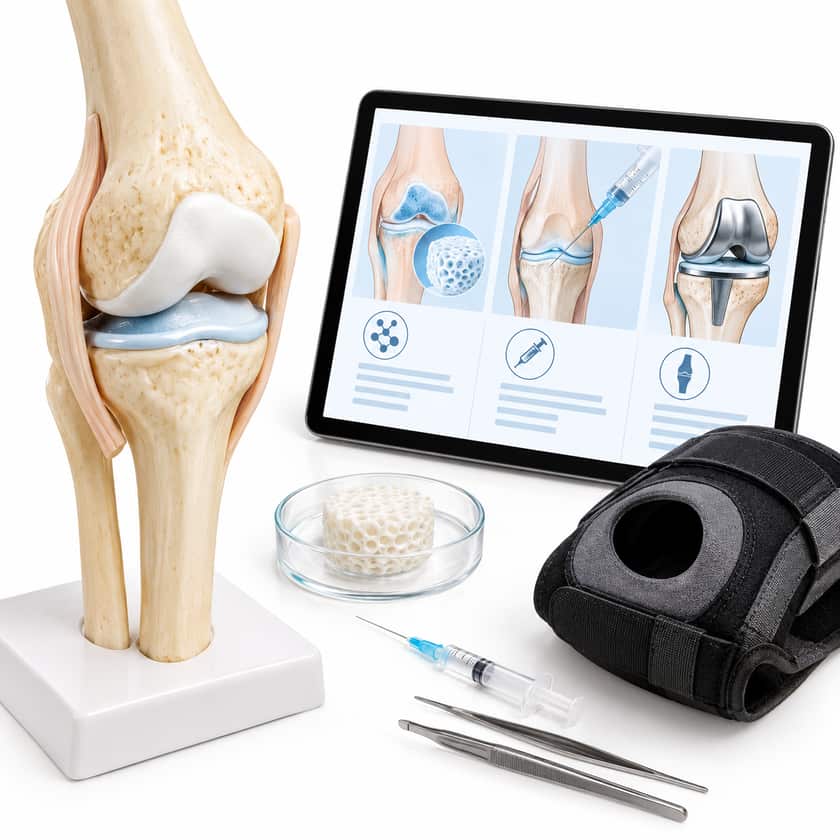
Understanding Structural Joint Degradation and Intervention Mismatches
For individuals navigating chronic joint discomfort, standard off-the-shelf solutions often fail to deliver meaningful results. This failure is rarely due to a patient's inability to manage their condition; rather, it stems from a fundamental structural mismatch between the physiological stage of joint degradation and the selected therapeutic intervention. Treating advanced mechanical wear with surface-level solutions overlooks the complex bio-mechanics of the knee joint.
To achieve lasting relief, you must align your treatment strategy with the precise anatomical state of your joint. Whether you are dealing with early-stage soft tissue inflammation or advanced bone-on-bone osteoarthritis, understanding the clinical realities of tissue degeneration is essential. By moving away from generalized advice and focusing on targeted, evidence-based interventions, you can transition from temporary symptom suppression to a structured, clinically sound joint management plan.
Targeted Knee Pain Solutions and Clinical Pathways
Immediate Home-Based Relief Strategies
When sudden flare-ups occur, understanding What is the Fastest Way to Relieve Knee Pain at Home helps prevent secondary tissue irritation. While many rely on simple rest, clinical consensus from organizations like the American Academy of Orthopaedic Surgeons (AAOS) recommends a structured approach combining targeted compression with elevation and controlled cryotherapy. Utilizing specialized compression sleeves from established brands like Bauerfeind or McDavid helps stabilize the patella and limit micro-motions that exacerbate acute inflammation.
For advanced degeneration, finding What is the Best Home Remedy for Bone on Bone Knee Pain requires addressing the absolute loss of articular cartilage. In these severe cases, thermal therapy combined with topically applied non-steroidal anti-inflammatory drugs (NSAIDs) such as Voltaren Gel (diclofenac sodium) provides superior localized relief compared to oral medications alone, minimizing systemic side effects. Additionally, maintaining low-impact mobility via stationary cycling helps distribute remaining synovial fluid, lubricating the joint space naturally.
Navigating Acute Symptoms and Clinical Interventions
Patients must recognize clinical red flags to determine How do i Know when to Go to the Hospital for Knee Pain. Immediate emergency medical evaluation is necessary if you experience an inability to bear weight on the limb, a sudden structural deformity, localized heat with high fever, or rapid swelling. These symptoms can indicate a septic joint, acute ligamentous rupture, or a deep vein thrombosis (DVT), all of which require urgent diagnostic imaging and intervention.
For sub-acute and chronic management, conservative clinical therapies often utilize targeted injections. Research regarding the Accuracy of Needle Placement Into the Intra Articular Space of the Knee demonstrates that blind or anatomical landmark-guided injections have an error rate of up to 20-30%. In contrast, utilizing musculoskeletal ultrasound guidance increases accuracy to over 95-99%, ensuring that therapeutic agents such as hyaluronic acid (from brands like Orthovisc or Synvisc-One) are delivered precisely into the joint space rather than the surrounding soft tissue.
Advanced Regenerative Innovations and Surgical Readiness
When traditional conservative options are exhausted, patients often ask, What is the Latest Technology that Can be Used to Develop New Cartilage Tissues. Emerging biotechnical advancements focus on matrix-induced autologous chondrocyte implantation (MACI) and 3D bioprinting utilizing bioactive scaffolds enriched with Vitamin C to stimulate cellular proliferation and collagen synthesis. These advanced therapies allow surgeons to harvest a patient's own cells, expand them in a laboratory setting, and re-implant them to regenerate damaged articular cartilage structures.
When regenerative options are no longer viable, patients must evaluate How to Know when You're Ready for a Knee Replacement and determine How do You Know when It's Time for a Knee Replacement. The transition to surgical joint reconstruction is indicated when pain consistently restricts activities of daily living, disrupts restorative sleep, and fails to respond to therapeutic injections or physical therapy. Orthopedic clinical pathways suggest scheduling a surgical consultation when imaging reveals complete joint space collapse and conservative options no longer preserve quality of life.
Post-Surgical Recovery and Medication Management
Following reconstructive surgery, managing acute post-operative pain is crucial for early mobilization. Patients frequently ask, How Long Should You Take Pain Narcotics After a Knee Total Knee Replacement. Clinical protocols emphasize minimizing narcotic dependency, generally tapering off strong prescription opioids within 7 to 14 days post-surgery. Transitioning to a multimodal pain regimen that incorporates non-opioid analgesics (such as acetaminophen and oral NSAIDs), cryotherapy units, and early physical rehabilitation prevents chronic dependence and supports optimal long-term joint mobility.
Structural Intervention Comparison Matrix
The following matrix outlines the primary pathways for managing knee joint degradation, comparing expected financial commitments, technical efficiency, and clinical indicators.
| Strategy / Option | Price/Cost Range | Structural/Technical Efficiency | Common Hidden Pitfalls / Traps | Ideal Use-Case Scenario |
|---|---|---|---|---|
| Conservative Home Care | $50 - $300 | Low structural modification; high temporary symptom management. | Over-reliance delays necessary clinical evaluation for progressive conditions. | Mild, activity-induced joint inflammation or early-stage osteoarthritis. |
| Guided Intra-articular Injections | $300 - $1,500 per cycle | Moderate; temporarily restores joint lubrication and reduces localized inflammation. | Injections performed without ultrasound guidance may miss the joint space completely. | Moderate osteoarthritis with preserved joint space seeking non-surgical delay. |
| Autologous Regenerative Therapies | $5,000 - $15,000 | High regenerative potential; restores localized focal cartilage defects. | High out-of-pocket costs; not suitable for widespread, diffuse arthritis. | Younger patients with isolated traumatic cartilage lesions and minimal bone damage. |
| Total Joint Arthroplasty (Replacement) | $15,000 - $40,000+ | Complete mechanical restoration; replaces worn bone surfaces with implants. | Extended post-operative rehabilitation requirements and risks of implant wear. | Advanced bone-on-bone osteoarthritis with severe functional impairment. |
Critical Technical and Decision Parameters
- Mechanical Alignment and Implant Fit: In modern total joint arthroplasty, orthopedists utilize robotic-assisted systems such as Stryker's Mako or Zimmer Biomet's ROSA. These technologies allow for personalized component positioning down to sub-millimeter tolerances, which minimizes premature implant wear.
- In-Office Guidance Protocols: When receiving viscosupplementation or corticosteroid therapies, patients should verify that the provider utilizes real-time ultrasound guidance. This ensures the fluid enters the capsule, maximizing therapeutic efficacy and preventing extra-articular tissue damage.
- Biomaterial Composition: For cartilage repair, look for scaffolds composed of type II collagen and hyaluronic acid. These materials offer the optimal mechanical environment for cellular adhesion, enabling newly developed cells to withstand normal physiological loads.
Strategic Purchase and Clinical Consultation Plan
Pre-Intervention Diagnostic Verification Checklist
Before committing to any advanced clinical treatment or purchasing high-end orthopedic bracing, verify the following four parameters:
- Obtain Weight-Bearing Radiographs: Ensure your diagnostic imaging includes weight-bearing X-rays rather than non-weight-bearing films, as joint space narrowing is only accurately assessed under physiological load.
- Confirm Ultrasound Guidance Availability: When scheduling therapeutic injections, verify that the clinical office has dedicated musculoskeletal ultrasound equipment in the procedure room.
- Assess Conservative Milestones: Document at least 6 to 12 weeks of structured physical therapy and lifestyle modifications to establish a baseline of conservative treatment failure before seeking surgical options.
- Verify Orthotic Structural Integrity: If purchasing a corrective unloader brace, ensure it features a dynamic three-point leverage system capable of physically shifting load away from the damaged joint compartment.
Clinical Consultation Script
Use these precise questions during your next orthopedic appointment to clarify your treatment pathway and avoid unnecessary expenditures:
- "What specific objective measurements on my weight-bearing X-rays indicate that I have reached a bone-on-bone status rather than moderate joint space narrowing?"
- "Will you be utilizing real-time ultrasound guidance during my intra-articular injection to guarantee precise needle placement within the joint space?"
- "Based on my current activity level and joint structure, what is the projected longevity of the implant materials you plan to use if I proceed with joint replacement?"
- "What is your clinic's standardized multi-modal pain management plan to help me transition away from prescription narcotics within the first two weeks following surgery?"