
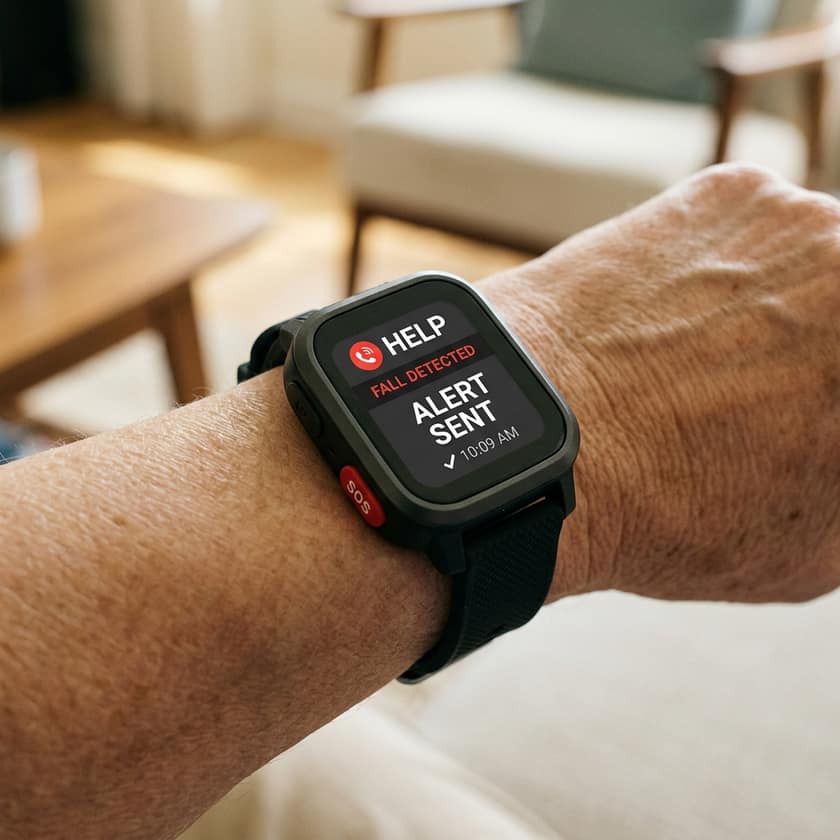
The Complexity Trap: Why Simple Smartwatches Win
For many older adults, a brand-new, high-end consumer smartwatch quickly becomes an expensive drawer ornament rather than a helpful safety tool. The culprit is rarely a lack of interest on the senior's part, but rather the sheer friction of modern wrist technology. High-resolution screens packed with tiny, hard-to-read icons, frequent software updates, and complex multi-layered menus create an overwhelming and frustrating user experience. More importantly, these endless features rapidly drain batteries, often requiring daily charging cycles. For a senior who may struggle with mild arthritis or occasional memory lapses, removing a watch every single night to charge it means they will eventually forget to put it back on. Complexity quietly kills wear rates, leaving seniors unprotected when they need help the most.
A simple smartwatch for seniors takes a completely different approach by prioritizing intuitive function over flashy features. These dedicated safety devices feature large, high-contrast print, minimal menus, and a single, unmistakable physical SOS pathway that is easy to press in an emergency. Instead of demanding constant user interaction and digital maintenance, they operate quietly in the background. The battery life on these simplified models is designed to match real human habits, often lasting several days or even a full week on a single charge. By focusing entirely on essential communication and safety tracking, these watches respect the user's daily routine without becoming a source of cognitive fatigue or constant frustration.
Fall Detection and Emergency Pathways on the Wrist
One of the primary reasons families shop for a life alert watch for seniors is automatic fall detection. However, there is a major structural difference between standard consumer smart sensors and a dedicated medical alert watch for seniors with fall detection. Consumer devices often rely on a Bluetooth connection to a nearby smartphone to make emergency calls, introducing multiple potential failure points. In contrast, dedicated medical watches feature built-in cellular chips that dial professional emergency dispatchers directly from the wrist. Families must also understand that no sensor is flawless; while hard falls on hard surfaces are easily registered, slow slides or soft falls onto couches might not trigger an automatic alert, making an accessible manual SOS button absolutely critical.
- The availability of a 24/7 professional monitoring center versus simple group text alerts to busy family members.
- Built-in GPS and cellular capabilities that operate completely independently of any nearby smartphone.
- Real-world water resistance ratings so the senior can safely wear the device while bathing, where many falls occur.
- A straightforward process to cancel false alarms before emergency services are dispatched.
Comparing Wearable Options for American Families
When shopping for a reliable senior wearable, families typically evaluate two distinct paths. The first path involves mainstream consumer ecosystems, such as the Apple Watch or Samsung Galaxy Watch. These devices are highly versatile, offering fitness tracking, cellular calls, and heart rate monitoring, but they demand a high level of tech-savviness and regular digital upkeep. The second path is a dedicated medical alert line, which prioritizes safety, simplicity, and direct connection to urgent response operators. While dedicated lines require a monthly subscription fee, they remove the technological barriers that frequently lead seniors to abandon more complex consumer devices, making them much more reliable for daily wear.
| Watch Category | Battery Expectation | Emergency Path | Monthly Subscription | Ideal User Profile |
|---|---|---|---|---|
| Mainstream Consumer | 18 to 36 Hours | Requires phone sync or cellular plan | Carrier fees only | Active seniors comfortable with tech |
| Dedicated Medical Alert | 3 to 5 Days | Direct line to 24/7 dispatchers | Required ($20 to $50/mo) | Seniors wanting reliable protection |
How Families Can Configure Devices Without the Friction
Setting up a new device can quickly turn into a source of family tension, particularly for cross-state households where help is miles away. To prevent this, adult children should adopt a calm, pre-configuration sequence before presenting the device. It is highly recommended to unbox, activate, and configure the watch entirely before gifting it to an aging parent. Program the essential emergency contacts, adjust the display font size to the maximum setting, test the physical SOS button, and ensure the charging dock is placed in a highly visible, convenient location in their home. Taking these steps ahead of time ensures that when the senior receives the watch, it is ready to wear immediately, completely bypassing the stress of troubleshooting together.
Families should also be wary of the persistent online marketing surrounding the cheap smartwatch for seniors. Many of these low-cost devices, often priced under fifty dollars, claim to offer advanced medical monitoring and fall alerts without requiring any subscription. In reality, these unbranded products lack dedicated cellular connectivity, professional emergency dispatch services, and reliable hardware. They often rely on poorly translated smartphone apps that fail to deliver timely notifications during emergencies. Investing in a reputable device with a clear, transparent subscription model ensures that a live, trained operator is always on the other end of the line during a crisis, offering true peace of mind.
Aging in Place with Dignity and Security
Ultimately, the best safety device is the one that actually stays on the senior's wrist. A simple smartwatch supports aging in place by preserving a senior's independence and personal dignity. Unlike traditional, clinical-looking emergency pendants that can make seniors feel self-conscious, a modern smartwatch looks stylish and ordinary. It blends seamlessly into their daily life, offering a discreet safety net without drawing unwanted attention. If cognitive decline or physical limitations eventually make wearing a watch impractical, families should then rethink the category and explore alternative options like home-based sensor systems. Until then, a simple, reliable wrist device offers the perfect balance of security for adult children and freedom for their parents.